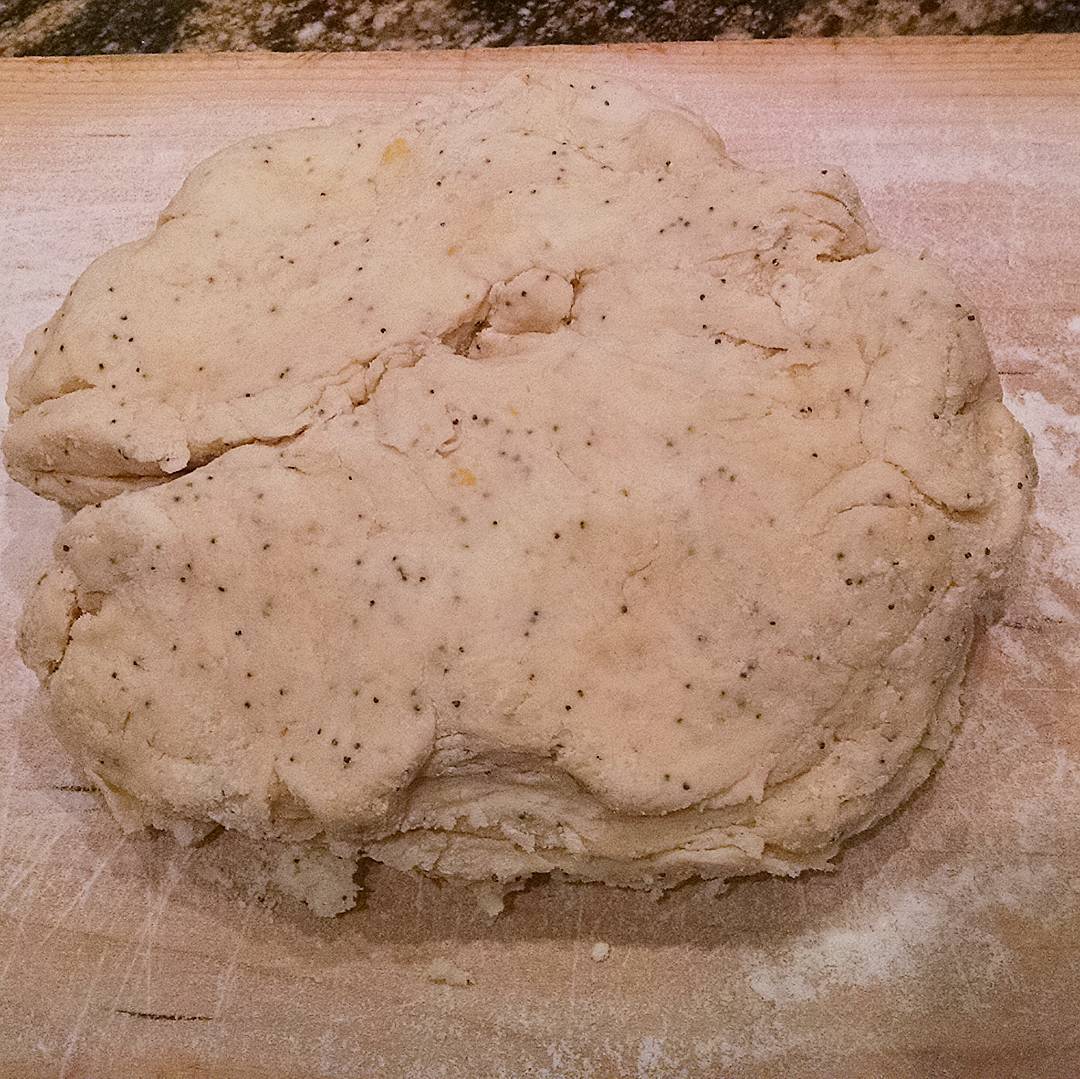
And So It Begins: Lemon Poppy Seed Scones
February 9, 2017 to February 12, 2017
“And so it begins! First blog post coming soon”
“First blog post scheduled for Monday”
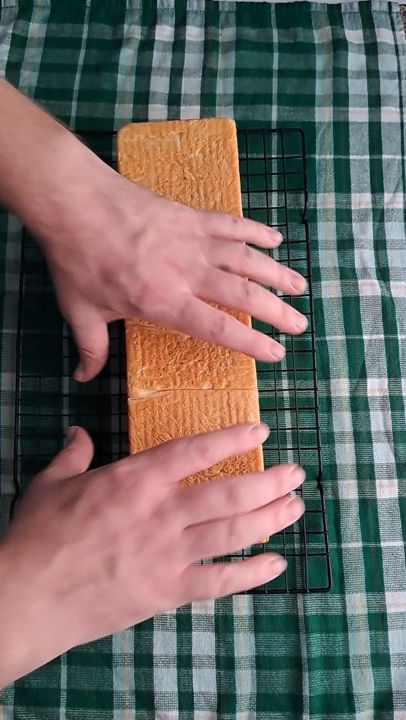
These are my very first posts, from February 2017. A rough round of dough speckled with poppy seeds on a wooden board, announcing that so it begins, with the first blog post coming soon. Then the same dough folded into a neat rectangle, with the first blog post scheduled for Monday.
The fold is the detail to notice. My recipe called for a business letter fold, where you fold the dough in thirds like a letter for an envelope, which stacks the butter into layers and gives a scone its flaky lift. I later learned it is the same fold used for croissants and puff pastry, and that it makes you feel like a real baker. I chose lemon poppy seed because my Meyer lemon tree was full.
This article is written in Corey’s voice for this tribute site, based on his captions and blog. His own words are the quotes above.
From the journalDial “S” for SconeRead Corey’s full write-up of this bake →Cream Scones with Lemon Poppy Seed Variation
Scones began in Scotland as a griddle-baked quick bread, first recorded in the early 1500s, and became an oven-baked teatime staple once baking powder arrived in the mid-19th century. The American cream scone is richer and more tender than its British cousin. A quick letter fold, borrowed from laminated pastry, gives it flaky layers and a tall rise.
Ingredients
Scones
- 300 g all-purpose flour (2 1/2 cups)
- 50 g granulated sugar (1/4 cup)
- 12 g baking powder (1 tbsp)
- 3 g fine sea salt (1/2 tsp)
- 85 g unsalted butter, cold, in 1 cm cubes (6 tbsp)
- 220 g heavy cream, cold (1 cup minus 1 tbsp), plus more for brushing
- 1 tsp vanilla extract
- Coarse sugar, for sprinkling
Lemon poppy seed variation
- Finely grated zest of 2 lemons, rubbed into the sugar
- 15 g poppy seeds (1 1/2 tbsp)
- 120 g powdered sugar (1 cup)
- 25 to 30 g fresh lemon juice (about 2 tbsp)
Method
- Whisk the flour, sugar, baking powder and salt in a large bowl. For the lemon variation, first rub the zest into the sugar with your fingertips until fragrant and damp, and add the poppy seeds with the flour.
- Add the cold butter and flatten each cube between your fingers, working quickly until the pieces range from oat flakes to small peas. Larger pieces of butter mean flakier scones.
- Stir the vanilla into the cold cream, pour it over the flour, and toss with a fork just until a shaggy dough forms with a few dry patches. Do not knead.
- Tip onto a lightly floured bench and pat into a rectangle about 2 cm (3/4 in) thick. Fold it in thirds like a letter, turn it 90 degrees, pat it out, and fold once more. This builds layers and brings the dough together without overworking it.
- Pat into an 18 cm (7 in) round about 3 cm (1 1/4 in) thick. Cut into 8 wedges with a sharp knife, pressing straight down without sawing.
- Space the wedges on a parchment-lined tray and chill for 20 minutes in the freezer or 30 minutes in the refrigerator. Heat the oven to 400°F (200°C).
- Brush the tops only with cream and sprinkle with coarse sugar. Bake for 18 to 22 minutes, until well risen and golden brown on top and underneath.
- Cool on the tray for 10 minutes. For the lemon variation, whisk the powdered sugar and lemon juice into a thick glaze and spoon it over the scones once they are barely warm.
Chef’s notes
- Tough scones have been overmixed. Stop while the dough is still shaggy and let the folds finish the job.
- Scones that spread and lose their shape were too warm going into the oven. Chilling the cut scones firms the butter and gives a taller rise.
- Keep the cream off the cut sides. Wash that runs down the edges glues the layers shut and the scones rise lopsided.
- Unbaked scones freeze well. Bake from frozen, adding 3 to 4 minutes.
Butter and cream, or cream alone?
Butter cut in, bound with cream
Thomas Keller and Sebastien Rouxel (Bouchon Bakery), Claire Saffitz, most pastry kitchens
Cold butter is worked into the flour before the cream goes in, and the pieces of butter melt into flaky layers in the oven. It gives the most lift and the richest flavour, and it is the method used here.
Cream only
King Arthur Baking Company's cream scones; James Beard's cream biscuits use the same idea
Heavy cream supplies all of the fat and liquid, so there is no butter to cut in and the dough comes together in a minute. The crumb is finer, softer and more cake-like, with less flakiness.
Drawn from the methods of
- Thomas Keller and Sebastien Rouxel, Bouchon Bakery (2012)
- King Arthur Baking Company
- Claire Saffitz, Dessert Person (2020)
Corey has not published his own formula for this piece. This reference recipe is compiled from the published methods of the chefs and bakers listed above, written in our own words.