Sourdough, Cut Open for the Crumb
February 14, 2026
“I don't love making sourdough, but I do it for the gram.”
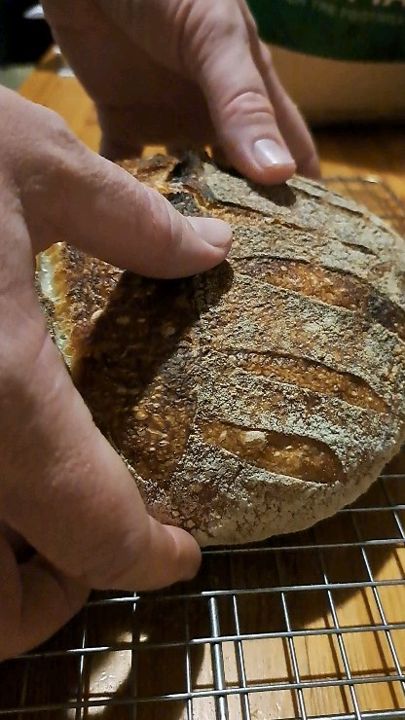
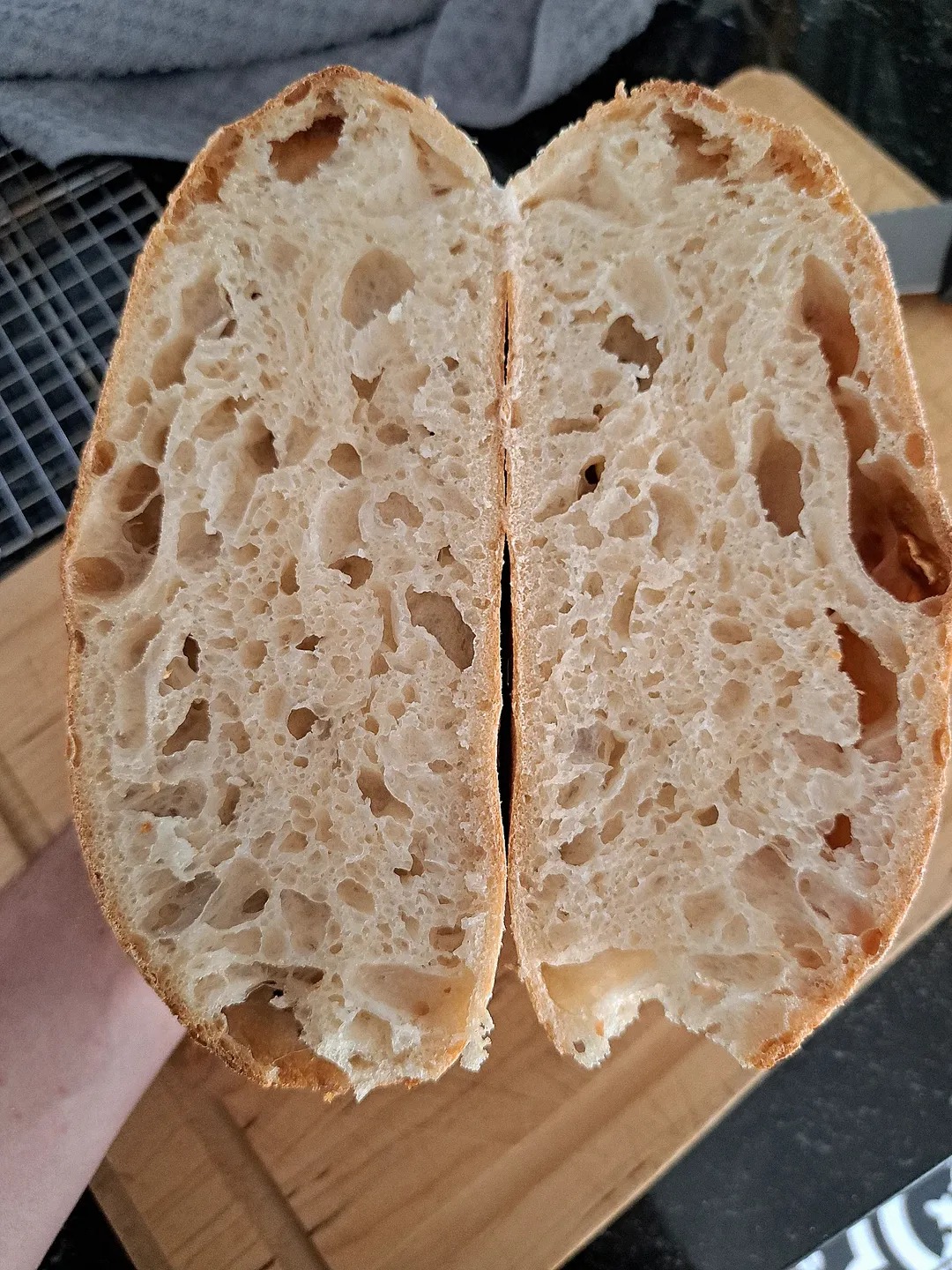
I don't love making sourdough, but I do it for the gram. And this is exactly the photo sourdough bakers chase: a loaf split down the middle and held open like a book, showing an irregular, glossy, wide-open crumb with a thin, well-baked crust.
Those holes are a record of everything that happened before the oven. A wet dough (high hydration), gentle handling during the folds, and a fermentation stopped at the right moment leave large pockets of gas trapped in a strong gluten network. The slight shine on the cell walls is gelatinized starch, which is the sign of a fully hydrated and fully baked crumb. Naturally leavened bread uses a starter of wild yeast and lactic acid bacteria, and that is where the tang and the keeping quality come from.
This article is written in Corey’s voice for this tribute site, based on his captions and blog. His own words are the quotes above.
Country Sourdough Loaf
A naturally leavened country loaf with a dark, blistered crust and an open, glossy crumb. Bread raised with wild yeast and bacteria is the oldest leavened bread there is. This style, a wet dough given gentle folds and baked in a covered pot, follows the French pain de campagne tradition as it was revived by American artisan bakers in the 1990s and 2000s.
Ingredients
Leaven
- 20 g mature sourdough starter (1 tbsp)
- 100 g bread flour and whole wheat flour, mixed half and half (3/4 cup)
- 100 g water at 78°F / 26°C (scant 1/2 cup)
Dough
- 900 g bread flour (about 7 1/4 cups)
- 100 g whole wheat flour (3/4 cup plus 1 tbsp)
- 700 g water at 80°F / 27°C, plus 50 g more with the salt (3 cups, plus 3 1/2 tbsp)
- 200 g ripe leaven (all but a spoonful of the batch above)
- 20 g fine sea salt (1 tbsp plus 1/2 tsp)
For shaping
- Rice flour, or a half and half mix of rice and wheat flour, for dusting the baskets
Method
- The night before, mix the leaven and leave it covered at room temperature for 8 to 12 hours. It is ready when it has grown, smells sweet and milky, and a spoonful floats in water.
- Dissolve 200 g of leaven in the 700 g of water, add both flours, and mix by hand until no dry flour remains. Cover and rest for 30 to 45 minutes. This rest, the autolyse, lets the flour hydrate and the gluten begin to form on its own.
- Sprinkle the salt over the dough, add the remaining 50 g of water, and squeeze it through with your fingers until fully absorbed.
- Let the dough ferment at 78-82°F (26-28°C) for 3 to 4 hours. Every 30 minutes for the first 2 hours, wet your hand, reach under the dough, stretch it up and fold it over, working around the bowl four times. Handle more gently as it fills with gas. It is ready when it has risen 20 to 30 percent, feels airy, and domes at the edges.
- Turn onto an unfloured surface, divide in two, and round each piece lightly using a bench knife. Rest uncovered for 20 to 30 minutes.
- Flour the tops, flip, and shape: fold the bottom third up, the sides in, the top down, then roll the dough over onto its seam and tighten it against the bench. Place seam side up in baskets dusted with rice flour.
- Cover and refrigerate for 12 to 18 hours. This slow final rise deepens the flavour and makes the loaf easy to score.
- Heat a lidded cast-iron Dutch oven in the oven at 500°F (260°C) for 45 minutes. Turn a cold loaf out onto parchment, score with a razor at a shallow angle, and lower it into the pot.
- Cover, reduce the oven to 450°F (230°C), and bake for 20 minutes. Remove the lid and bake 20 to 25 minutes more, until the crust is a deep chestnut brown. Reheat the pot to 500°F (260°C) and repeat with the second loaf.
- Cool on a rack for at least 2 hours. The crumb is still setting as it cools and will be gummy if cut early.
Chef’s notes
- A flat, dense loaf with a few big tunnels is underfermented. Watch the dough, not the clock, and keep it warm. In a cool kitchen, bulk fermentation can take 5 to 6 hours.
- A loaf that spreads out and will not hold a score is overproofed or was shaped too loosely. Shorten the bulk rise and build more tension in the final shape.
- Use the leaven while it is young and still rising. An overripe, collapsed leaven makes a sour, weaker dough.
- If the base scorches, slide a baking sheet onto the rack below the pot for the uncovered part of the bake.
Cold overnight proof or same-day bake?
Overnight cold retard
Chad Robertson (Tartine) gives it as the flavour-building option; standard practice in most modern artisan bakeries
Shaped loaves rest in the refrigerator for 12 to 18 hours and bake straight from cold. It builds more acidity and a blistered crust, makes scoring easy, and fits a home schedule, which is why this recipe uses it.
Room temperature final proof
Traditional French pain au levain practice; Jeffrey Hamelman gives ambient proofs alongside retarding in his levain formulas
Shaped loaves proof for 2 to 4 hours at about 76-80°F (24-27°C) and bake the same day. The flavour is milder and more lactic than sharp, and many bakers feel the wheat tastes sweeter.
Drawn from the methods of
- Chad Robertson, Tartine Bread (2010)
- Jeffrey Hamelman, Bread (2004)
- Ken Forkish, Flour Water Salt Yeast (2012)
Corey has not published his own formula for this piece. This reference recipe is compiled from the published methods of the chefs and bakers listed above, written in our own words.