Super Bouncy Japanese Milk Bread
January 14, 2025
“Super bouncy japanese milk bread!”
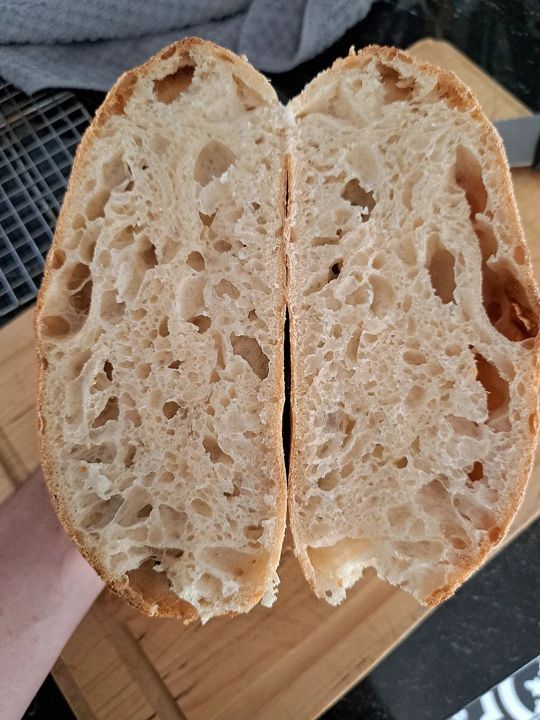
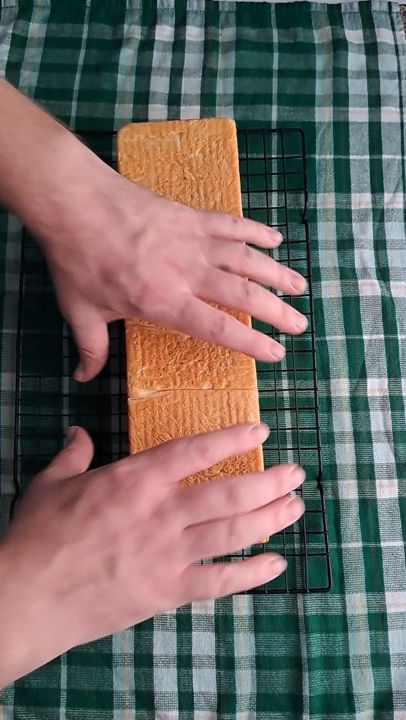
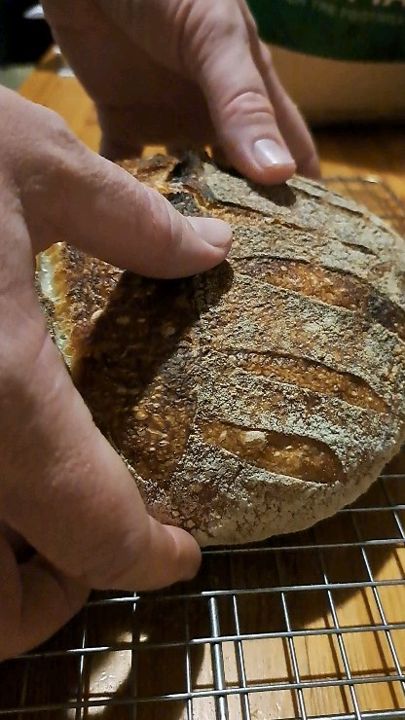
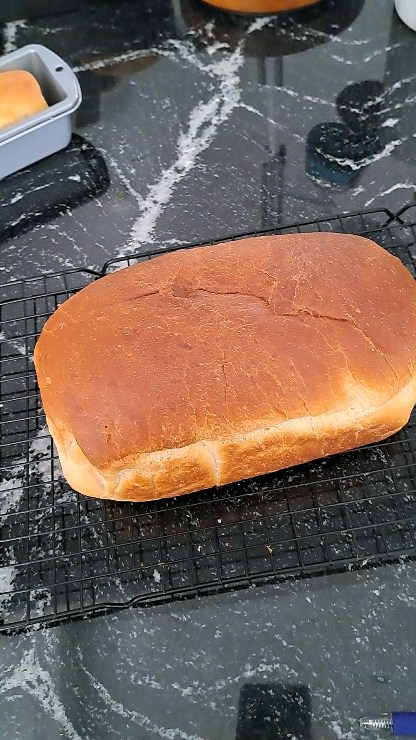
A burnished, pillow-topped loaf cooling on a rack, and in the video I press on it to show how it springs back. Japanese milk bread, shokupan, is famous for exactly that bounce: a feathery crumb that tears in long strands and stays soft for days.
The secret is a cooked flour paste. You heat a small portion of the flour with water or milk until it thickens, which lets the dough hold far more liquid than it otherwise could without becoming sticky. More water means more steam in the oven, a taller rise and a moister, longer-keeping loaf. Milk, butter and a little sugar round it out. It is the softest bread in the canon, and it was a natural next step for me after working through brioche and Pullman loaves.
This article is written in Corey’s voice for this tribute site, based on his captions and blog. His own words are the quotes above.
Shokupan (Japanese Milk Bread)
Shokupan is Japan's everyday white loaf: tall, feathery, faintly sweet, and able to be pulled apart in soft strands. Its softness comes from pre-cooking part of the flour with liquid, either as yudane, the Japanese scalded flour method, or as tangzhong, the roux version popularised across Asia in the 2000s by Taiwanese author Yvonne Chen.
Ingredients
Tangzhong
- 20 g bread flour (2 1/2 tbsp)
- 100 g whole milk or water (scant 1/2 cup)
Dough
- 330 g bread flour, 12 to 13% protein (2 2/3 cups)
- 120 g whole milk, lukewarm (1/2 cup)
- 50 g egg (1 large)
- 40 g granulated sugar (3 tbsp)
- 10 g dry milk powder, optional (1 1/2 tbsp)
- 6 g fine sea salt (1 tsp)
- 5 g instant yeast (1 1/2 tsp)
- 40 g unsalted butter, soft (3 tbsp)
Finish
- 1 egg beaten with 1 tbsp milk, for egg wash, or plain milk
Method
- Whisk the tangzhong flour and liquid in a small pan. Cook over medium-low heat, stirring constantly, until it thickens to a pudding-like paste and the whisk leaves lines, at 149°F (65°C). Transfer to the mixer bowl and cool to lukewarm.
- Add all the dough ingredients except the butter. Mix on low for 3 minutes, then add the butter and knead on medium for 10 to 12 minutes. The dough must reach a strong windowpane: a thin membrane you can stretch without tearing.
- Shape into a ball, cover, and let rise at 80°F (27°C) for about 1 hour, until doubled.
- Divide into 3 equal pieces, round them, cover, and rest 15 minutes.
- Roll each piece into a long oval about 12 x 25 cm (5 x 10 in). Fold the two long sides in to the centre, roll it flat again, then roll up from the short end into a tight coil. Set the three coils seam side down, side by side, in a buttered 23 x 13 cm (9 x 5 in) loaf pan.
- Cover and proof for 45 to 60 minutes, until the dough crests about 1 cm (1/2 in) above the rim of the pan and springs back slowly when pressed.
- Brush gently with egg wash. Bake at 350°F (175°C) for 30 to 35 minutes, until deep golden and 190°F (88°C) inside. Tent with foil after 20 minutes if it is browning too fast.
- Turn out at once and cool on a rack for at least 1 hour before slicing. For a flat-topped square loaf, bake in a lidded Pullman pan instead and skip the egg wash.
Chef’s notes
- The feathery pull depends on full gluten development. If the loaf is cakey and crumbly, knead longer. This dough is hard to overmix in a home mixer.
- A loaf that caves in at the sides was overproofed or underbaked. Bake to temperature and unmould immediately.
- The dough is sticky at first. Resist adding flour. It comes together once the gluten forms and the butter is absorbed.
- Thanks to the cooked flour, the loaf stays soft for 3 to 4 days in a sealed bag.
Tangzhong or yudane?
Tangzhong
King Arthur Baking Company, Kristina Cho
A small amount of flour is cooked on the stove with five times its weight in liquid to 149°F (65°C) and used once cooled. It is quick, can be used the same day, and is the method this recipe follows.
Yudane
Traditional Japanese bakeries and home bakers
About 20 percent of the flour is mixed with an equal weight of boiling water and rested, usually overnight in the refrigerator. It gelatinises more flour, and its supporters find the crumb chewier, moister and a little sweeter.
Drawn from the methods of
- King Arthur Baking Company
- Kristina Cho, Mooncakes and Milk Bread (2021)
Corey has not published his own formula for this piece. This reference recipe is compiled from the published methods of the chefs and bakers listed above, written in our own words.