Dial “S” for Scone
By Corey Coleman · February 13, 2017 · Originally published on makingsomedough.wordpress.com
The scone: it’s a rather underrated pastry/quickbread/muffin thing. Perhaps it’s because many people feel that it is very plain. It’s there to be enjoyed with tea or coffee. Traditionally, jams, butters, or curds were added to them to enhance their flavor. But I can tell you, the simple scone is more than just lumpy dry bread for some jam or butter to be lathered onto it, like sunscreen on a four-year-old on their first trip to the beach. No, it is a spectacular standalone baked good that just so happens to go well with many things.
Much like biscuits, scones have butter “cut into it”, meaning you use a mixer, food processor, pastry cutter or your hands to reduce the butter into tiny flecks of goodness, so the dough has pieces of (cold) butter all through out it. This gives it a nice, somewhat short (crumbly), yet soft texture throughout. You will always want the butter to stay relatively cold and not melt; otherwise it might mess with the end result.
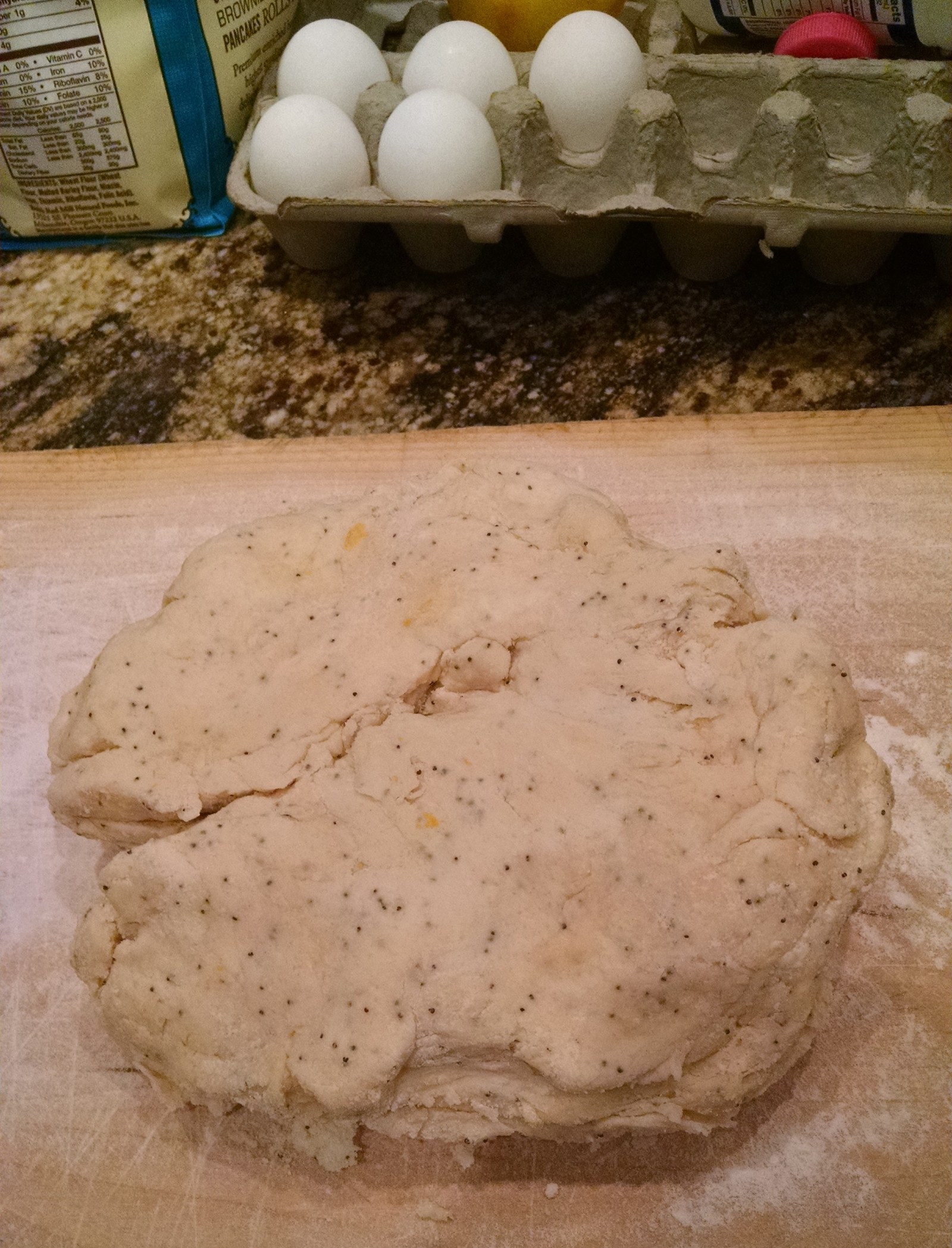
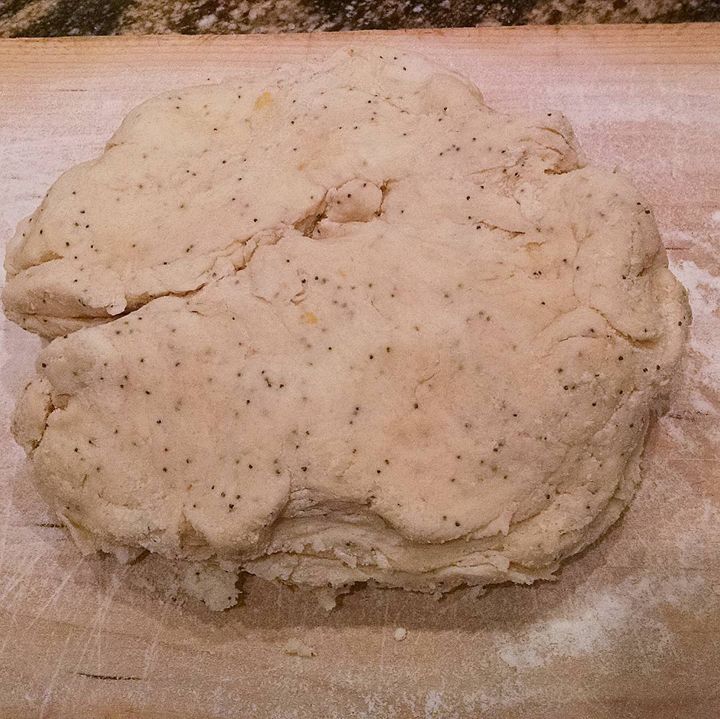
After adding the cream to the dry ingredients, you really get to work with it hands-on. You get to roll it, fold it, and shape it. The dough is hardy and resilient yet still supple and easily yielding to most forms and shapes.
I chose to make lemon poppy seed scones, as opposed to plain ones, which may be said to negate the whole point about plain scones I was trying to make earlier. To that I say: I have a tree bursting with Meyer lemons and a jar of poppy seeds that I was worried may sprout if I didn’t finish them up soon. So, there!
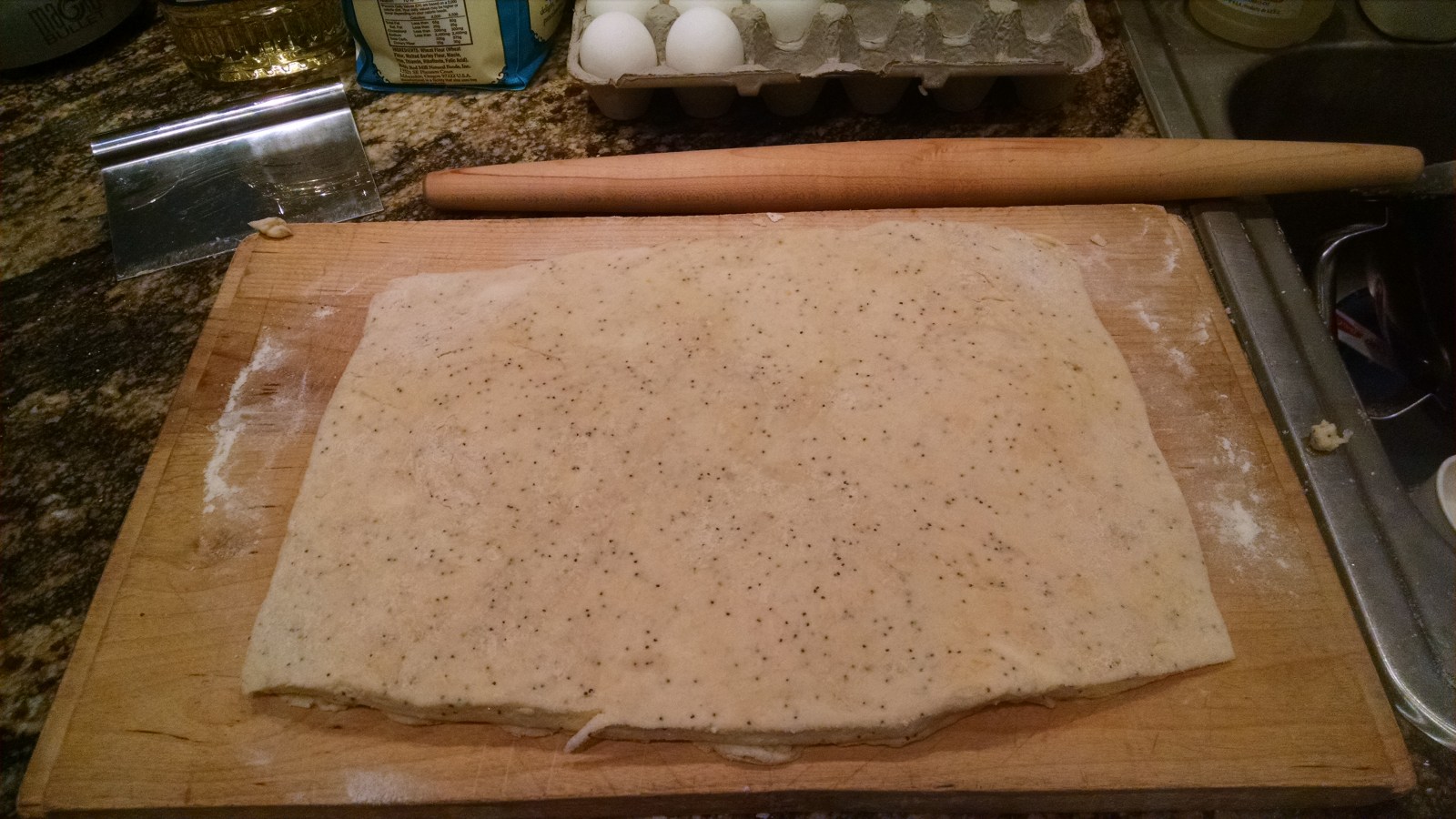
Per the recipe I was using, it called for a “business letter fold”, meaning you fold each side towards the center as if you were folding a piece of paper to go into an envelope. (As you can see in the picture below.) I have come to learn this is a fairly common baking technique. You use the same process when you make croissants or puff pastry in order to properly distribute butter. I also learned that it makes you feel like a real baker.
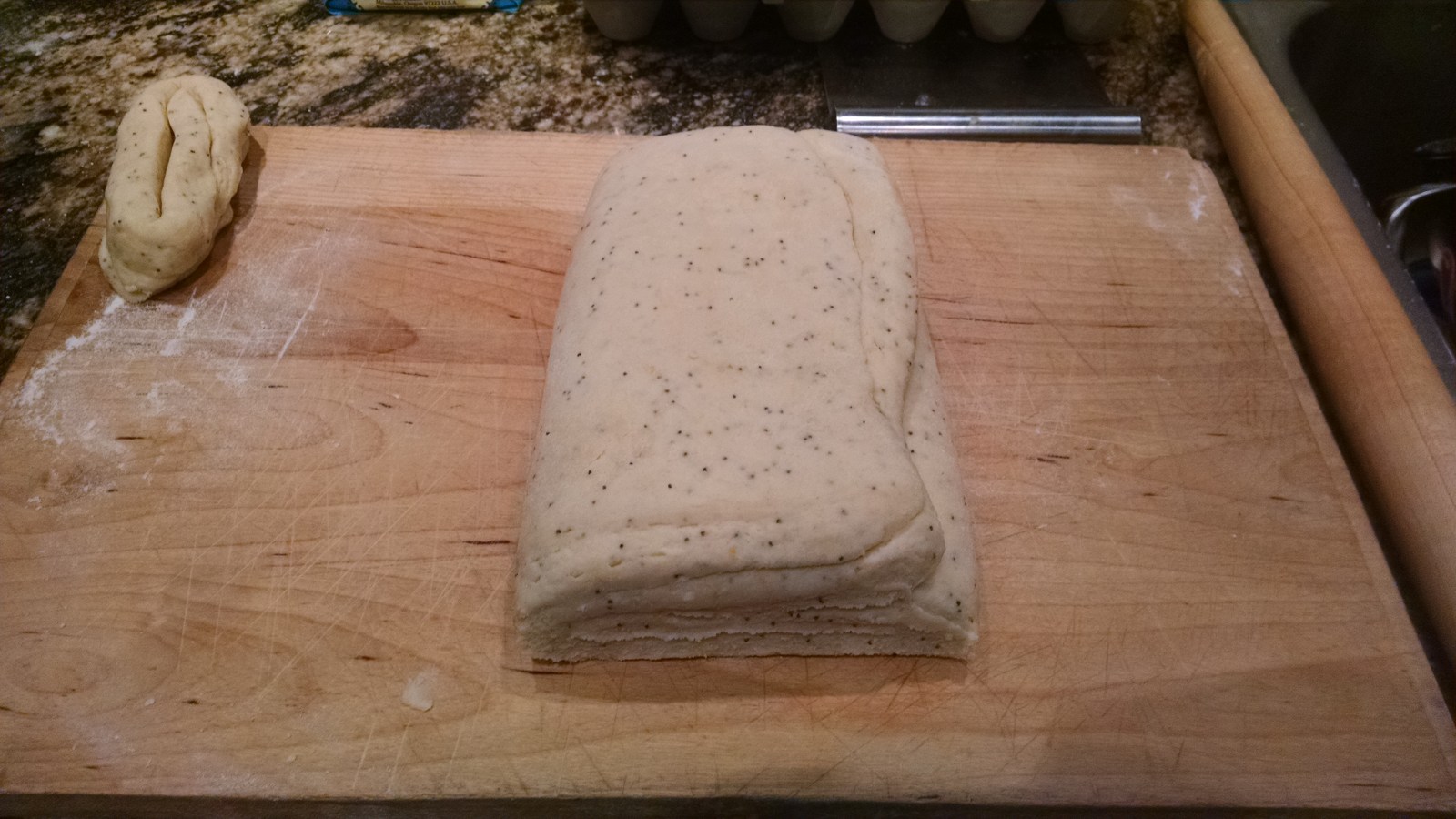
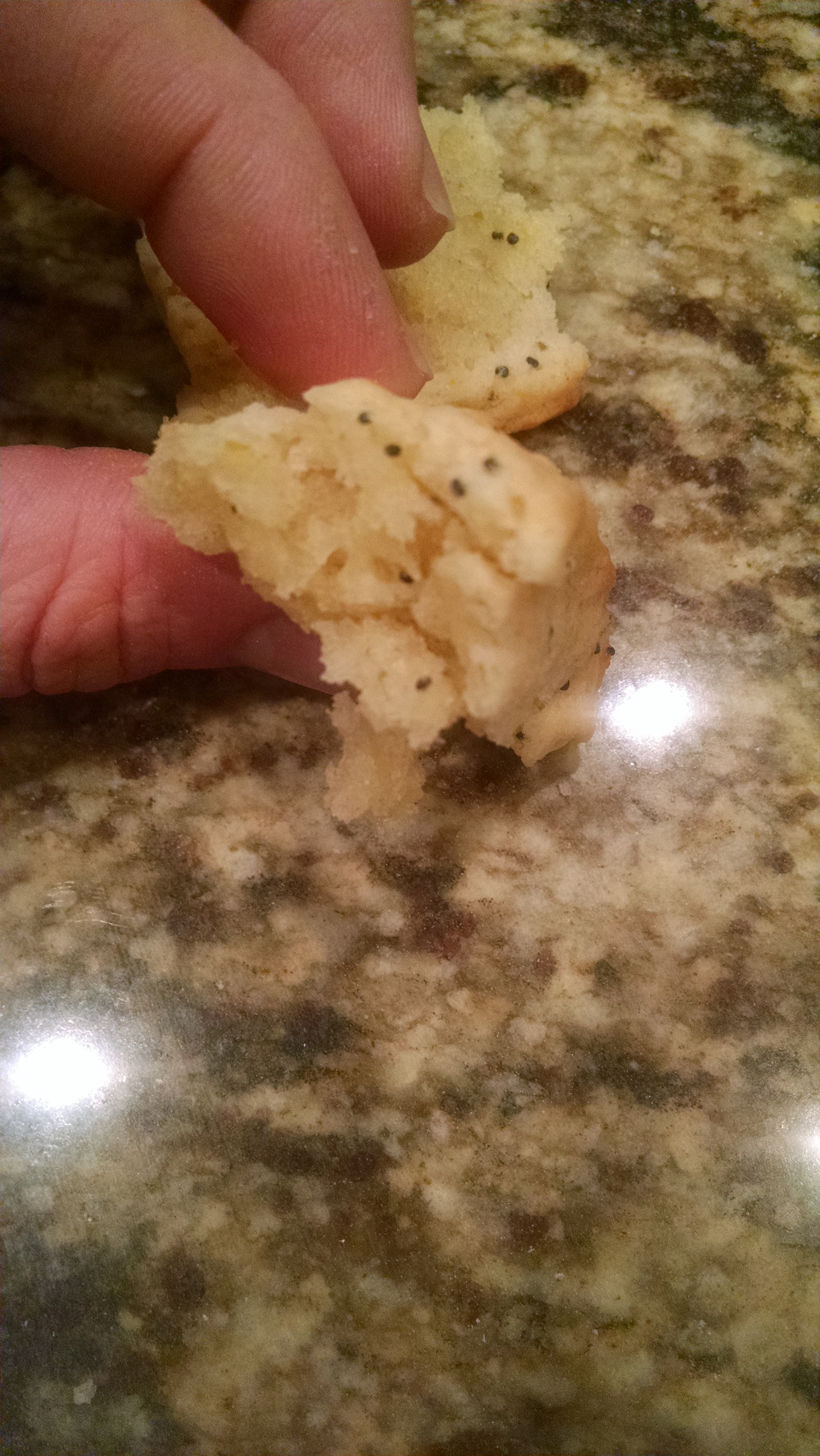
There is a key to making both biscuits and scones, which I was previously unaware of. When you shape them you need to make sure the edges are sharp and clean, meaning you need to cut them with a knife or other sharp utensil as opposed to ripping off a chunk and shaping it. Ripping and shaping inhibits rise and can lead to chewy or undercooked scones. Cutting the dough will ensure optimum rise for the scone or biscuit.
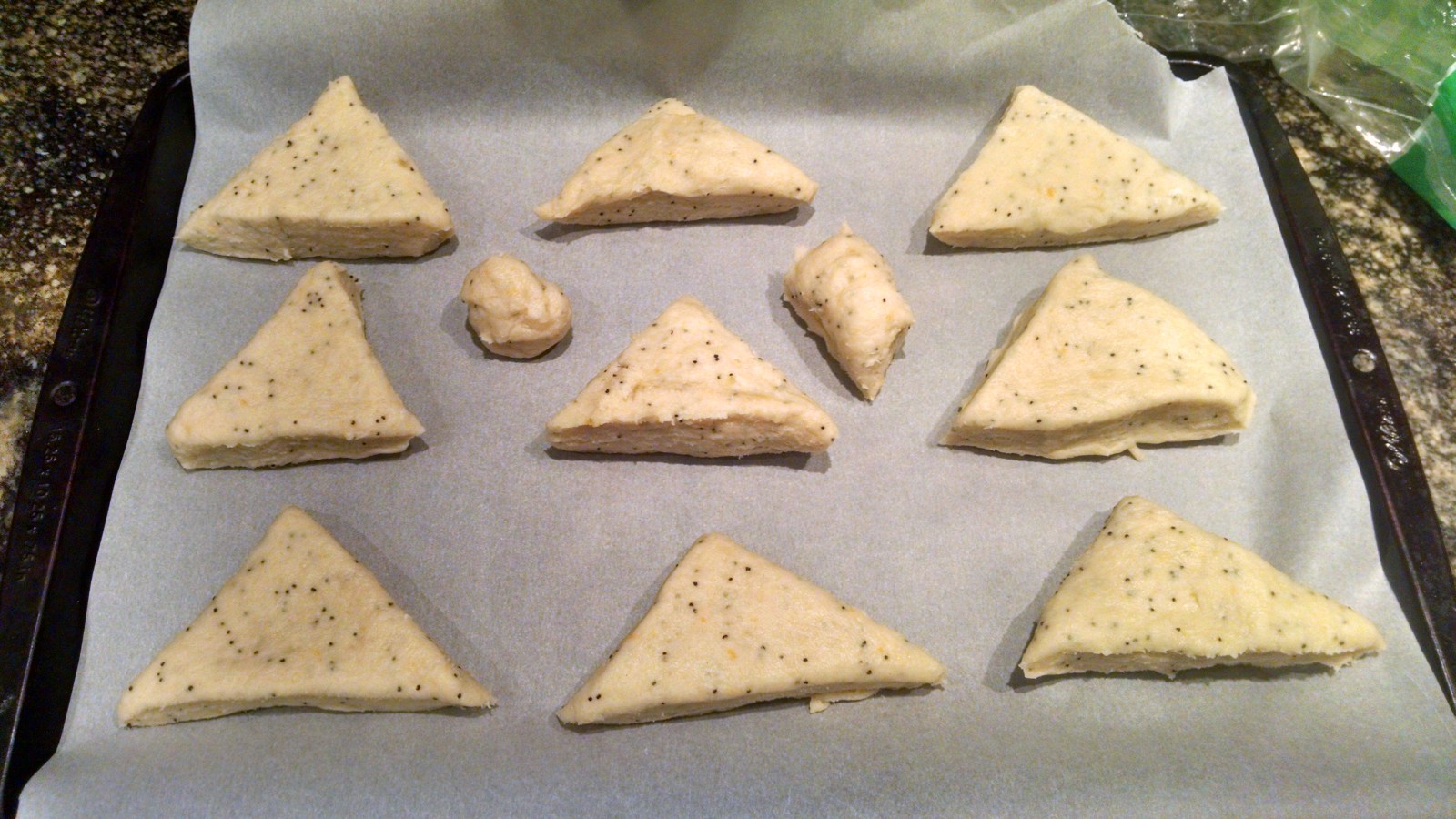
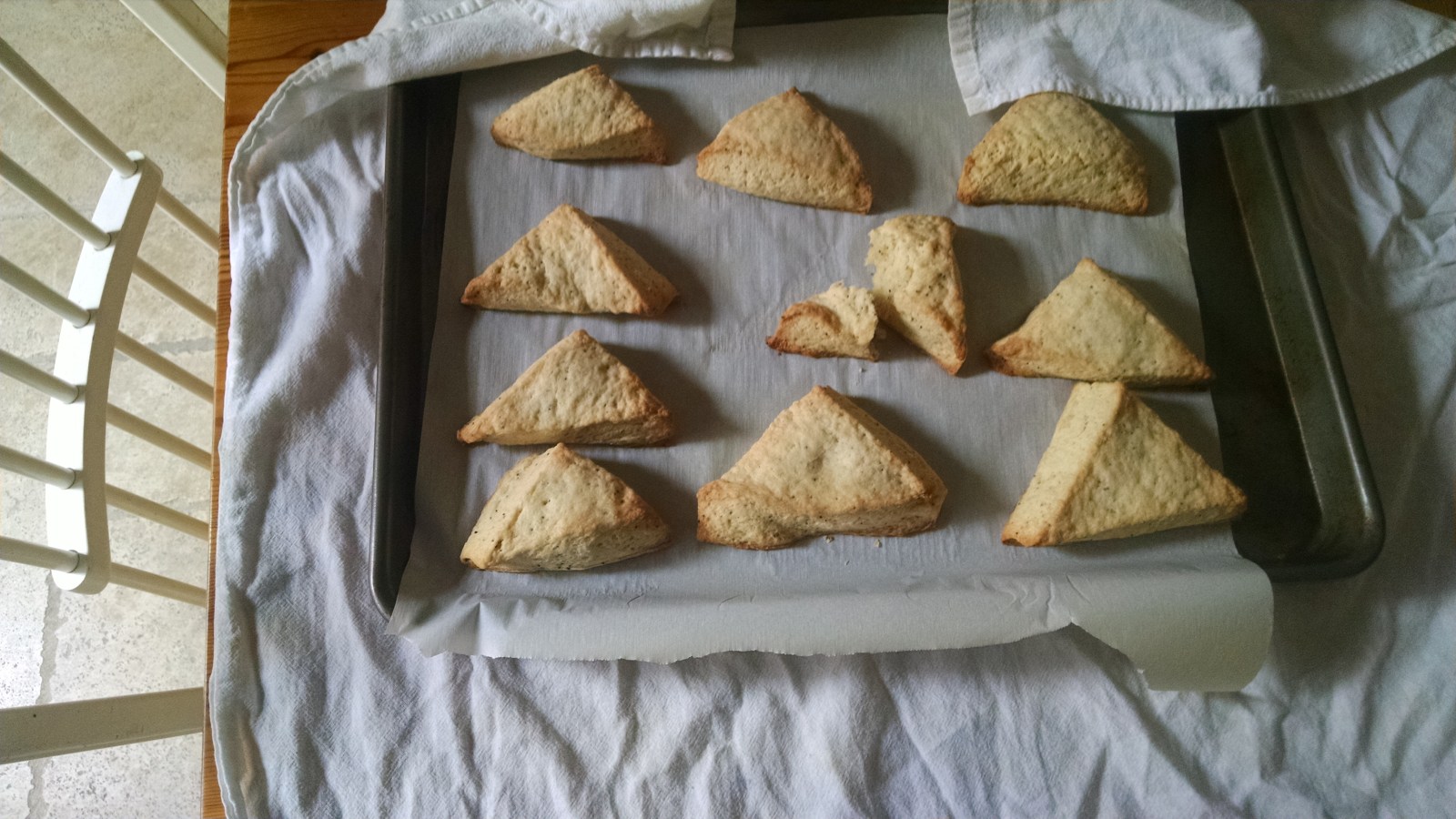
In the end I feel I executed the recipe quite well. The scones were well received and both flavor and texture were quite good. I think I need to work on the consistency of the shapes and the overall aesthetic of the end result, but it could have always been worse. I could have lit myself on fire. Not saying I didn’t, but I’m not saying I did.
Cream Scones with Lemon Poppy Seed Variation
Scones began in Scotland as a griddle-baked quick bread, first recorded in the early 1500s, and became an oven-baked teatime staple once baking powder arrived in the mid-19th century. The American cream scone is richer and more tender than its British cousin. A quick letter fold, borrowed from laminated pastry, gives it flaky layers and a tall rise.
Ingredients
Scones
- 300 g all-purpose flour (2 1/2 cups)
- 50 g granulated sugar (1/4 cup)
- 12 g baking powder (1 tbsp)
- 3 g fine sea salt (1/2 tsp)
- 85 g unsalted butter, cold, in 1 cm cubes (6 tbsp)
- 220 g heavy cream, cold (1 cup minus 1 tbsp), plus more for brushing
- 1 tsp vanilla extract
- Coarse sugar, for sprinkling
Lemon poppy seed variation
- Finely grated zest of 2 lemons, rubbed into the sugar
- 15 g poppy seeds (1 1/2 tbsp)
- 120 g powdered sugar (1 cup)
- 25 to 30 g fresh lemon juice (about 2 tbsp)
Method
- Whisk the flour, sugar, baking powder and salt in a large bowl. For the lemon variation, first rub the zest into the sugar with your fingertips until fragrant and damp, and add the poppy seeds with the flour.
- Add the cold butter and flatten each cube between your fingers, working quickly until the pieces range from oat flakes to small peas. Larger pieces of butter mean flakier scones.
- Stir the vanilla into the cold cream, pour it over the flour, and toss with a fork just until a shaggy dough forms with a few dry patches. Do not knead.
- Tip onto a lightly floured bench and pat into a rectangle about 2 cm (3/4 in) thick. Fold it in thirds like a letter, turn it 90 degrees, pat it out, and fold once more. This builds layers and brings the dough together without overworking it.
- Pat into an 18 cm (7 in) round about 3 cm (1 1/4 in) thick. Cut into 8 wedges with a sharp knife, pressing straight down without sawing.
- Space the wedges on a parchment-lined tray and chill for 20 minutes in the freezer or 30 minutes in the refrigerator. Heat the oven to 400°F (200°C).
- Brush the tops only with cream and sprinkle with coarse sugar. Bake for 18 to 22 minutes, until well risen and golden brown on top and underneath.
- Cool on the tray for 10 minutes. For the lemon variation, whisk the powdered sugar and lemon juice into a thick glaze and spoon it over the scones once they are barely warm.
Chef’s notes
- Tough scones have been overmixed. Stop while the dough is still shaggy and let the folds finish the job.
- Scones that spread and lose their shape were too warm going into the oven. Chilling the cut scones firms the butter and gives a taller rise.
- Keep the cream off the cut sides. Wash that runs down the edges glues the layers shut and the scones rise lopsided.
- Unbaked scones freeze well. Bake from frozen, adding 3 to 4 minutes.
Butter and cream, or cream alone?
Butter cut in, bound with cream
Thomas Keller and Sebastien Rouxel (Bouchon Bakery), Claire Saffitz, most pastry kitchens
Cold butter is worked into the flour before the cream goes in, and the pieces of butter melt into flaky layers in the oven. It gives the most lift and the richest flavour, and it is the method used here.
Cream only
King Arthur Baking Company's cream scones; James Beard's cream biscuits use the same idea
Heavy cream supplies all of the fat and liquid, so there is no butter to cut in and the dough comes together in a minute. The crumb is finer, softer and more cake-like, with less flakiness.
Drawn from the methods of
- Thomas Keller and Sebastien Rouxel, Bouchon Bakery (2012)
- King Arthur Baking Company
- Claire Saffitz, Dessert Person (2020)
Corey has not published his own formula for this piece. This reference recipe is compiled from the published methods of the chefs and bakers listed above, written in our own words.