When You Knead Your Work
February 16, 2017 to February 19, 2017
“Earn your loafing time with the next blog post!”
“When you knead your work...”
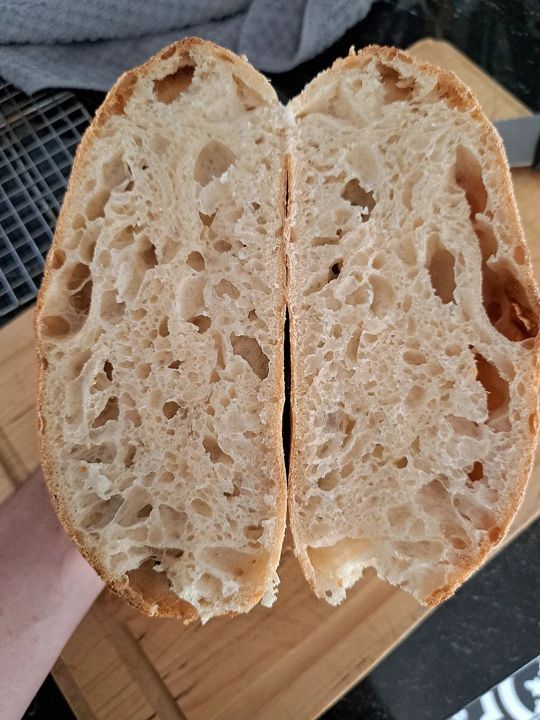
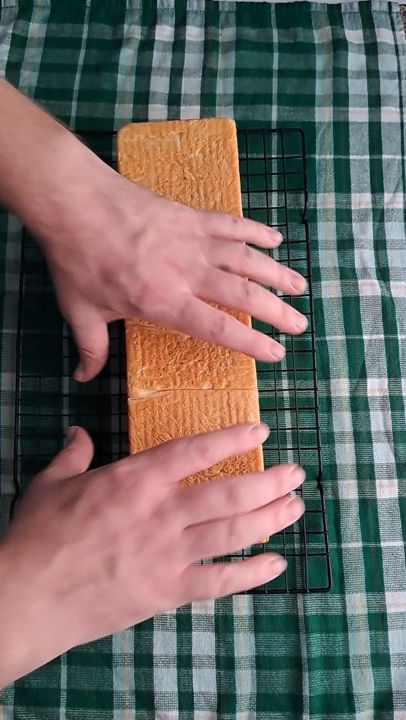
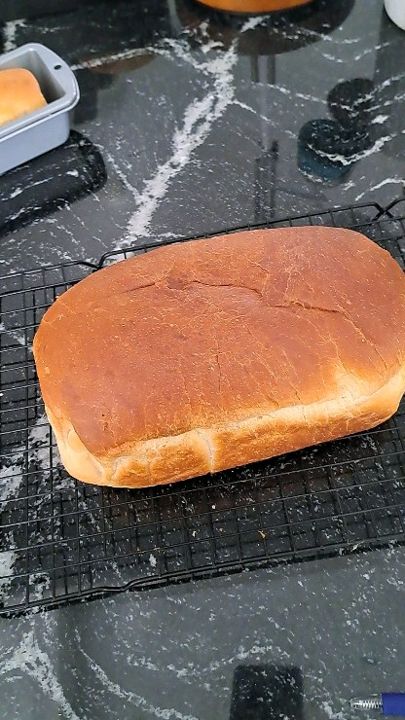
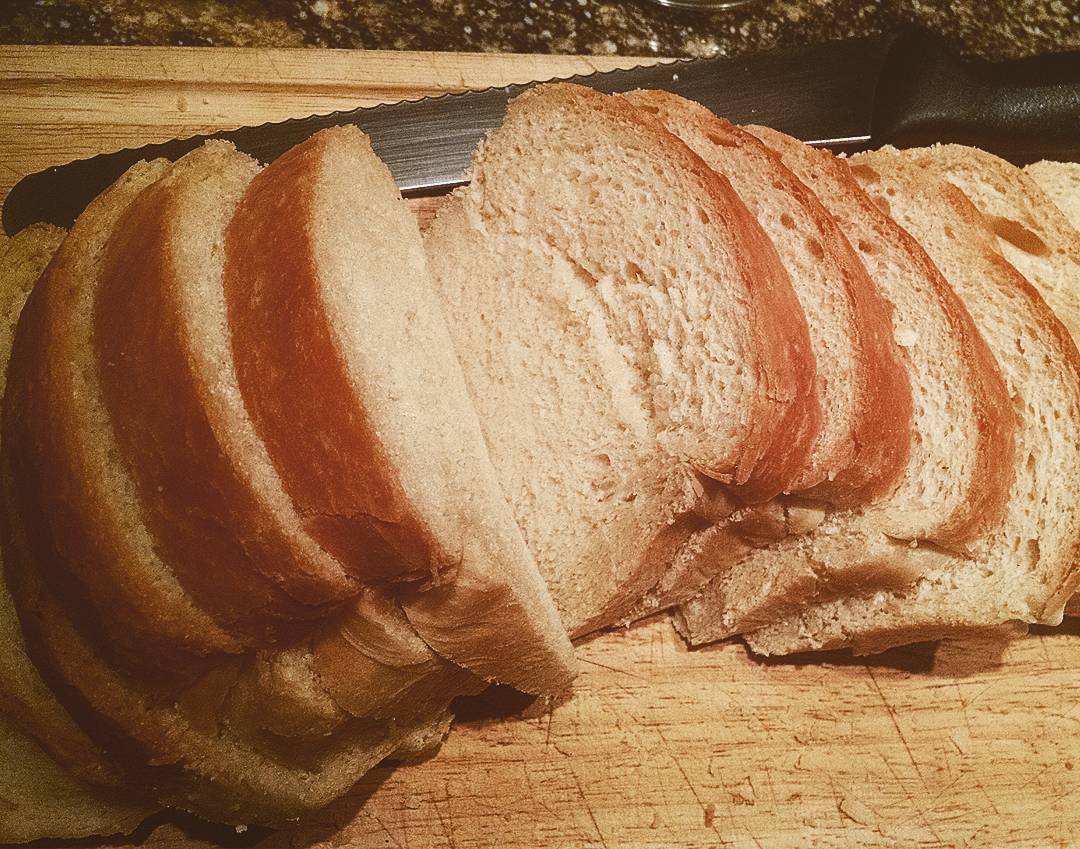
Here is my loaf of white bread sliced on a wooden board, tall and evenly browned, with a fine, soft crumb. I told everyone to earn their loafing time with the next blog post. I also took a video of working the dough by hand, for when you knead your work.
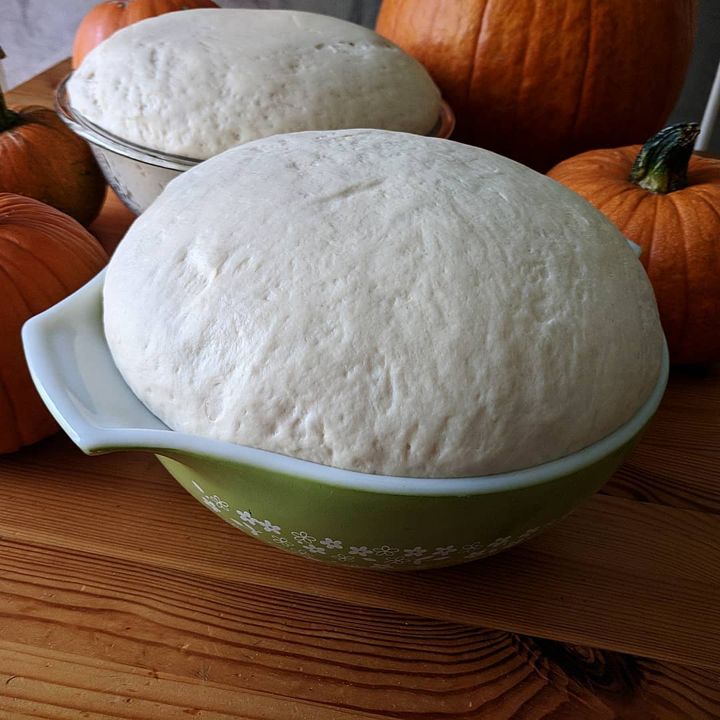
This was the second bake of my blog, written up as Puff the Magic Loaf. I chose bread because I am typically very bad with yeast, and the post records what I learned: water that is too hot kills yeast, and salt should not touch it directly. Kneading develops gluten, the protein network that gives dough its stretch and traps the gas from fermentation.
This article is written in Corey’s voice for this tribute site, based on his captions and blog. His own words are the quotes above.
From the journalPuff the Magic LoafRead Corey’s full write-up of this bake →Basic White Sandwich Loaf
This is the plain pan loaf of American and British home baking: a lightly enriched dough with a little milk, butter and sugar for a soft crumb and a thin golden crust. It is the best first bread to learn, because it teaches kneading, shaping and judging the proof in a forgiving dough.
Ingredients
Dough
- 500 g bread flour (about 4 cups)
- 200 g whole milk, lukewarm (3/4 cup plus 1 1/2 tbsp)
- 125 g water, lukewarm (1/2 cup)
- 25 g granulated sugar or honey (2 tbsp)
- 10 g fine sea salt (1 3/4 tsp)
- 7 g instant yeast (2 1/4 tsp, one packet)
- 40 g unsalted butter, soft (3 tbsp)
Finish
- 15 g unsalted butter, melted, for brushing (1 tbsp)
Method
- Combine all the dough ingredients and mix until no dry flour remains. Knead for 8 to 10 minutes in a mixer on medium-low speed, or 10 to 12 minutes by hand, until the dough is smooth, elastic and springs back when poked.
- Place in a lightly oiled bowl, cover, and let rise at 75-78°F (24-26°C) for 60 to 90 minutes, until doubled.
- Turn the dough out and press it into a rectangle about 20 x 30 cm (8 x 12 in), with a short side facing you, pressing out the large bubbles.
- Roll it up tightly from the short side, pressing the seam in with each turn, and pinch the final seam and the ends closed. Place seam side down in a buttered 23 x 13 cm (9 x 5 in) loaf pan.
- Cover and proof for 45 to 60 minutes, until the centre of the dough domes about 2.5 cm (1 in) above the rim and a floured fingertip leaves a dent that fills in slowly.
- Bake at 375°F (190°C) for 35 to 40 minutes, until well browned and 195-200°F (90-93°C) in the centre. The loaf should sound hollow when tapped on the base.
- Turn out of the pan at once, brush the top with melted butter for a soft crust, and cool on a rack for at least 1 hour before slicing.
Chef’s notes
- A loaf with a gap under the top crust was overproofed or loosely shaped. Roll the dough tightly and bake when it is about 2.5 cm over the rim, not higher.
- A dense, short loaf with torn sides was underproofed. Give it more time. In a cool kitchen, proofing can take 90 minutes.
- Slicing warm bread compresses the crumb and makes it gummy. Wait the full hour.
- Weigh the flour. A cup scooped straight from the bag can weigh 20 percent more than a spooned cup, which is the usual cause of dry, heavy bread.
Drawn from the methods of
- King Arthur Baking Company
- Peter Reinhart, The Bread Baker's Apprentice (2001)
- Rose Levy Beranbaum, The Bread Bible (2003)
Corey has not published his own formula for this piece. This reference recipe is compiled from the published methods of the chefs and bakers listed above, written in our own words.