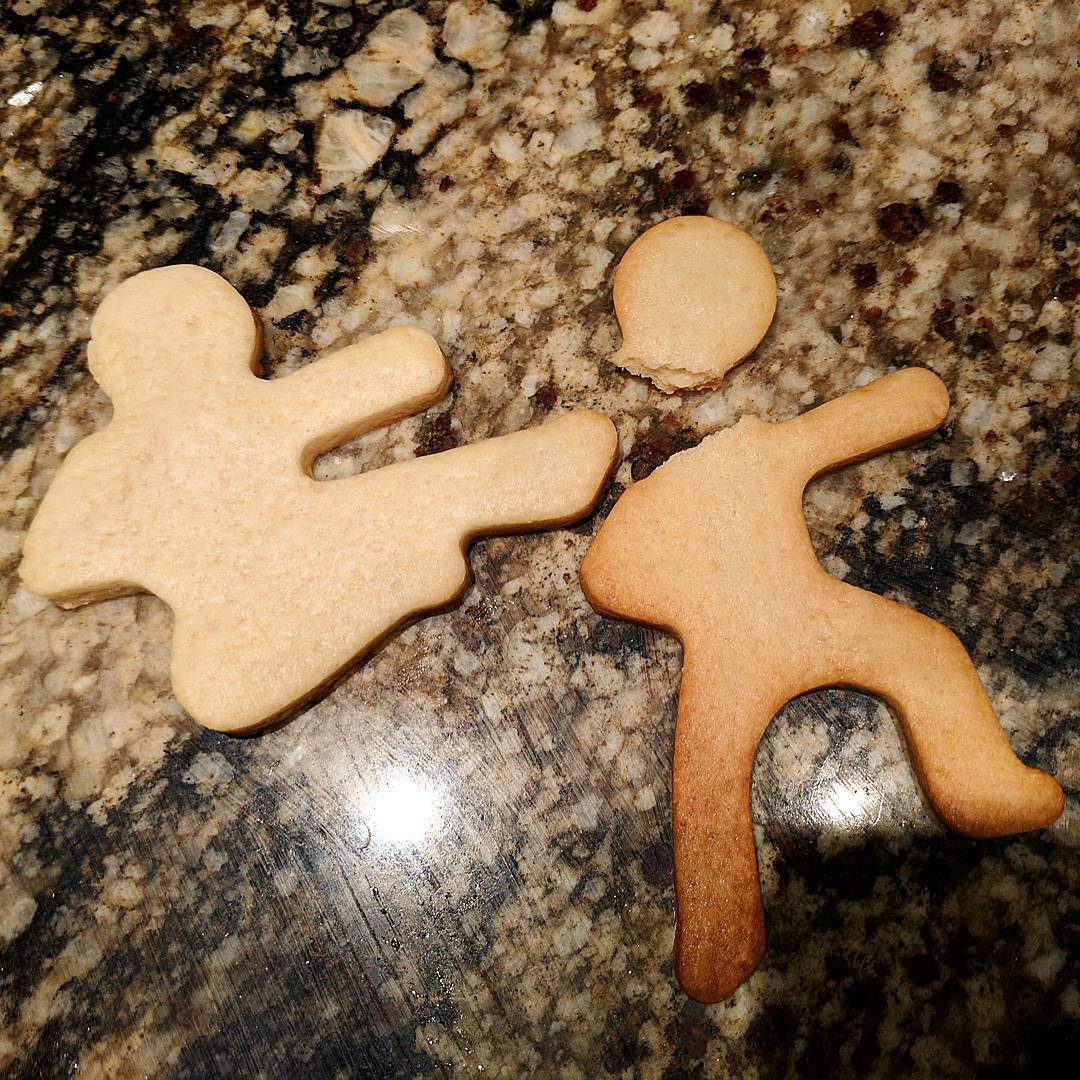
Ninja Cookie Battle
April 9, 2017
“Turning a potential fail into a hilarious win with these Ninja Cookies”
“Ninja cookie battle”
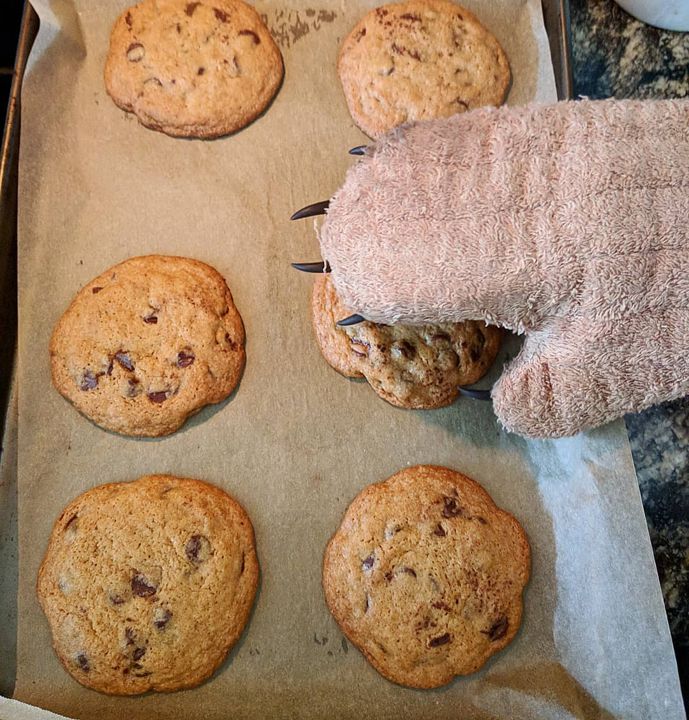
These are sugar cookies shaped like gingerbread men, except every one of them is mid-kick or mid-punch. I turned a potential #fail into a hilarious #win with these Ninja Cookies. In my second photo I staged a four-way fight: #fighttothedeath.
Whatever went wrong with my original plan, I am happy with the save, and the bake came out well too: the cookies are evenly golden at the edges and kept their sharp outlines, which takes a well-chilled dough. You should move cut-out cookies to the tray with a spatula so the shapes do not stretch, though a stretched limb is no problem for a ninja.
This article is written in Corey’s voice for this tribute site, based on his captions and blog. His own words are the quotes above.
No-Spread Cut-Out and Embossed Sugar Cookies
Rolled sugar cookies in America are commonly traced to the German Protestant settlers of Nazareth, Pennsylvania, in the 1700s, and pressing a pattern into cookie dough goes back further still to European molded cookies such as springerle and speculaas. This dough is built for detail: it has no chemical leavening, so cut edges stay sharp and an embossed pattern survives the oven.
Ingredients
Dough
- 225 g unsalted butter, cool but pliable (1 cup)
- 150 g granulated sugar (3/4 cup)
- 4 g fine sea salt (3/4 teaspoon)
- 1 large egg, cold (about 50 g without shell)
- 10 g pure vanilla extract (2 teaspoons)
- 1/4 teaspoon almond extract (optional)
- 375 g all-purpose flour (3 cups), plus more for dusting
Method
- Beat the butter, sugar and salt on low to medium speed for 1 to 2 minutes, only until evenly combined and creamy. Do not beat until light and fluffy: trapped air is what makes cut-out cookies puff and lose their shape.
- Mix in the egg, vanilla and almond extract until smooth, scraping the bowl once. Add the flour all at once and mix on low until the dough gathers into large clumps with no dry flour left.
- Divide the dough in two. Roll each half between sheets of parchment to an even 6 mm (1/4 inch), using rolling guides or dowels if you have them.
- Slide the sheets of dough onto a tray and refrigerate for at least 1 hour, until firm. The dough can be held this way for 2 days.
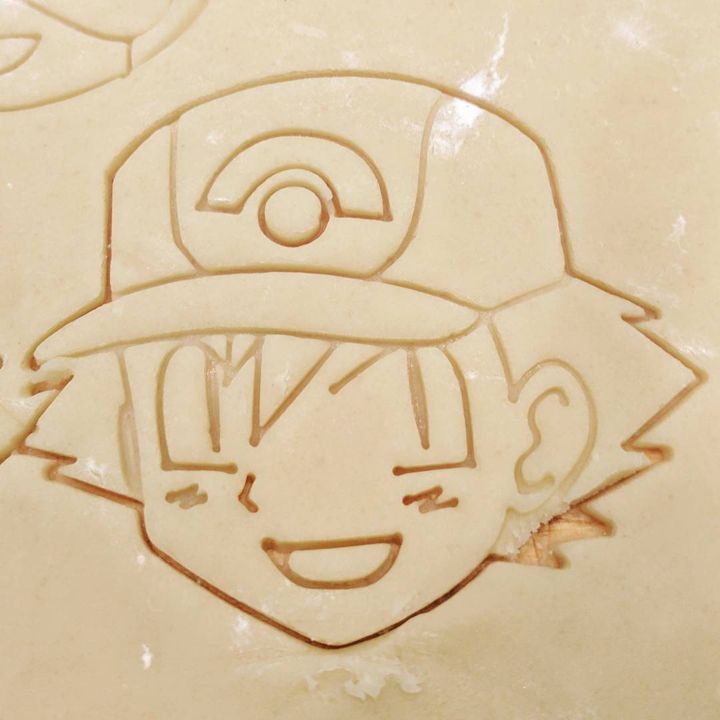
- For embossed cookies, peel off the top parchment, dust the dough and the embossed rolling pin or stamp lightly with flour, and press the pattern firmly in a single pass. Then cut shapes with a floured cutter. For plain cut-outs, simply cut.
- Arrange the cookies 2.5 cm (1 inch) apart on parchment-lined baking sheets. Freeze for 15 minutes or refrigerate for 30 minutes while the oven heats to 350°F (175°C).
- Bake for 10 to 13 minutes, turning the sheet once, until the surfaces look dry and the edges are just beginning to color. Embossed cookies are best kept pale so the pattern reads clearly.
- Cool on the sheet for 5 minutes, then on a rack. Gather the scraps, press them together without kneading, re-roll once and chill before cutting again.
Chef’s notes
- If the cookies spread or the imprint blurs, the usual causes are over-creamed butter, dough that went into the oven warm, or too little flour. Weigh the flour and always bake from cold.
- If the stamp or pin sticks, the dough is too warm or the pattern needs more flour. Chill the dough again and brush flour into the carving with a dry pastry brush, tapping out the excess.
- Dough rolled between parchment needs almost no bench flour, which keeps the cookies tender. Scraps rolled more than once get tough and shrink.
- For a sharper pattern still, let the embossed, cut cookies dry uncovered in the refrigerator for a few hours before baking, as is done with traditional molded cookies.
Drawn from the methods of
- King Arthur Baking Company
- Rose Levy Beranbaum, Rose's Christmas Cookies (1990)
- Dorie Greenspan, Dorie's Cookies (2016)
Corey has not published his own formula for this piece. This reference recipe is compiled from the published methods of the chefs and bakers listed above, written in our own words.