Gluten-Free Muffins
April 9, 2017
“Gluten free muffins”
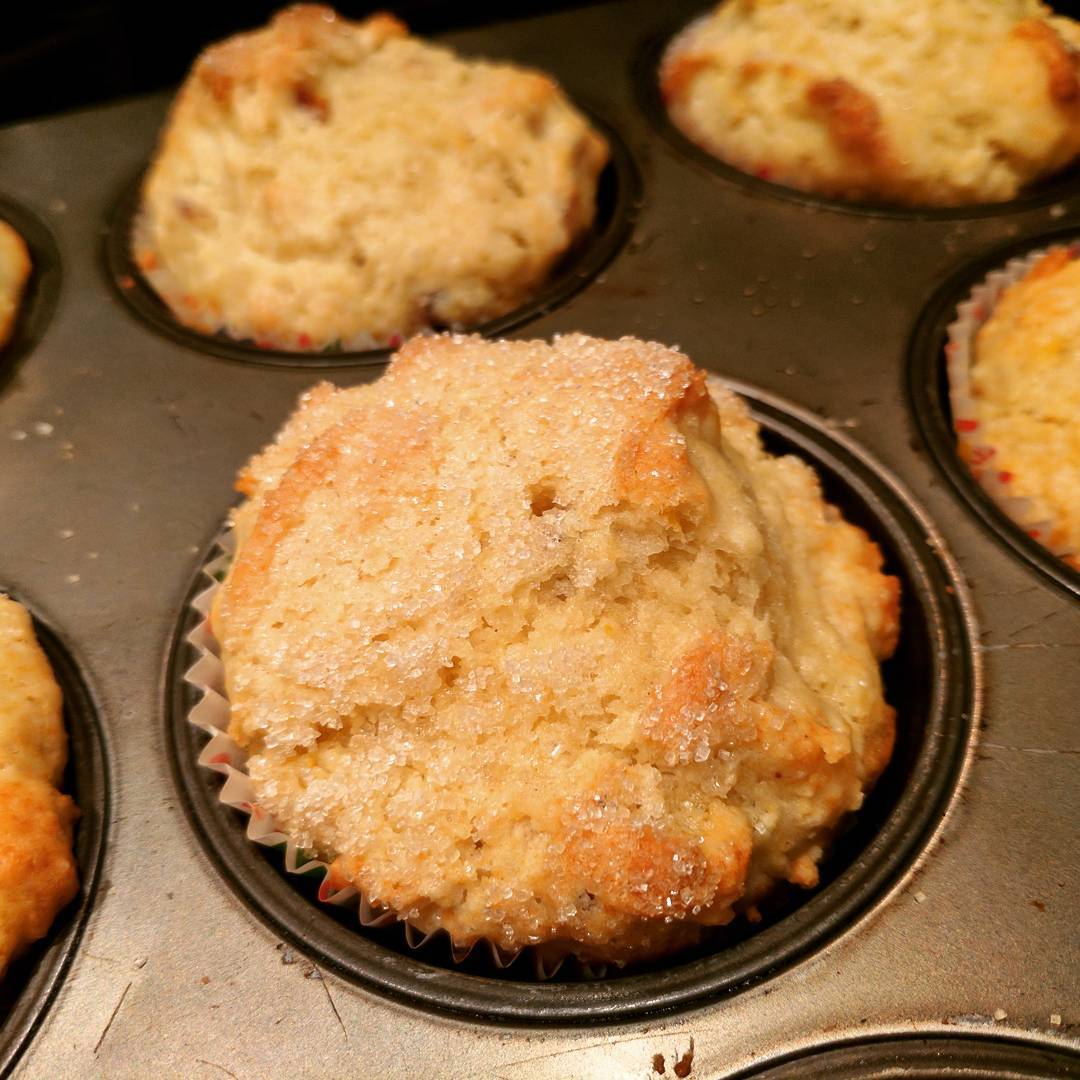
Here are my muffins in a dark tin, risen high over their paper cases with craggy tops and a sparkling crust of coarse sugar.
Gluten-free baking replaces wheat flour with a blend of other flours and starches, and muffins are one of the most forgiving places to do it, since they rely on eggs and chemical leavening and not on a gluten network. I rest the batter for half an hour before baking, which lets the flours hydrate and avoids a gritty texture. The coarse sugar on top does not melt in the oven, so it stays crunchy. Gluten-free bakes turn up all through my work.
This article is written in Corey’s voice for this tribute site, based on his captions and blog. His own words are the quotes above.
Gluten-Free Muffins with a Coarse Sugar Top
The American muffin is a quick bread raised with baking powder rather than yeast, a style that took hold in the 19th century once chemical leaveners became available. This gluten-free version uses a rice-based all-purpose blend with a little almond flour for moisture, and a short rest so the batter hydrates and bakes up tender instead of gritty. A heavy sprinkle of coarse sugar gives the crackly bakery top.
Ingredients
Dry ingredients
- 250 g gluten-free all-purpose flour blend that contains xanthan gum (about 1 3/4 cups)
- 50 g almond flour (1/2 cup)
- 150 g granulated sugar (3/4 cup)
- 10 g baking powder (2 teaspoons)
- 1/2 teaspoon baking soda
- 3 g fine sea salt (1/2 teaspoon)
Wet ingredients
- 2 large eggs, room temperature (about 100 g without shells)
- 200 g buttermilk, room temperature (3/4 cup plus 1 tablespoon)
- 115 g unsalted butter, melted and cooled (1/2 cup)
- 10 g pure vanilla extract (2 teaspoons)
- Finely grated zest of 1 lemon (optional)
Fruit and topping
- 200 g blueberries, fresh or frozen (about 1 1/3 cups)
- 40 g coarse sugar such as turbinado, demerara or sparkling sugar (3 tablespoons)
Method
- Whisk the flour blend, almond flour, sugar, baking powder, baking soda and salt in a large bowl, breaking up any lumps of almond flour.
- In a second bowl whisk the eggs, buttermilk, melted butter, vanilla and zest until smooth.
- Pour the wet ingredients over the dry and stir with a spatula until evenly combined and smooth. With no gluten to toughen, there is no need to worry about overmixing.
- Cover the bowl and rest the batter at room temperature for 30 minutes. It will thicken noticeably as the rice flour and starches absorb the liquid.
- Heat the oven to 400°F (200°C) and line a 12-cup muffin pan with paper liners. Fold the blueberries into the rested batter; if frozen, add them straight from the freezer.
- Divide the batter among the cups, filling them nearly to the top, and cover each one generously with coarse sugar.
- Bake for 20 to 24 minutes, until the tops are domed and golden and a skewer in the center comes out clean. The center should reach about 205°F (96°C).
- Cool in the pan for 10 minutes, then move to a rack. Gluten-free muffins are fragile when hot and firm up as they cool.
Chef’s notes
- A sandy or gritty texture means the batter was not rested. The 30 minute hydration is the most important step in gluten-free quick breads.
- A gummy, wet center means the muffins were underbaked; gluten-free batters hold more water and need a full bake. Trust the skewer and the internal temperature, not the color of the top.
- If your blend has no xanthan gum, add 3/4 teaspoon to the dry ingredients or the muffins will crumble apart.
- Fine sugar melts into the crust. Only a coarse crystal survives the oven and stays crunchy.
All-purpose blend or individual flours?
All-purpose gluten-free blend with a binder
King Arthur Baking Company; America's Test Kitchen
A balanced mix of rice flours and starches with xanthan gum or psyllium is designed to behave like wheat flour, so familiar recipes convert with predictable results. The main recipe follows this method.
Single flours chosen for flavor
Alice Medrich, Flavor Flours
This approach builds each recipe around one or two flours, such as oat, buckwheat, sorghum, corn or nut flours, and treats them as ingredients with their own taste and texture instead of stand-ins for wheat. The results can be more interesting than a neutral blend, but every recipe has to be developed for its particular flour.
Drawn from the methods of
- King Arthur Baking Company
- America's Test Kitchen, The How Can It Be Gluten Free Cookbook (2014)
- Alice Medrich, Flavor Flours (2014)
Corey has not published his own formula for this piece. This reference recipe is compiled from the published methods of the chefs and bakers listed above, written in our own words.