Pinwheel Sugar Cookies
April 25, 2017
“Pinwheel sugar cookies”
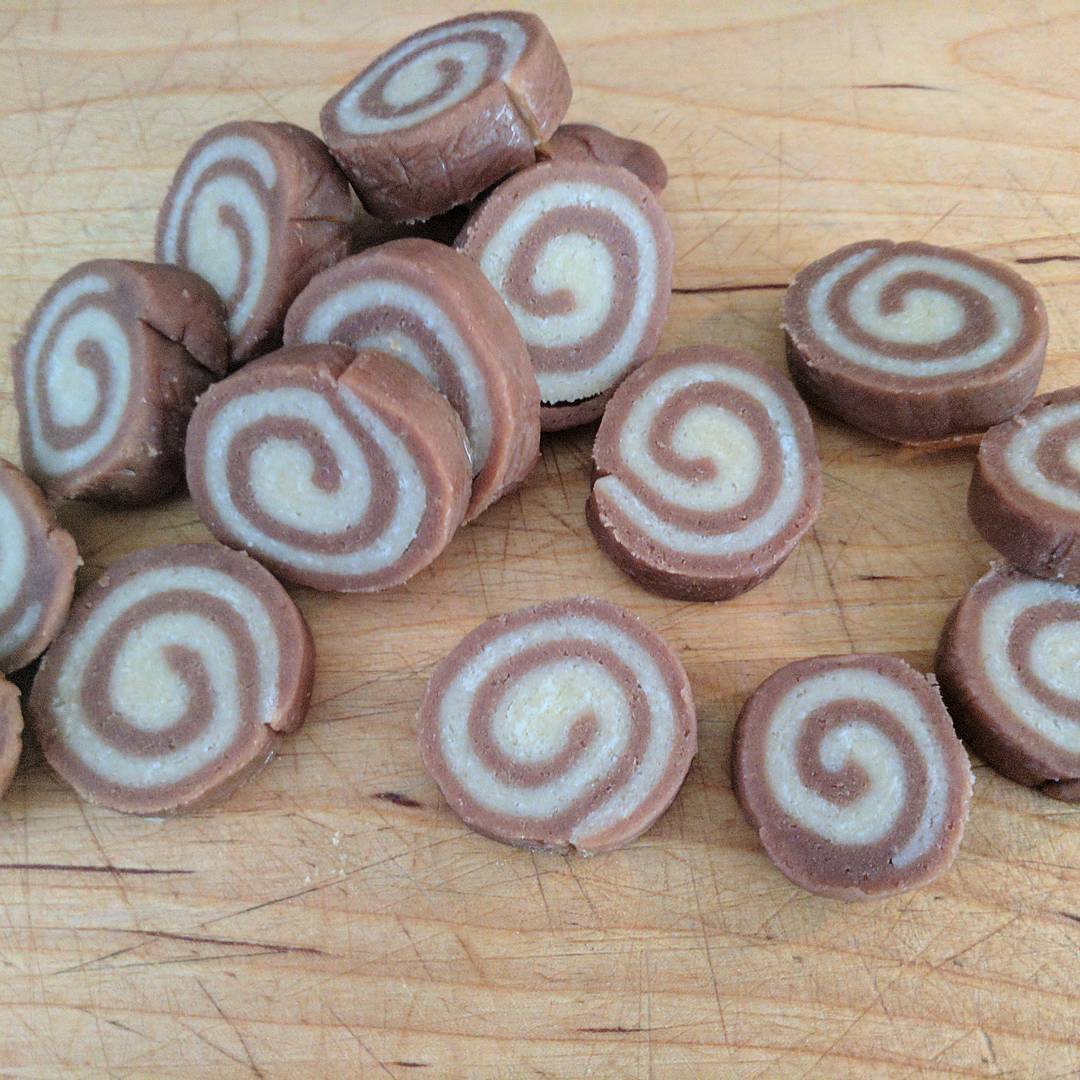
This is a scatter of my unbaked pinwheel cookies on a wooden board, each one a neat spiral of chocolate and vanilla dough.
To make pinwheels you roll a sheet of vanilla dough and a sheet of chocolate dough to the same size, stack them, and roll the pair into a tight log. The log gets chilled until firm and then sliced into rounds. They belong to the family of icebox cookies, so called because the dough waits in the icebox until you need it. I got a clean line between the two colors here, which means both doughs were at the same temperature and the log was chilled thoroughly before I cut it. I posted these in April 2017, in week two of my cookie course.
This article is written in Corey’s voice for this tribute site, based on his captions and blog. His own words are the quotes above.
Pinwheel and Checkerboard Icebox Cookies
Icebox cookies are slice-and-bake cookies: the dough is shaped into a log, chilled until firm, then cut into rounds or squares. They became a staple of American home baking in the 1920s and 1930s as iceboxes and then electric refrigerators reached ordinary kitchens. This version uses a French-style sablé dough in vanilla and chocolate, built into two classic two-tone patterns.
Ingredients
Base dough
- 340 g unsalted butter, cool room temperature (1 1/2 cups)
- 150 g powdered sugar (1 1/4 cups)
- 4 g fine sea salt (3/4 teaspoon)
- 3 large egg yolks (about 55 g)
- 15 g pure vanilla extract (1 tablespoon)
Vanilla half
- 225 g all-purpose flour (1 3/4 cups plus 1 tablespoon)
Chocolate half
- 195 g all-purpose flour (1 1/2 cups plus 1 tablespoon)
- 30 g Dutch-process cocoa powder (1/3 cup), sifted
Assembly
- 1 large egg white, lightly beaten, for glue
- Coarse or sanding sugar for the edges (optional)
Method
- Beat the butter, powdered sugar and salt on low to medium speed until smooth and creamy but not fluffy, about 2 minutes. Beat in the yolks and vanilla, then divide the mixture into two equal portions by weight.
- Mix the plain flour into one portion on low speed just until a dough forms. Whisk the remaining flour with the cocoa and mix it into the other portion the same way.
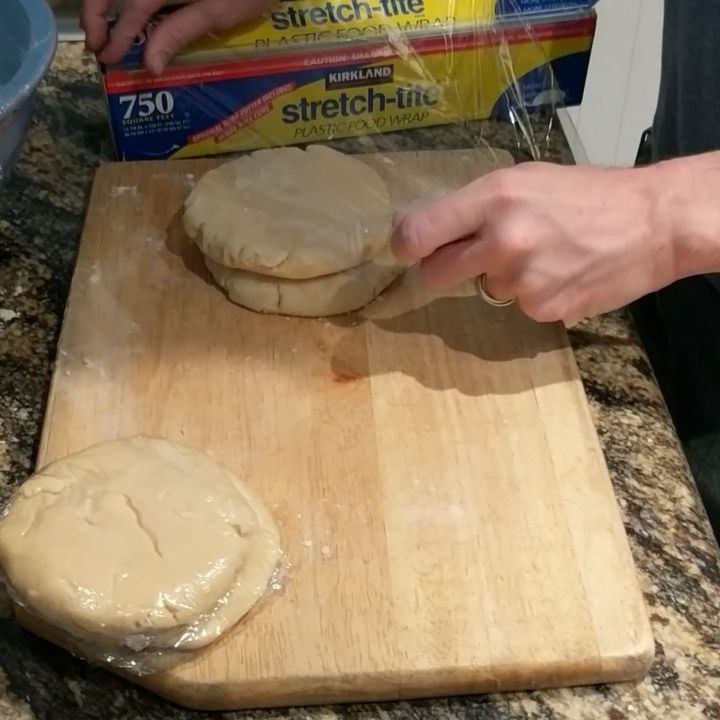
- Divide each dough in half so you have four pieces of about 250 g. For the pinwheels, roll one vanilla and one chocolate piece between sheets of parchment into rectangles about 25 by 18 cm (10 by 7 inches). For the checkerboards, pat the other two pieces into neat slabs about 20 by 10 cm (8 by 4 inches) and 1 cm (3/8 inch) thick. Chill everything for 30 minutes.
- Pinwheels: peel the parchment from the thin rectangles, brush the vanilla sheet with egg white and lay the chocolate sheet on top. Let it soften for a few minutes until flexible, then roll up tightly from a long side, using the parchment to lift. Wrap and chill the log.
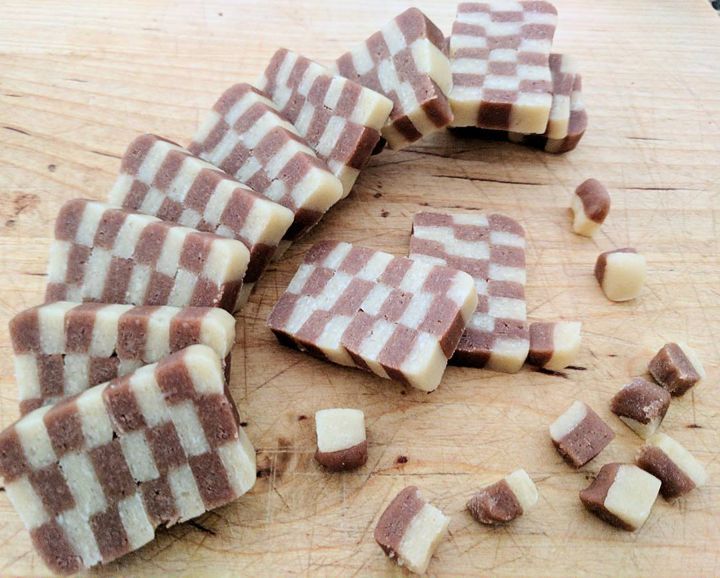
- Checkerboards: cut each slab lengthwise into 10 strips 1 cm (3/8 inch) wide. Brushing lightly with egg white between every strip, build two logs of 3 strips by 3 strips, alternating the colors like a chessboard. One log starts with vanilla in the corner and the other with chocolate.
- Wrap all the logs tightly, square the checkerboard logs against the counter, and chill for at least 3 hours or overnight until very firm. Roll the pinwheel log in coarse sugar first if you want a sparkling edge.
- Heat the oven to 350°F (175°C) and line baking sheets with parchment. Slice the logs 6 mm (1/4 inch) thick with a thin sharp knife, turning the log a quarter turn every few cuts, and space the slices 2.5 cm (1 inch) apart.
- Bake for 12 to 14 minutes, until the vanilla dough is set and just turning golden at the edges. Cool on the sheets for 5 minutes, then move to a rack.
Chef’s notes
- If a sheet of dough cracks when you roll the pinwheel, it is too cold. Wait a few minutes and try again; if it smears, it is too warm and needs 10 minutes back in the refrigerator.
- Gaps and separated layers after baking mean the pieces were not glued or pressed together firmly. Use a thin, even film of egg white and press each layer down as you build.
- Creaming the butter until fluffy beats in air that makes the cookies puff and blurs the pattern. Stop when the mixture is smooth.
- The wrapped logs freeze well for up to 2 months. Slice them after 10 minutes at room temperature and add a minute to the baking time.
Drawn from the methods of
- Dorie Greenspan, Dorie's Cookies (2016)
- Maida Heatter, Maida Heatter's Book of Great Cookies (1977)
- Rose Levy Beranbaum, Rose's Christmas Cookies (1990)
Corey has not published his own formula for this piece. This reference recipe is compiled from the published methods of the chefs and bakers listed above, written in our own words.