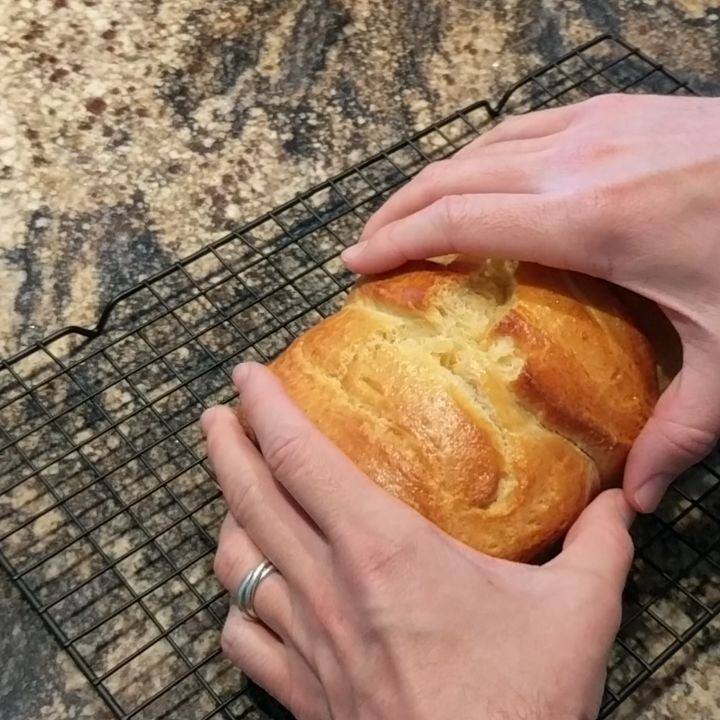
First Brioche Loaf
June 7, 2017
“First attempt at a brioche loaf. Too crunchy but not the worst.”
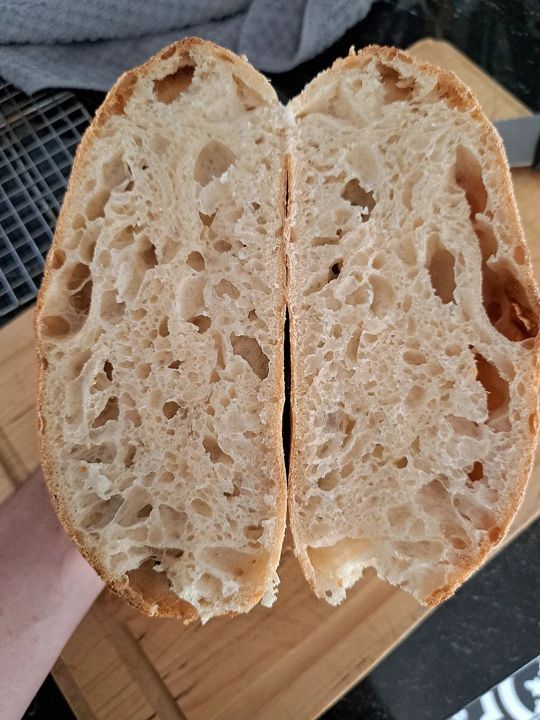
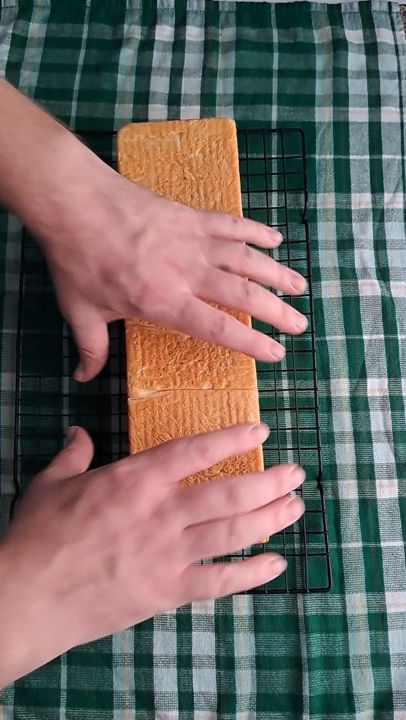
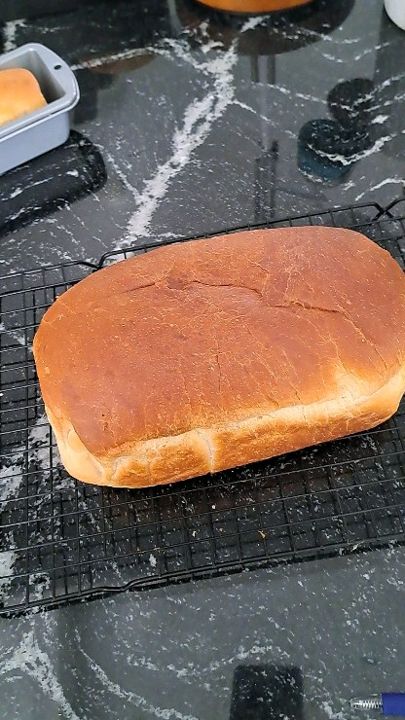
My first brioche loaf, small and golden, held in both hands over the cooling rack. Too crunchy, but not the worst.
Brioche should have a thin, soft, deeply colored crust, so crunchy tells me something specific: the oven was a little hot or the bake a little long for a small loaf, or there wasn't quite enough butter worked in. The dough is also notoriously sticky. The butter is added piece by piece to an already developed dough, and it has to be chilled for hours before it can be shaped. A first loaf that holds a clean shape is a good first loaf. This post is a video on Instagram.
This article is written in Corey’s voice for this tribute site, based on his captions and blog. His own words are the quotes above.
Brioche: Loaf and Braided Buns
Brioche is the richest of the classic French yeast doughs, made with eggs in place of most of the water and with butter worked in at up to half the weight of the flour. It has been recorded in France since the early 15th century, with Normandy, famous for its butter, usually named as its home.
Ingredients
Dough
- 500 g bread flour (about 4 cups)
- 50 g granulated sugar (1/4 cup)
- 10 g fine sea salt (1 3/4 tsp)
- 10 g instant yeast (1 tbsp)
- 300 g eggs, cold (6 large)
- 30 g whole milk, cold (2 tbsp)
- 250 g unsalted butter, cool but pliable, in small pieces (2 sticks plus 2 tbsp)
Finish
- 1 egg beaten with 1 egg yolk and a pinch of salt, for egg wash
- Pearl sugar, for the buns (optional)
Method
- Put the flour, sugar, salt and yeast in the mixer bowl, keeping the salt and yeast apart, and add the eggs and milk. Mix with the dough hook on low for 4 minutes, then on medium for 8 to 10 minutes, until the dough is strong, elastic and clears the sides of the bowl.
- With the mixer on medium-low, add the butter a few pieces at a time, waiting until each addition disappears. This takes about 10 minutes. Continue kneading 5 minutes more, until the dough is glossy, pulls away from the bowl, and stretches into a thin translucent window.
- Cover and let rise at room temperature for 1 hour. Fold the dough over itself a few times to deflate, cover tightly, and refrigerate overnight, 8 to 16 hours. The butter firms and the dough becomes workable like modelling clay.
- For a loaf, divide 570 g of cold dough into 6 pieces, round each into a tight ball, and set them in two rows of three in a buttered 21 x 11 cm (8 1/2 x 4 1/2 in) loaf pan.
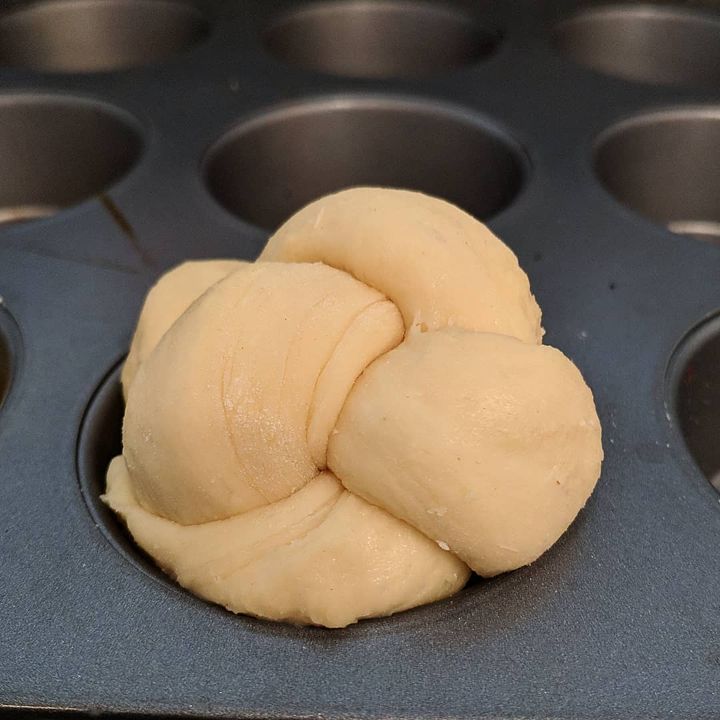
- For braided buns, divide the remaining dough into 8 pieces of about 70 g. Roll each into a 30 cm (12 in) rope, cut it into three, pinch the tops together, braid, and tuck both ends under. Space on a parchment-lined tray.
- Brush with egg wash and proof at 75-80°F (24-27°C) until doubled and very wobbly: about 2 to 2 1/2 hours for the loaf and 1 1/2 hours for the buns. Keep the proof below 82°F (28°C) so the butter does not melt out.
- Egg wash again. Bake the buns at 375°F (190°C) for 14 to 18 minutes, until deep golden.
- Bake the loaf at 350°F (175°C) for 35 to 40 minutes, until dark golden and 190°F (88°C) inside. Tent with foil if the top browns too fast. Unmould after 5 minutes and cool completely on a rack before slicing.
Chef’s notes
- Develop the gluten fully before the butter goes in. If the butter is added to a weak dough, it coats the flour and the dough never becomes strong enough to rise tall.
- A greasy dough means the butter got too warm. Stop, chill the bowl for 15 minutes, and continue. The finished dough should be no warmer than about 77°F (25°C).
- Do not skip the overnight chill. It improves flavour and makes shaping possible. Warm brioche dough is too soft to braid.
- Day-old brioche makes the best French toast and bostock.
Drawn from the methods of
- Thomas Keller and Sebastien Rouxel, Bouchon Bakery (2012)
- Ferrandi Paris, French Pâtisserie (2017)
- Peter Reinhart, The Bread Baker's Apprentice (2001)
- Jeffrey Hamelman, Bread (2004)
Corey has not published his own formula for this piece. This reference recipe is compiled from the published methods of the chefs and bakers listed above, written in our own words.