Quick Puff Pastry: So Many Layers, So Much Less Time
June 17, 2017
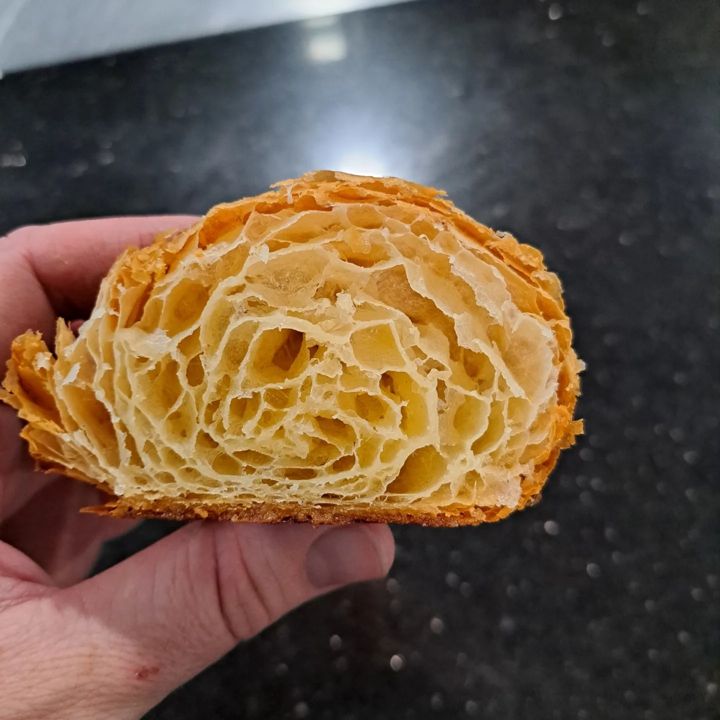
“Layered goodness of quick puff pastry. So many layers, so much less time!”
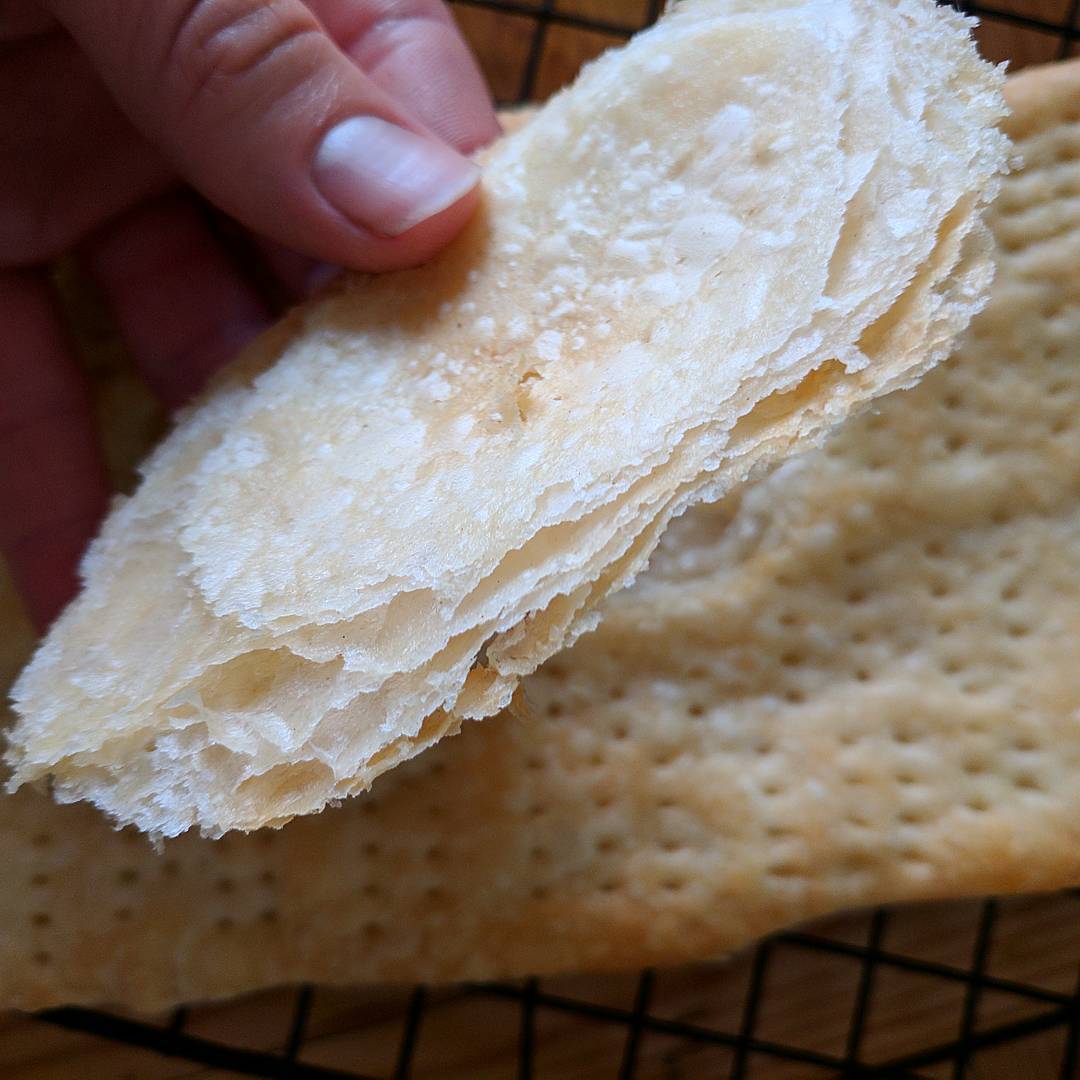
A piece of baked puff pastry, docked with rows of tiny holes, being peeled apart by hand to show thin, crisp, translucent sheets. So many layers, so much less time.
Classic puff pastry wraps a single block of butter in dough and takes most of a day. Quick, or rough, puff mixes chunks of butter straight into the dough and then gives it the same series of folds. The butter flattens into irregular streaks, not perfect sheets, so the rise is a little less even, but the flavor is the same and it takes about an hour. The holes are docking: I pricked the dough so it bakes flat for use in a mille-feuille.
This article is written in Corey’s voice for this tribute site, based on his captions and blog. His own words are the quotes above.
Rough Puff Pastry
Rough puff, called feuilletage rapide or demi-feuilletage in French kitchens, is the quick version of puff pastry. Rather than wrapping the dough around a single block of butter, cold chunks of butter are mixed straight into the flour and then rolled and folded into layers. It rises a little less evenly than classic puff, but takes a fraction of the time and tastes just as buttery.
Ingredients
Dough
- 250 g all-purpose flour (2 cups)
- 5 g fine sea salt (1 tsp)
- 250 g unsalted butter, very cold, in 2 cm (3/4 in) cubes (2 sticks plus 2 tbsp)
- 110 to 125 g ice water (about 1/2 cup)
- 5 g lemon juice or white vinegar, optional (1 tsp)
Method
- Toss the flour and salt in a wide bowl. Add the butter cubes and toss to coat, then press each cube flat between your fingers. Leave the pieces large, like thick flakes. Do not rub them in.
- Stir the lemon juice into 110 g of the ice water and drizzle it over the flour while tossing with a fork. Add the remaining water only if needed. The dough should be shaggy and barely holding together, with visible slabs of butter.
- Tip onto a floured bench and press into a rough rectangle. Roll it to about 15 x 40 cm (6 x 16 in). It will be crumbly and ragged at this stage, which is normal.
- Fold in thirds like a letter, using a bench knife to lift the dough, and turn it 90 degrees. Roll out and fold again. After the second fold the dough will start to look smooth. Wrap and chill for 30 minutes.
- Give the dough two more letter folds, for four in total, keeping the edges straight and the corners square. If the butter begins to feel soft or greasy at any point, chill the dough for 20 minutes before going on.
- Wrap tightly and rest in the refrigerator for at least 1 hour, or up to 2 days, before the final rolling. It can be frozen for 2 months.
- To use, roll to 3 mm (1/8 in) thick, cut with a sharp knife, and chill the cut shapes for 20 minutes. Bake at 400°F (200°C) until deeply golden and crisp throughout, usually 20 to 30 minutes depending on the size.
Chef’s notes
- The most common mistake is breaking the butter down too far. If the mix looks like breadcrumbs you will get pie dough, not puff. You should see streaks of butter through the first two folds.
- Brush off excess flour before each fold. Flour trapped between the layers stops them fusing and leaves the pastry dusty and tough.
- Cut with a sharp knife straight down, and keep egg wash away from the cut edges. Squashed or glued edges will not rise.
- Pastry that shrinks in the oven was not rested long enough. Always chill after the final rolling and cutting.
Drawn from the methods of
- Claire Saffitz, Dessert Person (2020)
- Bo Friberg, The Professional Pastry Chef
- Le Cordon Bleu
- King Arthur Baking Company
Corey has not published his own formula for this piece. This reference recipe is compiled from the published methods of the chefs and bakers listed above, written in our own words.