Chocolate from the Bean: Hand Ground, Tempered and Molded
September 5, 2017 to September 7, 2017
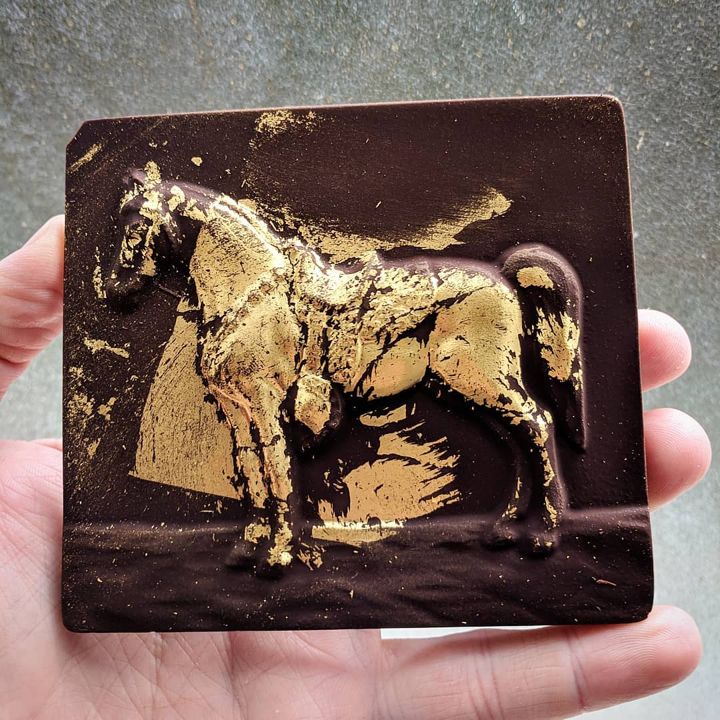
“Hand ground, tempered and molded. chocolate tempered heart grainybutgood @dandelionchocolate”
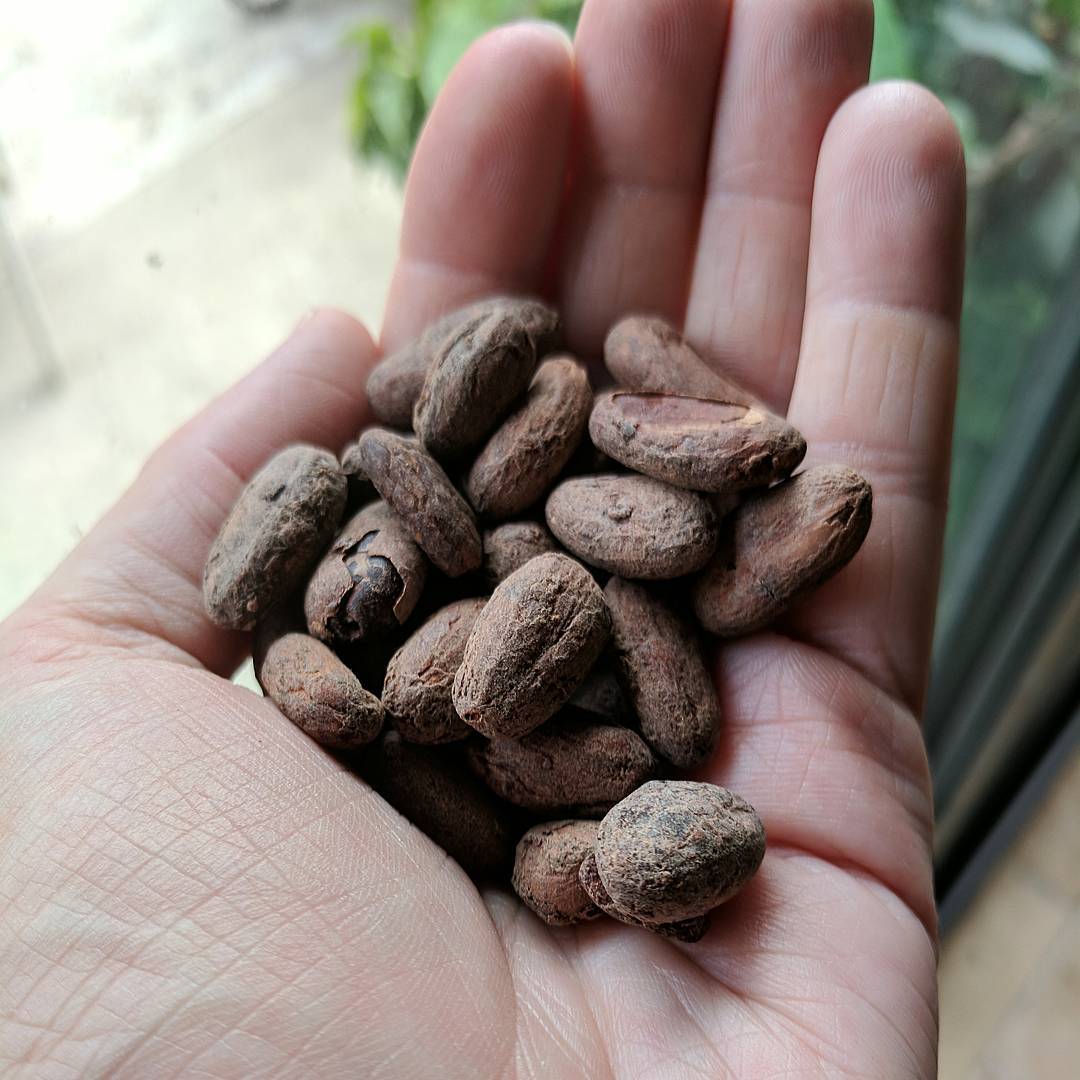
“I will soon be able to make my own chocolate from scratch. Wish me luck! chocolate fromscratch from @dandelionchocolate”
First, a handful of whole roasted cacao beans and an announcement: I would soon be able to make my own chocolate from scratch. Wish me luck! Two days later I had three small dark chocolate hearts, hand ground, tempered and molded. Grainy but good. The beans came from Dandelion Chocolate in San Francisco.
Making chocolate from the bean is a different craft from working with finished chocolate. The beans are roasted, cracked and winnowed to remove the husk, and the nibs are ground until the cocoa butter melts and the mass turns liquid. Factories refine it for days to get particles too small for the tongue to feel. Ground by hand, it will always be a little grainy, which is exactly what I got. The shine on my hearts shows the temper worked.
This article is written in Corey’s voice for this tribute site, based on his captions and blog. His own words are the quotes above.
Small Batch Bean-to-Bar Dark Chocolate
Cacao has been roasted and ground on stone in Mesoamerica for thousands of years, and smooth eating chocolate only became possible after Rodolphe Lindt developed the conche in 1879. The American craft movement that began in the late 1990s showed that the whole process can be scaled down to a kitchen counter. This is a 70 percent dark chocolate made from whole beans and sugar.
Ingredients
Chocolate
- 1 kg raw fermented, dried cacao beans (2.2 pounds), which gives about 700 g roasted nibs
- 300 g granulated cane sugar (1 1/2 cups)
Equipment
- Rimmed baking sheet and oven
- Rolling pin and heavy zip bag, plus a hair dryer or small fan and a wide bowl for winnowing
- Tabletop stone melanger (wet grinder), or a heavy mortar and pestle or metate for the rustic method
- Digital thermometer and bar molds
Method
- Sort the beans on a tray and discard any that are flat, broken, moldy or stuck together, along with stones and twigs. Do not taste raw beans; roasting is the step that makes them safe to eat.
- Heat the oven to 275°F (135°C). Spread the beans in a single layer and roast for 20 to 30 minutes, stirring once, until the sharp vinegar smell gives way to a warm brownie aroma and a cooled bean cracks cleanly, with a husk that slips off. Cool completely.
- Crack the beans by putting them in a heavy bag and rolling firmly with a rolling pin until they break into pieces of nib and loose papery husk.
- Winnow outdoors or over a sink: pour the cracked beans slowly from one bowl to another in front of a hair dryer on a cool setting or a fan, so the light husk blows away and the heavier nibs fall. Repeat until almost no husk is left, then weigh out 700 g of nibs.
- Warm the nibs and the melanger bowl gently to about 120°F (50°C), then start the machine and add the nibs a handful at a time. Within 30 to 60 minutes friction and pressure turn them into a thick, flowing paste called cocoa liquor.
- Add the sugar a few spoonfuls at a time over 15 minutes. Run the melanger for 24 to 48 hours, until the chocolate feels completely smooth when you rub a drop against the roof of your mouth.
- The same long run does the work of conching. Leave the lid off or ajar for the first several hours so sharp, acidic aromas can escape, and taste as you go; stop when the flavor is rounded and no longer sour.
- To make it without a melanger, pulse the warm nibs in a food processor to a rough paste, then grind in a warmed mortar or on a metate, working in the sugar. Be honest with yourself about the result: it will be grainy and rustic, like traditional stone-ground Mexican chocolate, because hand tools cannot reach the fine particle size a machine can.
- Temper the chocolate. Heat it to 122°F (50°C), cool it over a bowl of cool water while stirring constantly to 81 to 82°F (27 to 28°C), then warm it gently to 88 to 90°F (31 to 32°C) and test a smear, which should set glossy within 5 minutes.
- Pour into clean, dry molds, tap out the air bubbles and let the bars set in a cool place or the refrigerator until they release. Wrap airtight; the flavor continues to mellow over a week or two.
Chef’s notes
- Husk left in the nibs tastes woody and adds grit, and it is hard on the melanger stones. Winnow twice if you need to, and pick out the last pieces by hand.
- Chocolate made with only beans and sugar is thick. If it will not flow in the melanger or is hard to mold, warm it slightly, or add 30 to 50 g of melted cocoa butter.
- Any water at all will ruin the batch. Make sure the melanger, the sugar and every tool are bone dry, and never add liquid flavorings.
- If the bars come out dull or streaky, the temper was missed, which is common with home chocolate. Remelt and temper again, or stir in a few shavings of an earlier well-tempered bar as seed.
Two ingredients or added cocoa butter?
Beans and sugar only
Dandelion Chocolate and many American craft makers
Using nothing but cacao and sugar puts the character of a single origin in front, with no added fat, vanilla or lecithin to soften it. The main recipe follows this method, and accepts a thicker chocolate that is harder to work with.
Added cocoa butter, and often lecithin and vanilla
Traditional European makers such as Valrhona and Callebaut
Extra cocoa butter and a little lecithin make the chocolate more fluid, so it refines, tempers and molds more easily and melts more smoothly on the tongue. Makers who work this way see it as the classic route to a refined texture and a consistent product.
Drawn from the methods of
- Dandelion Chocolate, Making Chocolate: From Bean to Bar to S'more (2017)
- Peter Greweling, Chocolates and Confections (2007)
- John Nanci, Chocolate Alchemy
Corey has not published his own formula for this piece. This reference recipe is compiled from the published methods of the chefs and bakers listed above, written in our own words.