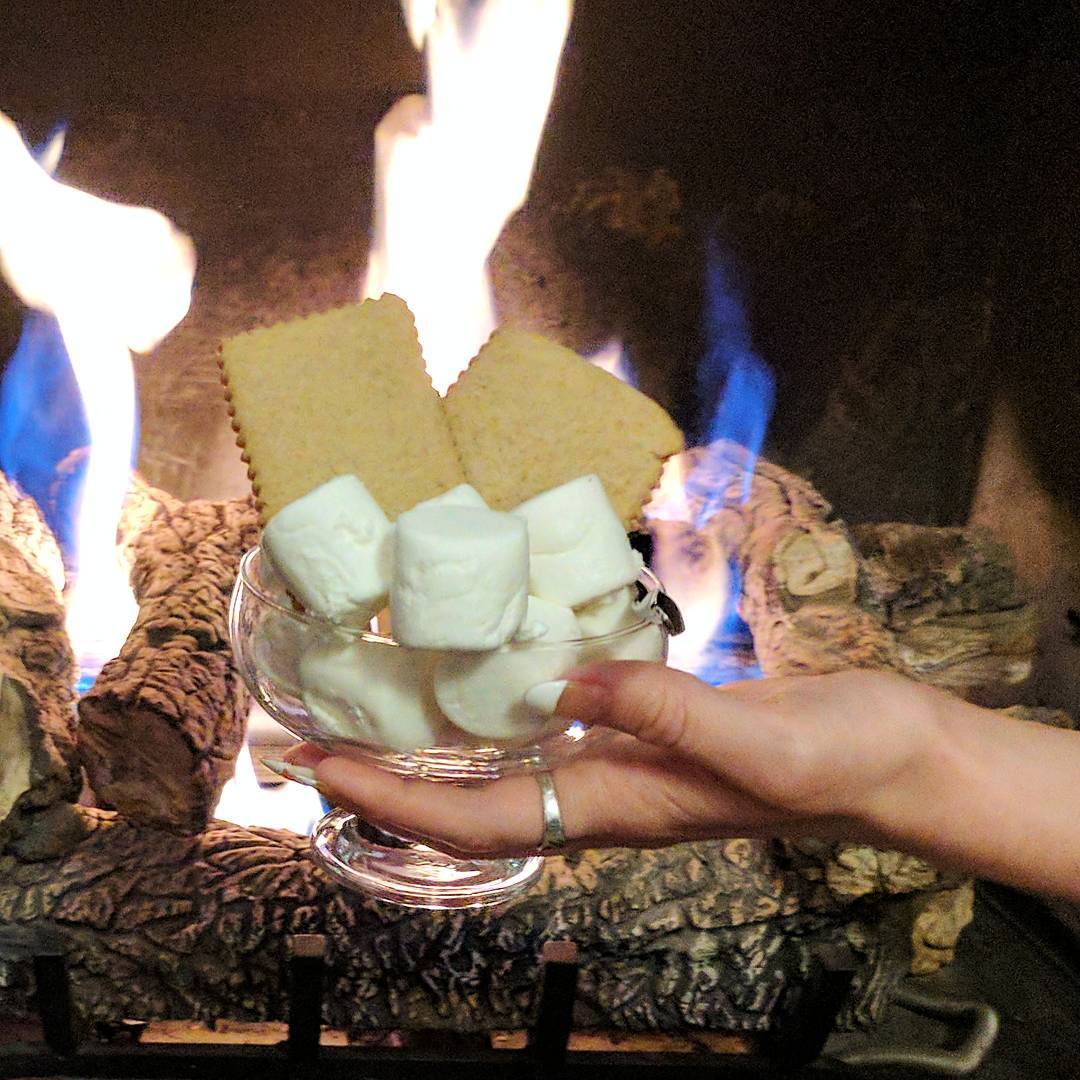
Graham Crackers, Need I Say More?
April 11, 2017
“Graham Crackers, need I say more?”
I held up a glass dish of my homemade marshmallows and graham crackers in front of a roaring fire. The obvious question was my hashtag: #wheresthechocolate.
Graham crackers are named for Sylvester Graham, a nineteenth-century American minister who promoted coarse whole wheat flour as part of a plain diet. He would not recognize today's sweet version. Made from scratch with whole wheat flour, honey and a little cinnamon, they are crisper and more flavorful than the boxed kind, and they are the foundation of every s'more and many cheesecake crusts, including several of mine in this collection.
This article is written in Corey’s voice for this tribute site, based on his captions and blog. His own words are the quotes above.
Homemade Honey Graham Crackers
The graham cracker is named for Sylvester Graham, a 19th-century American minister and diet reformer who promoted coarsely ground whole wheat flour. His plain health food was later sweetened by commercial bakeries into the honey cracker known today. Made at home with real graham or whole wheat flour, butter and honey, it has a deeper, toastier flavor than the boxed version.
Ingredients
Dough
- 190 g all-purpose flour (1 1/2 cups)
- 130 g graham flour or stone-ground whole wheat flour (1 cup)
- 100 g dark brown sugar (1/2 cup, packed)
- 5 g baking soda (1 teaspoon)
- 4 g fine sea salt (3/4 teaspoon)
- 1/2 teaspoon ground cinnamon
- 100 g unsalted butter, cold, cut into small cubes (7 tablespoons)
- 85 g honey (1/4 cup)
- 75 g whole milk (5 tablespoons)
- 10 g pure vanilla extract (2 teaspoons)
Topping (optional)
- 25 g granulated sugar (2 tablespoons)
- 1/2 teaspoon ground cinnamon
Method
- Pulse both flours, the brown sugar, baking soda, salt and cinnamon in a food processor to combine. Add the cold butter and pulse until the mixture looks like coarse meal with no visible lumps of butter.
- Whisk the honey, milk and vanilla together until the honey dissolves. Pour this over the flour mixture and pulse just until the dough comes together in a soft, sticky mass.
- Turn the dough onto plastic wrap, pat it into a flat rectangle about 2.5 cm (1 inch) thick, wrap and refrigerate for at least 1 hour, until firm.
- Divide the dough in half. Roll each piece on a well-floured sheet of parchment to an even 3 mm (1/8 inch), dusting the top with flour as needed.
- Trim the edges straight and cut the sheet into 7 cm (2 3/4 inch) squares with a ruler and a pastry wheel or knife, leaving them in place. Dock each square with a fork or skewer and sprinkle with cinnamon sugar if using.
- Slide the parchment onto baking sheets and chill for 20 minutes while the oven heats to 350°F (175°C).
- Bake for 15 to 18 minutes, turning the sheets halfway, until the crackers are a deep even brown and feel firm at the edges. Recut along the lines with the wheel while they are still hot.
- Cool completely on the sheets. The crackers crisp fully as they cool, and the scraps can be gathered, chilled and rolled once more.
Chef’s notes
- This is a sticky dough because of the honey. Keep it cold, flour the parchment generously and return it to the refrigerator the moment it turns soft.
- If the crackers are chewy rather than crisp, they were rolled too thick or pulled too soon. Bake them to a darker brown than seems right, or dry them for 5 to 10 minutes more at 300°F (150°C).
- Docking is not decoration. The holes let steam escape so the crackers bake flat instead of blistering.
- True graham flour is coarsely ground whole wheat. Regular whole wheat flour works well; whole wheat pastry flour gives a more delicate cracker.
Drawn from the methods of
- Nancy Silverton, Nancy Silverton's Pastries from the La Brea Bakery (2000)
- Stella Parks, BraveTart (2017)
- King Arthur Baking Company
Corey has not published his own formula for this piece. This reference recipe is compiled from the published methods of the chefs and bakers listed above, written in our own words.