Chocolate and Cream Layer Slices
January 2, 2024
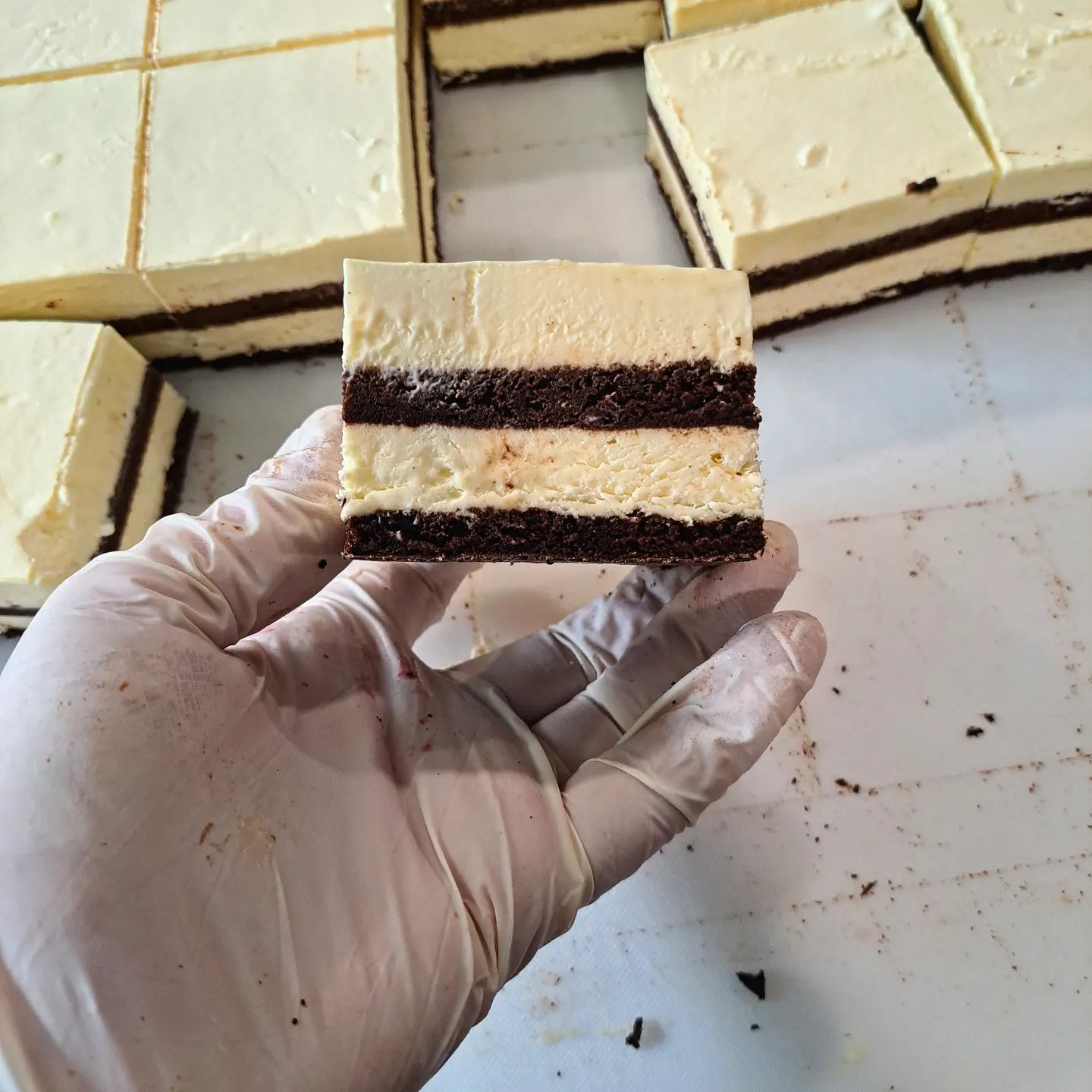
“After what feels like a lifetime, the cake and filling is even on the bottom AND the top!”
After what feels like a lifetime, the cake and filling is even on the bottom AND the top! I'm holding up a single bar cut from a sheet: two bands of dark chocolate cake and two bands of pale cream filling, each layer the same thickness and every line dead level.
Anyone who has built a layered sheet cake knows why I thought this deserved a post. Even layers mean the cake was baked flat and trimmed true, the filling was portioned by weight and spread with a frame or guide, and the whole slab was chilled firm before being cut with a hot, clean knife. It is quiet, unglamorous precision, and it is what separates a pastry case slice from a home one.
This article is written in Corey’s voice for this tribute site, based on his captions and blog. His own words are the quotes above.
Chocolate and Vanilla Bavarian Slice
Bavarian cream, or bavarois, is a vanilla custard set with gelatin and lightened with whipped cream, a staple of French pastry since the early nineteenth century and closely associated with Antonin Carême. Layered with chocolate sponge in a square frame and cut into bars, it becomes the kind of neat striped slice found in every pâtisserie case. The appeal is contrast: dark, tender cake against a cool, barely set cream.
Ingredients
Chocolate sponge sheet
- 4 large eggs (200 g), at room temperature
- 120 g granulated sugar (1/2 cup plus 2 Tbsp)
- 90 g all-purpose flour (3/4 cup)
- 30 g Dutch-process cocoa powder (1/3 cup)
- 30 g unsalted butter, melted and warm (2 Tbsp)
Soaking syrup
- 60 g water (1/4 cup)
- 60 g granulated sugar (1/4 cup plus 1 Tbsp)
- 1 tsp vanilla extract or 1 Tbsp dark rum
Vanilla bavarian cream
- 375 g whole milk (1 1/2 cups plus 1 Tbsp)
- 1 vanilla bean, split and scraped
- 120 g egg yolks (6 large)
- 90 g granulated sugar (scant 1/2 cup)
- 12 g powdered gelatin, 200 bloom (4 tsp), soaked in 60 g cold water
- 450 g heavy cream, 35% fat, cold (scant 2 cups)
Chocolate top
- 100 g dark chocolate, 60 to 66% cacao, chopped
- 100 g heavy cream (scant 1/2 cup)
Method
- Heat the oven to 375°F (190°C) and line a 13 x 18-inch (33 x 46 cm) half sheet pan with parchment. Whip the eggs and sugar over simmering water to 40°C (104°F), then whip off the heat until pale, tripled and holding a ribbon, 6-8 minutes.
- Sift the flour and cocoa over the foam in three additions, folding gently. Stir a scoop of batter into the warm butter, fold it back in, spread evenly in the pan and bake 10-12 minutes until the cake springs back. Cool, then cut two 8-inch (20 cm) squares.
- Boil the water and sugar for the syrup, cool, and add the vanilla or rum. Line an 8-inch (20 cm) square frame or pan with acetate or film, set one sponge square in the bottom, and brush it lightly with syrup.
- For the bavarian, bring the milk and vanilla to a simmer. Whisk the yolks and sugar, temper in the hot milk, and cook, stirring constantly, to 82-84°C (180-183°F). Remove from the heat, stir in the soaked gelatin and strain into a bowl.
- Cool the custard over an ice bath, stirring often, to 25-28°C (77-82°F). It should be cool and slightly thickened but still fluid.
- Whip the cream to soft peaks and fold it into the custard in two additions. Pour half over the sponge in the frame, chill 15 minutes in the freezer until just holding, then add the second sponge square, brush with syrup, and pour on the rest of the cream. Level the top.
- Refrigerate at least 6 hours, or freeze 2 hours and then refrigerate, until fully set.
- For the top, pour the simmering cream over the chocolate, stir until smooth, cool to about 35°C (95°F) and spread in a thin, even layer over the set bavarian. Chill 30 minutes.
- Lift off the frame and trim the four edges with a hot, dry knife. Cut in half, then cut each half into six bars about 1 1/4 inches (3 cm) wide, wiping the knife between cuts.
Chef’s notes
- If the custard goes above 85°C (185°F) the yolks scramble. Strain it at once and blend with an immersion blender to rescue a slightly grainy anglaise.
- Fold the cream in while the custard is still pourable. If the base has already begun to gel the result will be lumpy; warm it briefly over hot water and stir smooth before folding.
- Rubbery bavarian means too much gelatin or too little whipped cream. Weigh the gelatin, and stop whipping the cream at soft peaks so it folds in without deflating.
- A brief freeze before cutting gives the sharpest layers. Let the bars temper in the refrigerator for an hour before serving.
Drawn from the methods of
- Ferrandi Paris, French Pâtisserie (2017)
- Bo Friberg, The Professional Pastry Chef (2002)
- Gaston Lenôtre, Lenôtre's Desserts and Pastries (1977)
Corey has not published his own formula for this piece. This reference recipe is compiled from the published methods of the chefs and bakers listed above, written in our own words.