Fruit Tarts, "the Bane of My Existence"
January 2, 2024
“Ah, fruit tarts the bane of my existence...”
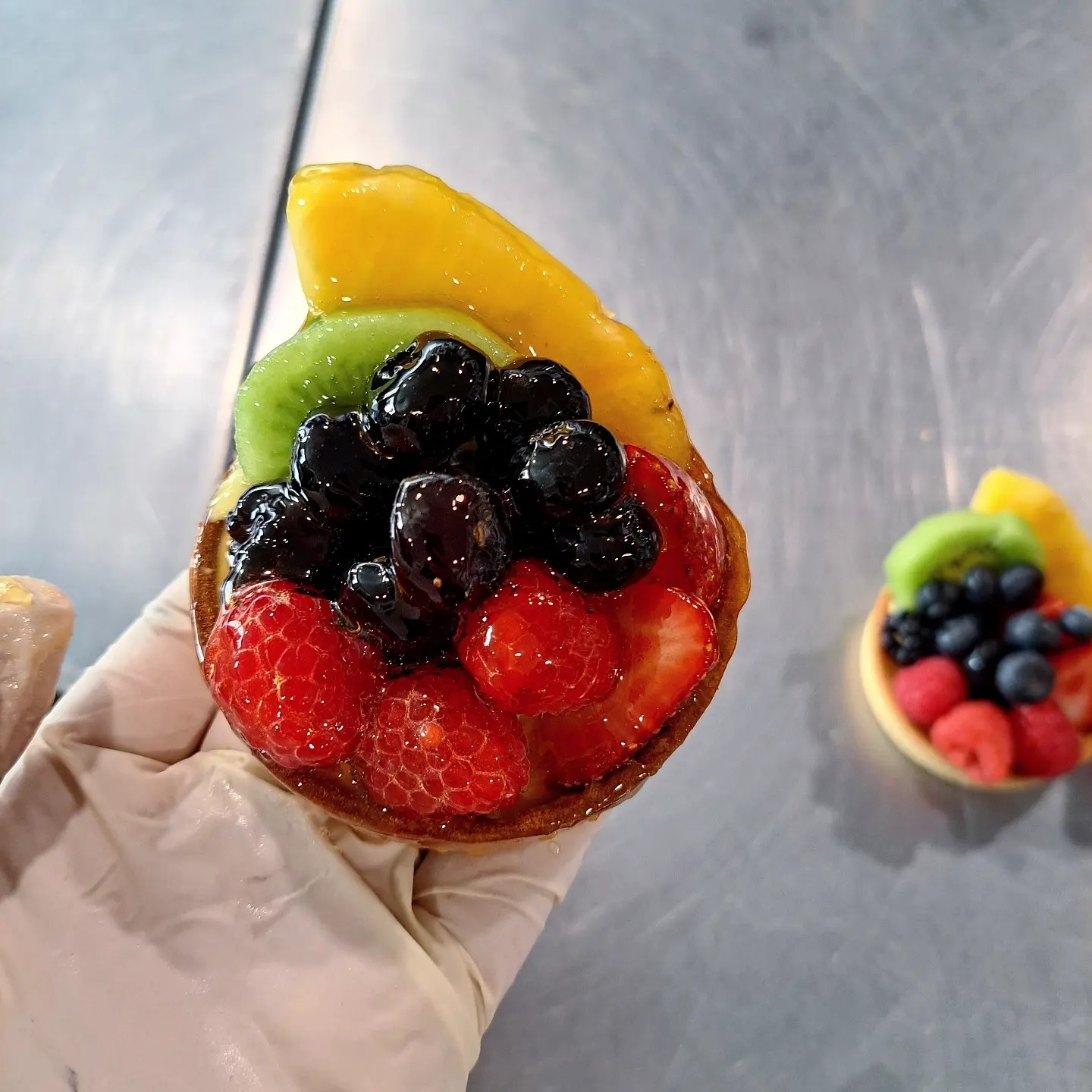
An individual fruit tart held up in my gloved hand: mango slices fanned along one edge, strawberry, kiwi and a tight cluster of glazed blueberries and blackberries, with a second tart waiting behind it.
Fruit tarts are the bane of my existence, and I think most pastry cooks would agree with me. You can't make them ahead because the shell softens and the fruit fades, every piece of fruit is a different shape, and each tart has to be arranged by hand, one at a time, and still match its neighbors. A thin coat of melted cocoa butter or white chocolate brushed inside the baked shell is the professional trick for keeping the pastry crisp under the cream.
This article is written in Corey’s voice for this tribute site, based on his captions and blog. His own words are the quotes above.
Fresh Fruit Tart
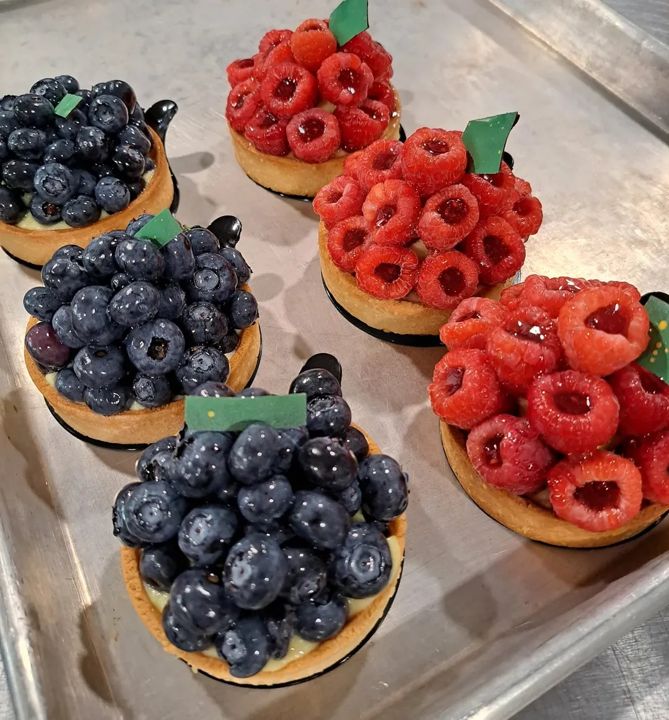
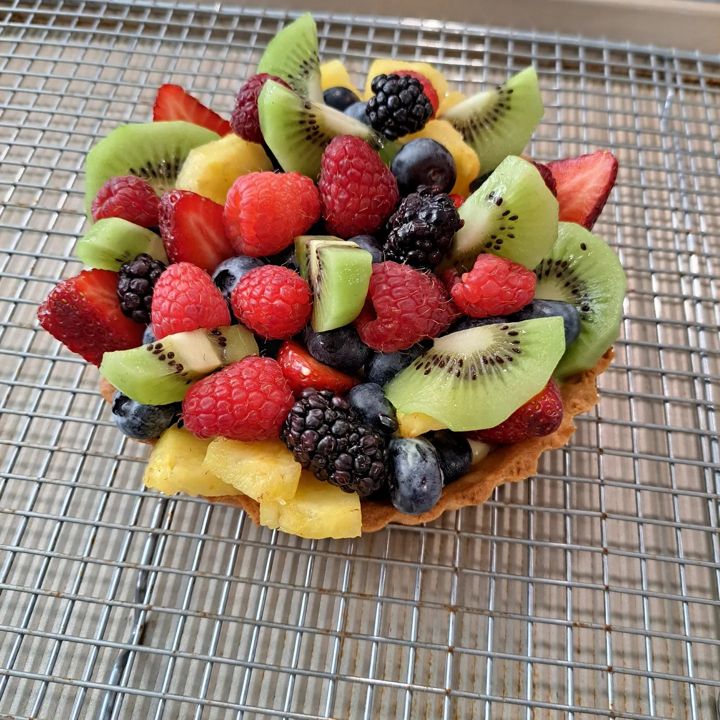
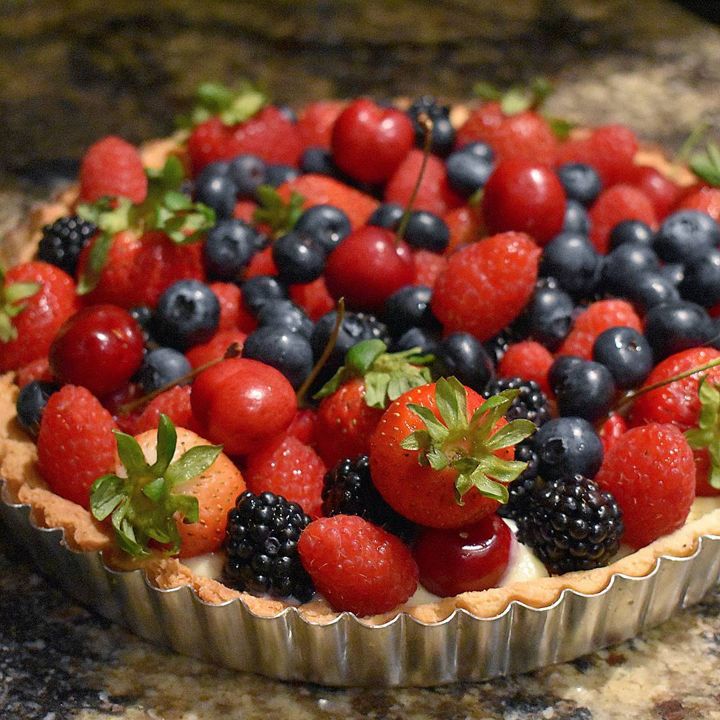
The classic French tarte aux fruits: a crisp sweet pastry shell filled with vanilla pastry cream and covered in glazed fresh fruit. It is a fixture of pâtisserie windows across France, and every component is a foundation recipe of the French pastry kitchen. The same recipe makes one large tart or a set of individual tartlets.
Ingredients
Pâte sucrée
- 250 g all-purpose flour (2 cups)
- 30 g almond flour (1/3 cup)
- 95 g powdered sugar (3/4 cup plus 1 tbsp)
- 2 g fine salt (1/3 tsp)
- 150 g unsalted butter, soft but cool (10 1/2 tbsp)
- 50 g egg (1 large)
Vanilla pastry cream
- 500 g whole milk (2 cups plus 1 tbsp)
- 1 vanilla bean, split and scraped
- 120 g egg yolks (6 large)
- 100 g granulated sugar (1/2 cup)
- 40 g cornstarch (1/3 cup)
- 40 g unsalted butter, cubed (3 tbsp)
Fruit and glaze
- 600 g mixed fresh fruit: strawberries, raspberries, blueberries, kiwi, mango (about 4 cups)
- 100 g apricot jam or neutral glaze (1/3 cup)
- 15 g water (1 tbsp)
- 30 g white chocolate or cocoa butter, melted, to seal the shell (optional)
Method
- Make the dough. Beat the butter, powdered sugar and salt until smooth but not fluffy, mix in the almond flour and egg, then add the flour and mix only until the dough comes together. Flatten into a disk, wrap and chill at least 2 hours.
- Roll the dough to 3 mm (1/8 inch) between sheets of parchment. Line a 9-inch (23 cm) tart ring or tartlet rings, pressing the dough into the corners without stretching it, trim the rim and chill 30 minutes.
- Heat the oven to 350°F (175°C). Line the shell with parchment and pie weights and bake 15 minutes, lift out the weights and bake 8-12 minutes more until evenly golden. Cool completely.
- For the pastry cream, bring the milk and vanilla to a simmer. Whisk the yolks, sugar and cornstarch until smooth, then whisk in the hot milk a little at a time.
- Return the mixture to the pan and cook over medium heat, whisking constantly, until it thickens and boils. Keep it at a boil for a full minute to cook out the starch, then whisk in the butter off the heat.
- Spread the cream in a shallow dish, press plastic wrap directly on the surface and chill until cold, at least 2 hours. Whisk until smooth before using.
- Brush the inside of the cooled shell with a thin coat of melted white chocolate if the tart must hold for more than a few hours. Fill with pastry cream to just below the rim and level it.
- Arrange the fruit tightly, working from the outside edge toward the centre and overlapping cut fruit so no cream shows.
- Warm the jam with the water until fluid, strain it, and dab it over the fruit with a soft brush. Chill 30 minutes and serve the same day.
Chef’s notes
- A shell that shrinks was stretched during lining or not rested long enough. Ease the dough into the corners and chill it firm before baking.
- Pastry cream that tastes starchy or turns runny after a day was not boiled long enough. It must bubble for a full minute, which also deactivates the yolk enzyme that breaks down starch.
- Dry the fruit thoroughly after washing. Wet berries weep into the cream and dull the glaze.
- Glaze should be warm and fluid, not hot. Hot glaze cooks the surface of the berries and makes them slump.
Drawn from the methods of
- Ferrandi Paris, French Pâtisserie (2017)
- Thomas Keller and Sebastien Rouxel, Bouchon Bakery (2012)
- Bo Friberg, The Professional Pastry Chef (2002)
Corey has not published his own formula for this piece. This reference recipe is compiled from the published methods of the chefs and bakers listed above, written in our own words.