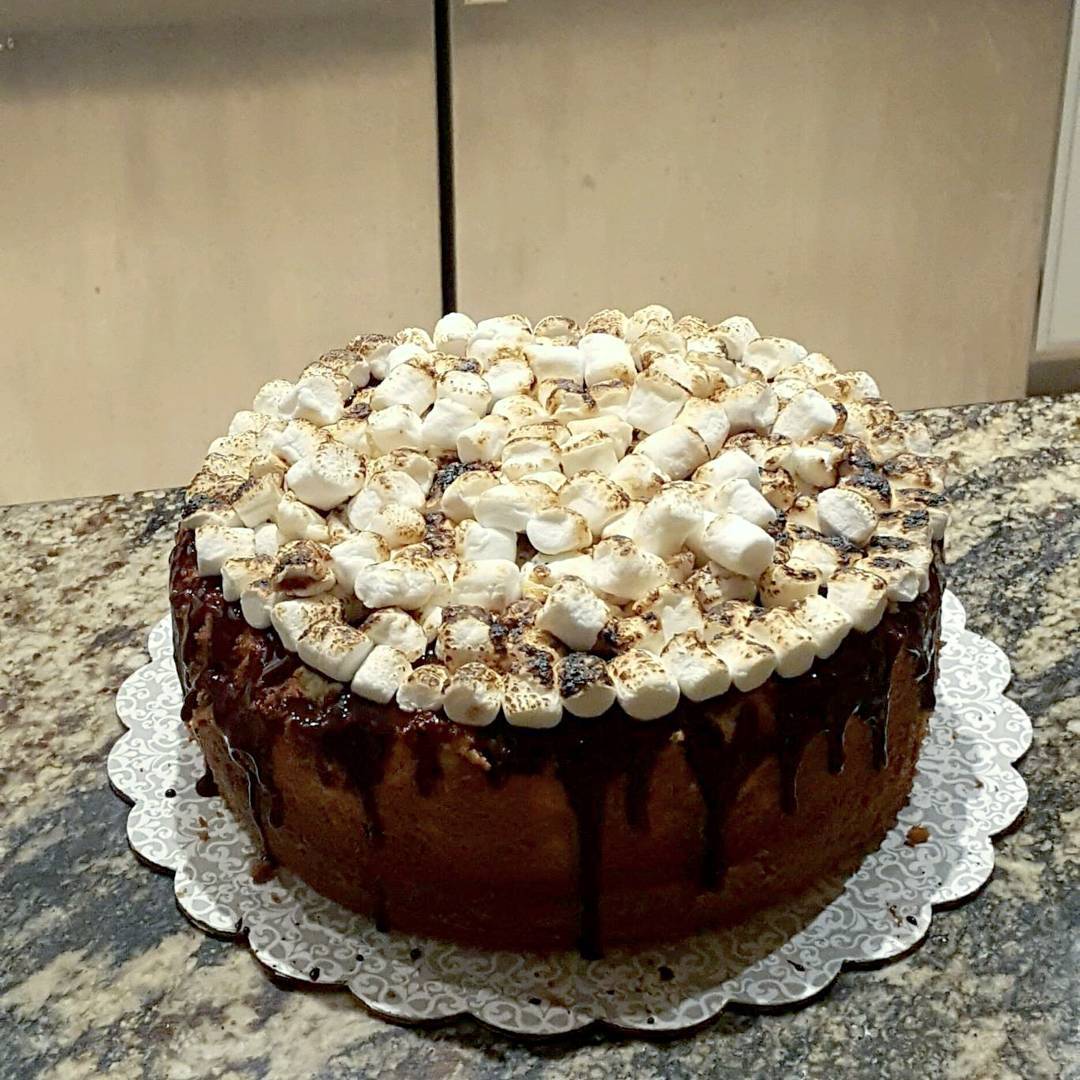
The S'mores Cheesecake, Twice
April 2, 2017 to July 15, 2017
“🍰🍰🍰”
“Yet another smore cheesecake, with a ganache glaze on top.”
In April 2017 I made a cheesecake buried under toasted mini marshmallows, with chocolate ganache dripping down the sides. In July came yet another s'more cheesecake, with a ganache glaze on top. That one was taller, photographed outdoors with a torched marshmallow crown.
It's a dessert built for a crowd, and clearly one people asked for again. The parts of a s'more map neatly onto a cheesecake: graham cracker crust, a chocolate layer, and marshmallows toasted with a torch just before serving. The ganache drip is controlled by temperature. Poured warm it runs to the plate, and poured cooler it stops partway down the side, as it does here.
This article is written in Corey’s voice for this tribute site, based on his captions and blog. His own words are the quotes above.
New York Cheesecake
New York cheesecake is tall, dense and rich, built almost entirely on cream cheese, which was first produced in New York State in the 1870s. Delis and restaurants such as Lindy's and Junior's made the style famous in the twentieth century. This version bakes gently in a water bath for a creamy, crack-free cake, with two dressed-up variations.
Ingredients
Graham crust
- 180 g graham cracker crumbs, from about 12 full sheets (1 1/2 cups)
- 25 g granulated sugar (2 tbsp)
- Pinch of fine salt
- 75 g unsalted butter, melted (5 tbsp)
Cheesecake filling
- 900 g full-fat block cream cheese, at room temperature (four 8 oz packages)
- 250 g granulated sugar (1 1/4 cups)
- 20 g cornstarch (2 1/2 tbsp)
- 2 g fine salt (1/3 tsp)
- 240 g sour cream, at room temperature (1 cup)
- 15 g vanilla extract (1 tbsp)
- 15 g lemon juice (1 tbsp)
- 200 g eggs, at room temperature (4 large)
S'mores variation
- 120 g dark chocolate, chopped, and 120 g heavy cream for the ganache drip (4 oz and 1/2 cup)
- About 30 large marshmallows, or 1 batch Swiss meringue
- 2 graham crackers, broken into shards
Crème brûlée variation
- Seeds of 1 vanilla bean, added to the filling
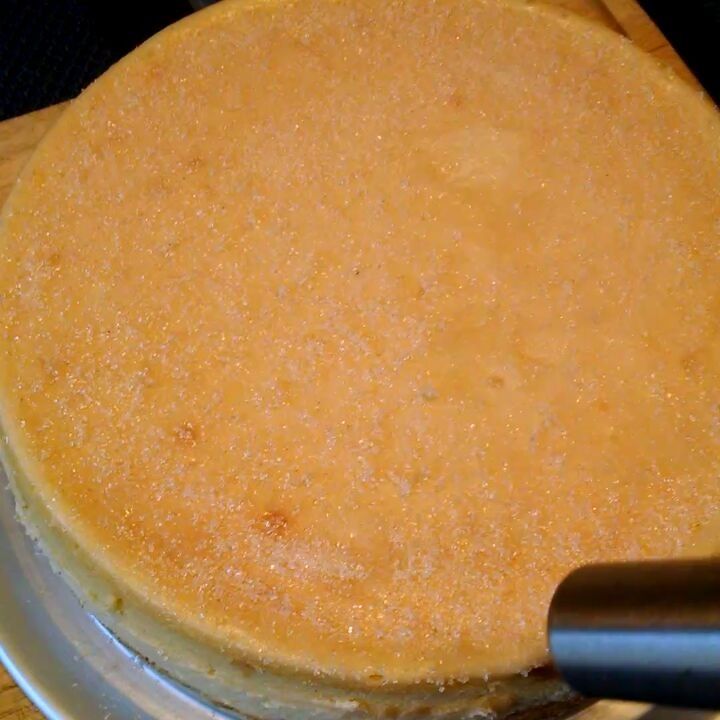
- 60 g granulated or superfine sugar for the torched top (1/3 cup)
Method
- Heat the oven to 350°F (175°C). Wrap the outside of a 9-inch (23 cm) springform pan in two layers of heavy foil, or set it inside a slightly larger cake pan to keep water out.
- Mix the crumbs, sugar, salt and melted butter, press firmly over the base of the pan and bake 10 minutes. Cool, and lower the oven to 325°F (165°C).
- Beat the cream cheese on low speed with the paddle until completely smooth, scraping the bowl and paddle several times. Add the sugar, cornstarch and salt and mix until smooth.
- Mix in the sour cream, vanilla and lemon juice. Add the eggs one at a time on the lowest speed, mixing only until each disappears.
- Pour the batter over the crust and tap the pan to release air bubbles. Set the pan in a roasting pan and pour in hot water to come 2.5 cm (1 inch) up the sides.
- Bake 65-80 minutes, until the outer 5 cm (2 inches) is set and the centre still wobbles as one mass. The centre should read about 150°F (65°C).
- Turn off the oven, prop the door open and leave the cheesecake inside for 1 hour. Lift it from the water, run a thin knife around the edge and cool to room temperature.
- Chill uncovered for at least 8 hours or overnight before unmoulding. Slice with a thin knife dipped in hot water and wiped between cuts.
- For s'mores, pour warm cream over the chocolate, stir smooth, cool until thick but pourable and spoon around the edge of the cold cake so it drips, then top with marshmallows and torch until browned. For crème brûlée, blot the chilled top dry, sprinkle evenly with sugar and torch to a deep amber crust just before serving.
Chef’s notes
- Lumps cannot be beaten out once the eggs are in. Get the cream cheese perfectly smooth first, and have every ingredient at room temperature.
- Cracks come from overbaking, too much air in the batter, or the cake sticking to the pan as it shrinks. Mix on low, pull it while the centre jiggles, and loosen the edge as it cools.
- Foil leaks more often than you would think. Setting the springform inside a larger cake pan or an oven bag is the surest way to keep the crust dry.
- The brûlée crust softens in about an hour, so torch it at the table or just before serving.
Water bath or no water bath?
Water bath
Rose Levy Beranbaum, Tish Boyle, Junior's of Brooklyn
The pan sits in hot water, which holds the edge of the cake near 212°F (100°C) and adds humidity. The custard sets evenly from edge to centre, stays creamy and pale, and rarely cracks. This recipe uses this method.
High heat, then low and slow with no bath
Stella Parks, many New York deli bakeries
The cake starts in a very hot oven, around 450°F (230°C), for about 20 minutes to puff and brown the top, then finishes at about 250°F (120°C) with no water. It avoids leaks and gives the browned top and slightly firmer, drier edge that many consider the true New York style.
Drawn from the methods of
- Rose Levy Beranbaum, The Cake Bible (1988)
- Tish Boyle, The Cake Book (2006)
- Stella Parks, BraveTart (2017)
- Alan Rosen and Beth Allen, Junior's Cheesecake Cookbook (2007)
Corey has not published his own formula for this piece. This reference recipe is compiled from the published methods of the chefs and bakers listed above, written in our own words.