"So Shiny I Can See Myself!"
December 7, 2018
“So shiny I can see myself!”
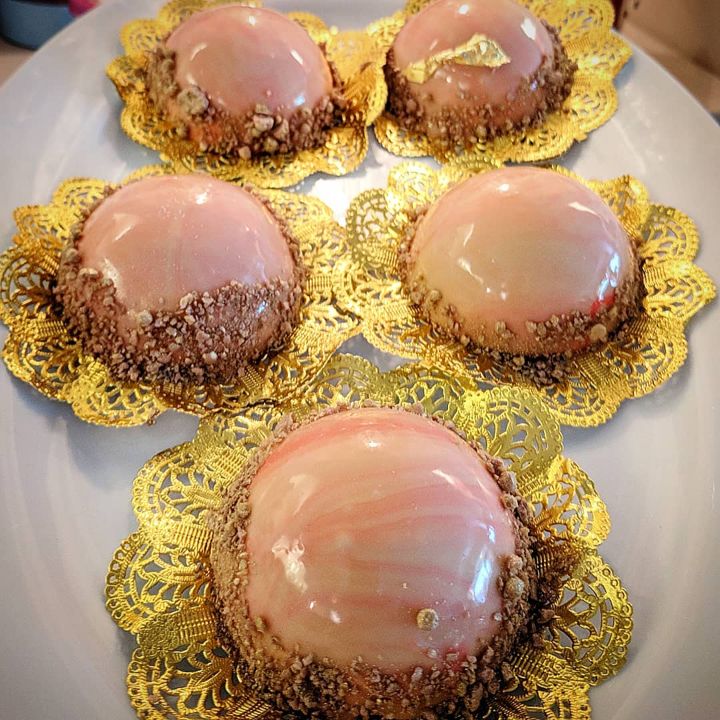
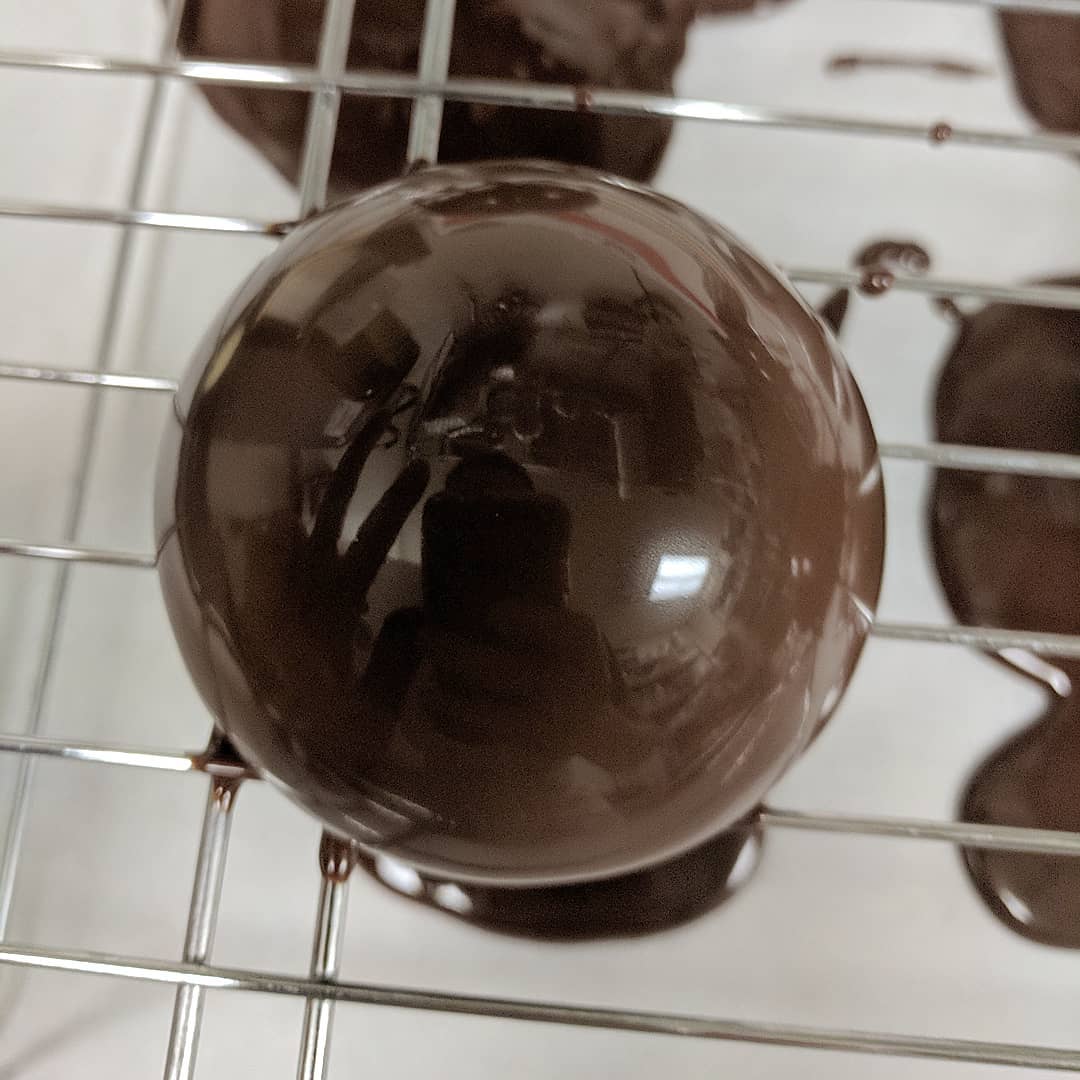
So shiny I can see myself! A chocolate dome on a glazing rack, freshly coated, with the excess glaze still dripping through the wires. The surface is so reflective you can see the room in it, which was the point of my #mirrorselfie tag.
A chocolate mirror glaze gets its shine from gelatin and a high proportion of sugar and glucose, which set into a smooth, light-reflecting film. The cake underneath has to be frozen hard so the glaze sets on contact, and you pour it once, in a confident spiral from the center, and never touch it again. The rack over a tray lets the surplus run off so it can be collected and reused.
This article is written in Corey’s voice for this tribute site, based on his captions and blog. His own words are the quotes above.
Mirror Glaze Entremet
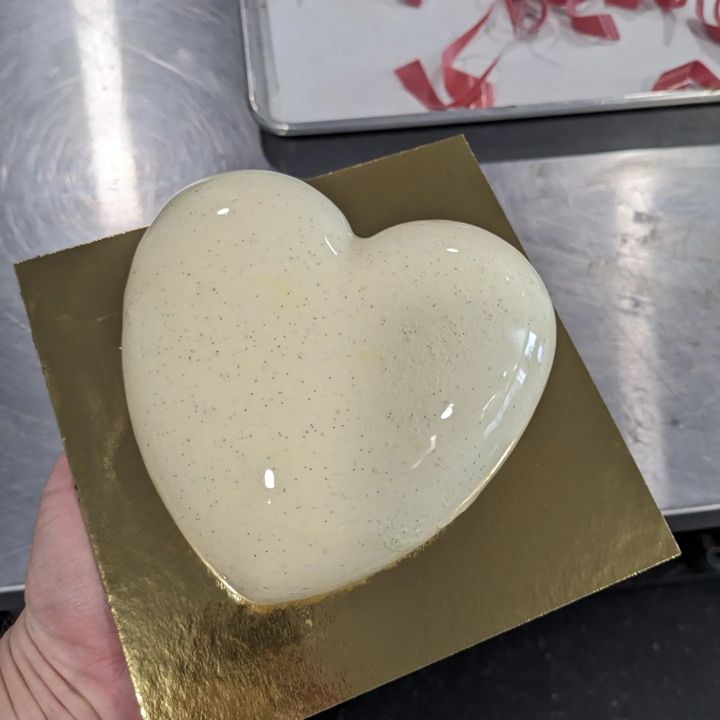
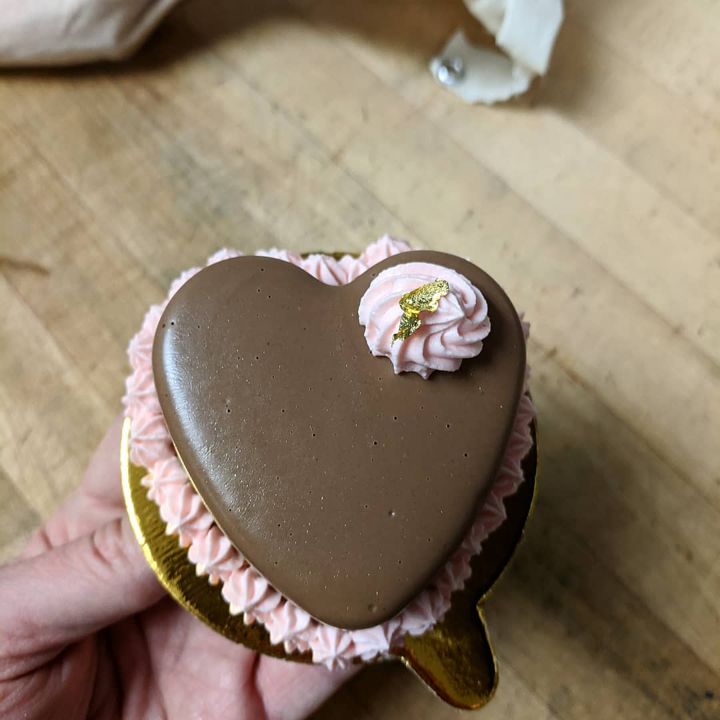
The modern entremet is a French mousse cake built upside down in a mold, frozen solid, then coated in a glaze so glossy it reflects the room. Silicone molds made the smooth heart and dome shapes possible, and the poured mirror glaze became the signature finish of contemporary pâtisserie in the 2010s. This version layers vanilla white chocolate mousse around a raspberry insert on an almond dacquoise base.
Ingredients
Raspberry insert
- 250 g raspberry purée, strained (1 cup)
- 40 g granulated sugar (3 Tbsp)
- 5 g powdered gelatin, 200 bloom (1 1/2 tsp), soaked in 25 g cold water
Almond dacquoise
- 90 g egg whites (3 large)
- 30 g granulated sugar (2 1/2 Tbsp)
- 75 g almond flour (3/4 cup)
- 75 g powdered sugar (2/3 cup)
Vanilla white chocolate mousse
- 150 g whole milk (2/3 cup)
- 1 vanilla bean, split and scraped
- 7 g powdered gelatin (2 1/4 tsp), soaked in 35 g cold water
- 250 g white chocolate, 30 to 35% cocoa butter, chopped
- 350 g heavy cream, 35% fat, cold (1 1/2 cups)
Mirror glaze
- 150 g water (2/3 cup)
- 300 g granulated sugar (1 1/2 cups)
- 300 g glucose syrup or light corn syrup (scant 1 cup)
- 200 g sweetened condensed milk (2/3 cup)
- 20 g powdered gelatin (2 Tbsp), soaked in 120 g cold water
- 300 g white chocolate, chopped
- Gel or powder food color, plus a little titanium dioxide or white color for opacity (optional)
Method
- Make the insert first. Warm the raspberry purée with the sugar to about 60°C (140°F), stir in the soaked gelatin until dissolved, and pour into a 5 1/2-inch (14 cm) ring or pan lined with plastic film. Freeze until hard, at least 4 hours.
- For the dacquoise, heat the oven to 350°F (175°C). Whip the egg whites to soft peaks, add the granulated sugar and whip to a firm, glossy meringue. Fold in the almond flour and powdered sugar sifted together, pipe or spread into a 6 1/2-inch (16 cm) disc on parchment, and bake 15-18 minutes until lightly golden and dry to the touch. Cool, then trim to sit just inside the mold.
- For the mousse, bring the milk and vanilla to a simmer, remove from the heat and stir in the soaked gelatin. Strain over the white chocolate in three additions, stirring from the center each time to build a smooth, elastic emulsion. Cool to 28-30°C (82-86°F).
- Whip the cold cream only to soft, floppy peaks. Fold a third into the chocolate base to loosen it, then fold in the rest until no streaks remain.
- Assemble upside down. Fill the silicone mold about two thirds full, tap it firmly to release air bubbles, and press in the frozen raspberry insert. Cover with the remaining mousse, set the dacquoise on top, and level flush with the rim.
- Freeze at least 12 hours, until rock hard all the way through. The cake must be at freezer temperature, about -18°C (0°F), when it is glazed.
- For the glaze, boil the water, sugar and glucose to 103°C (217°F). Off the heat, stir in the soaked gelatin and then the condensed milk, and pour over the white chocolate. Add color and blend with an immersion blender held at an angle with the head fully submerged, then strain. Press film onto the surface and rest in the refrigerator overnight if you can.
- Rewarm the glaze gently to about 40°C (104°F), then stir slowly until it cools to 32-35°C (90-95°F). Unmold the frozen cake onto a rack set over a tray, wipe off any frost with your palm, and pour in one steady pass from the center outward until every side is covered.
- Let the glaze drip for 2-3 minutes, sweep a small palette knife around the base to cut the drips, and move the cake to a board. Thaw in the refrigerator 4-6 hours before serving.
Chef’s notes
- Bubbles in the finish come from blending air into the glaze. Keep the blender head under the surface, strain twice, and rest the glaze overnight so trapped air can rise.
- If the glaze slides off and looks translucent it was too warm. If it sets in thick ridges it was too cool. Use a thermometer and pour at 32-35°C (90-95°F).
- Condensation or frost on the cake stops the glaze from gripping. Glaze within a minute of unmolding and brush frost off first.
- A glazed entremet does not refreeze well: the shine dulls and weeps on thawing. Freeze cakes unglazed for up to a month and glaze the day you serve.
Condensed milk glaze or cocoa glaçage miroir?
White chocolate and condensed milk glaze
Antonio Bachour, Amaury Guichon and most contemporary entremet specialists
A sugar and glucose syrup is set with gelatin and enriched with condensed milk and white chocolate, giving an opaque base that takes any color and allows marbled effects. It is the most forgiving to pour and holds its shine longest. This recipe follows this method.
Classic cocoa glaçage miroir
Pierre Hermé, Gaston Lenôtre and the French classical school
Water, sugar, cream and cocoa powder are boiled together and set with gelatin for a deep black, bittersweet glaze. It tastes more of chocolate and less of sugar, but it only comes in one color and shows every flaw in the surface beneath.
Drawn from the methods of
- Ferrandi Paris, French Pâtisserie (2017)
- Antonio Bachour, Bachour (Miami)
- Amaury Guichon, The Art of Flavor (2018)
- Francisco Migoya, The Elements of Dessert (2012)
Corey has not published his own formula for this piece. This reference recipe is compiled from the published methods of the chefs and bakers listed above, written in our own words.