First Twelfth Night Galette
August 6, 2017
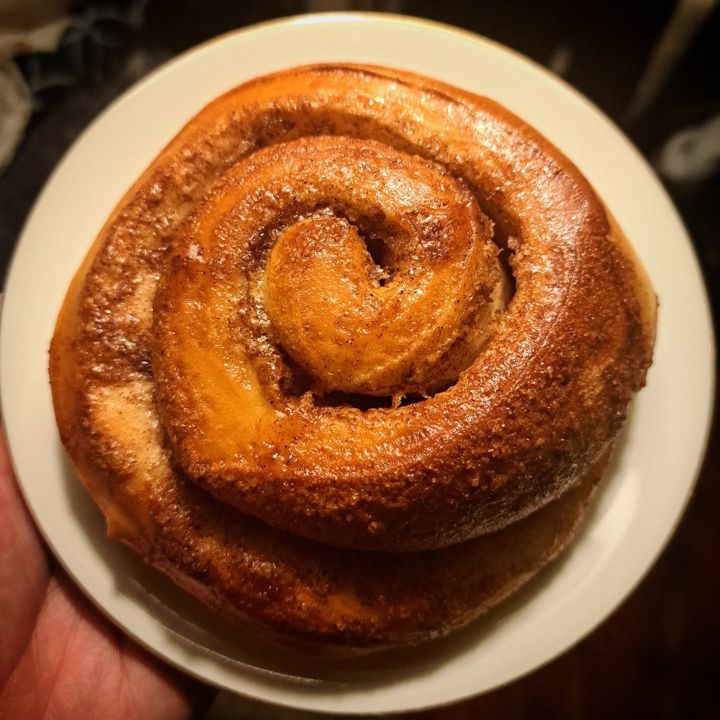
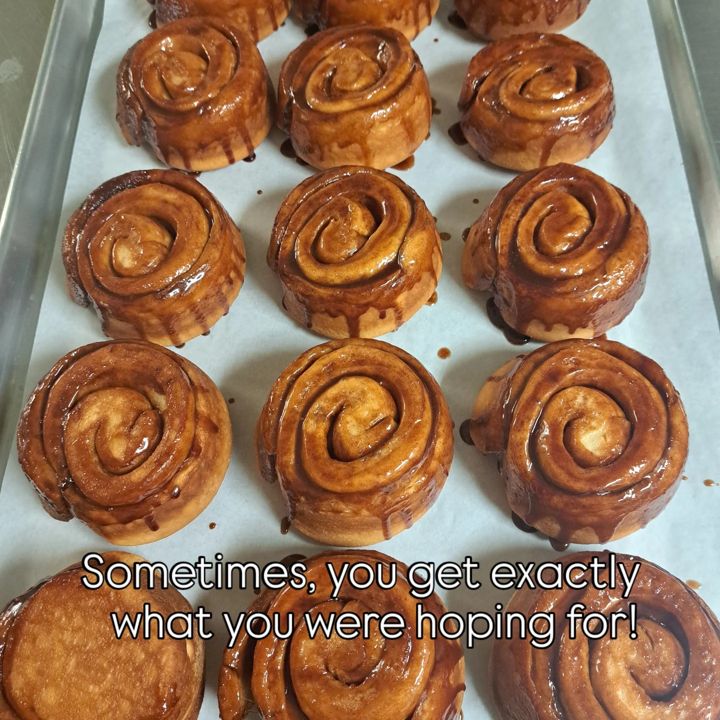
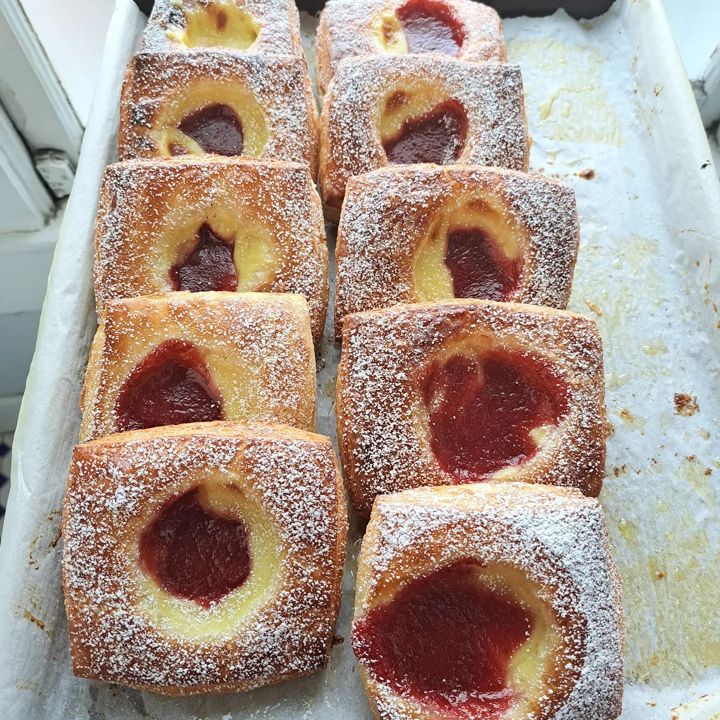
“First attempt at a 12th night galett.”
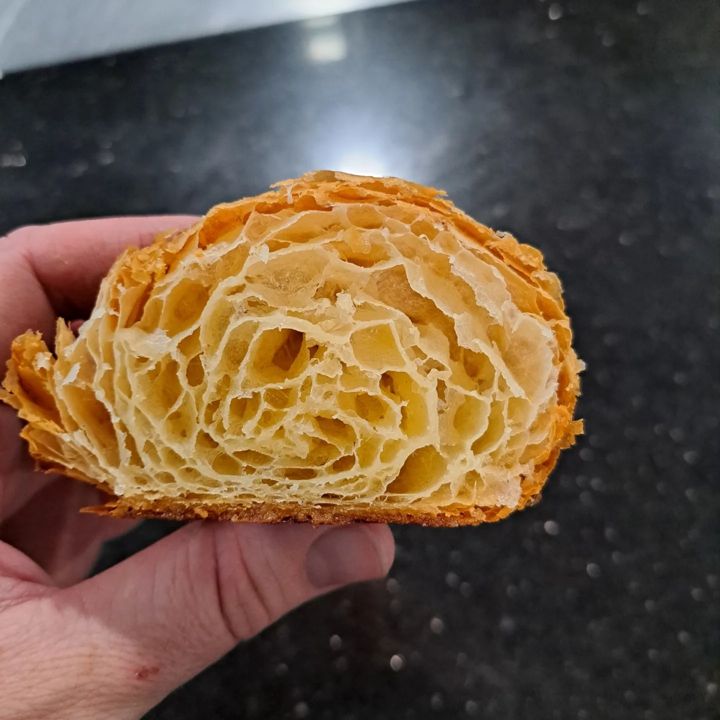
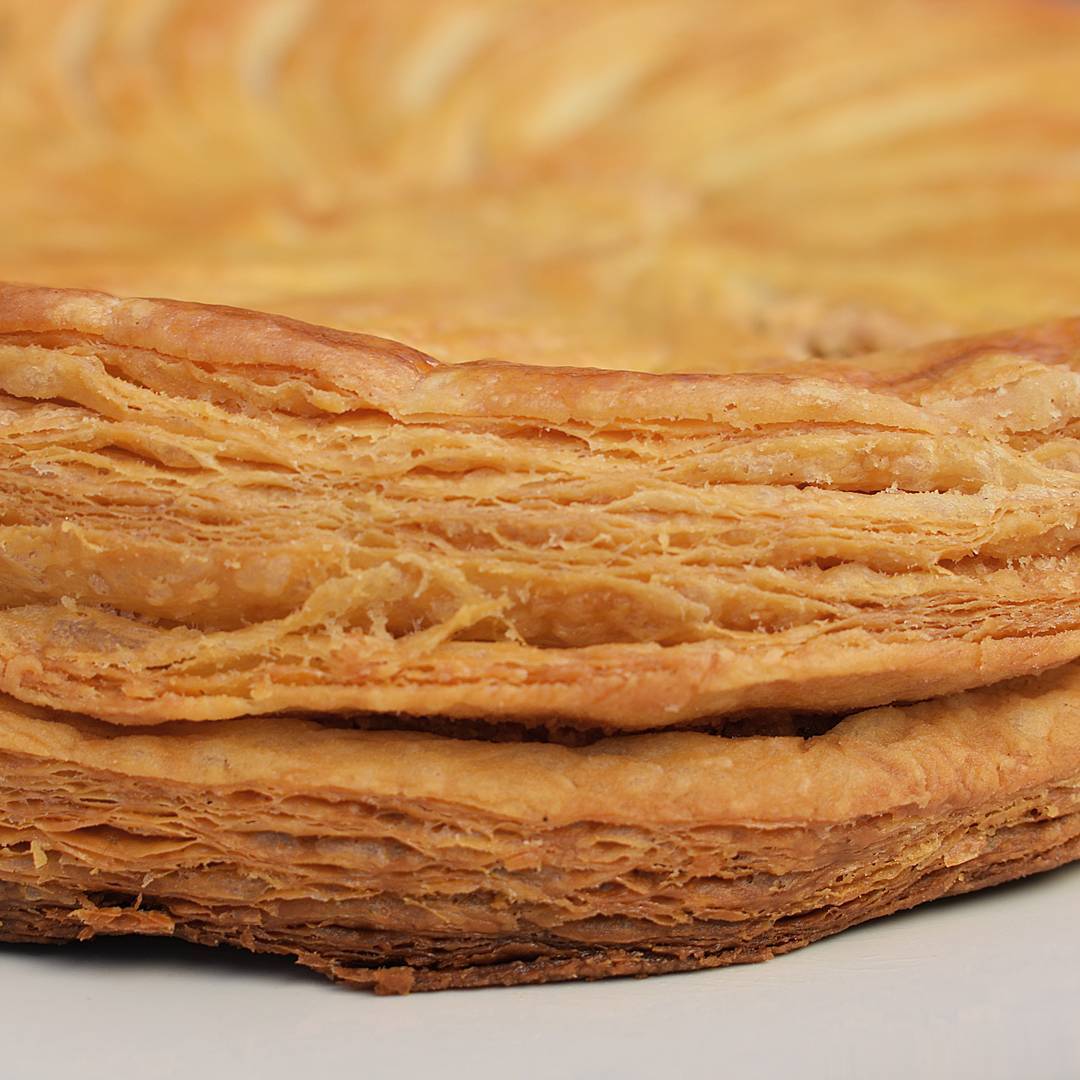
My first Twelfth Night galette, in a close-up of the edge: dozens of crisp, separated layers of golden puff pastry stacked like the pages of a book, with the curved score lines of the traditional pattern visible on top.
The galette des rois, kings' cake, is eaten in France for Epiphany, the twelfth night after Christmas. Two discs of puff pastry enclose a filling of frangipane, and a small charm, the fève, is hidden inside. Whoever finds it is crowned king or queen for the day. You score the top with a knife tip in spirals or a leaf pattern before baking. Height and separation like this come from sharp cuts and a properly chilled pastry.
This article is written in Corey’s voice for this tribute site, based on his captions and blog. His own words are the quotes above.
Galette des Rois
The galette des rois, or kings' cake, is the puff pastry and almond cream cake eaten across northern France for Epiphany on January 6 and throughout the month. A small charm called the fève, originally a dried bean, is hidden inside, and whoever finds it in their slice is crowned king or queen for the day. In the south of France the same feast is marked with a ring of brioche instead.
Ingredients
Pastry
- 600 g all-butter puff pastry, classic or rough puff, well chilled (about 1 1/3 lb)
Pastry cream
- 125 g whole milk (1/2 cup)
- 1 large egg yolk (20 g)
- 25 g granulated sugar (2 tbsp)
- 10 g cornstarch (1 tbsp plus 1 tsp)
- 1/2 tsp vanilla extract
Almond cream
- 100 g unsalted butter, soft (7 tbsp)
- 100 g granulated or powdered sugar (1/2 cup granulated)
- 100 g almond flour (1 cup)
- 100 g eggs, room temperature (2 large)
- 10 g cornstarch or all-purpose flour (1 tbsp plus 1 tsp)
- 15 g dark rum (1 tbsp)
- Pinch of salt
Finish
- 1 egg yolk beaten with 1 tsp cream or milk, for egg wash
- 1 fève, or a whole almond or dried bean
- 30 g sugar boiled with 30 g water, for the syrup glaze (2 tbsp each)
Method
- Make the pastry cream: whisk the yolk, sugar and cornstarch, whisk in the hot milk, return to the pan and boil for 1 minute, whisking constantly. Stir in the vanilla, press plastic wrap on the surface, and chill until cold.
- Make the almond cream: beat the butter and sugar until creamy but not fluffy, then beat in the almond flour, the eggs one at a time, the cornstarch, rum and salt. Whisk the cold pastry cream smooth and fold it in. This two-to-one blend of almond cream and pastry cream is frangipane. Chill for 30 minutes.
- Divide the pastry in two and roll each half to a 3 mm (1/8 in) thick square. Chill for 20 minutes, then cut one 25 cm (10 in) disc and one 26 cm (10 1/2 in) disc. Lay the smaller disc on a parchment-lined tray.
- Pipe or spread the frangipane in a low dome over the smaller disc, leaving a 3 cm (1 1/4 in) border bare. Press the fève into the cream near the edge, not the centre, so the knife is less likely to hit it.
- Brush the border lightly with water. Lay the larger disc on top, press out any air, and seal the edges firmly with your fingertips. Chill for 30 minutes.
- Flip the galette over so the flat, smooth side is on top. Brush with egg wash, keeping it off the cut edge, and chill for 20 minutes. Egg wash a second time.
- With the tip of a paring knife, score curved lines from the centre to the edge like the spokes of a pinwheel, cutting only halfway through the pastry. Scallop the rim with the back of the knife and poke 5 small steam holes through the top.
- Bake at 375°F (190°C) for 40 to 45 minutes, until puffed and deep golden brown, including the sides.
- Brush the hot galette at once with the warm syrup for a mirror shine. Cool for at least 30 minutes and serve just warm or at room temperature.
Chef’s notes
- Leaking filling is the classic failure. Keep the border clean and free of cream, seal firmly, and never let egg wash run over the edge.
- A lopsided rise comes from uneven rolling or from skipping the rests. Chill the pastry at every stage so it does not shrink or slide.
- Do not whip air into the almond cream. An aerated cream puffs up in the oven, cracks the top, and then sinks.
- Warn your guests about the fève before anyone takes a bite.
Frangipane or pure almond cream?
Frangipane (almond cream plus pastry cream)
Classic French pâtisserie as taught at Ferrandi Paris and Le Cordon Bleu
About one part pastry cream is folded into two parts almond cream. The filling bakes softer, moister and more custardy, and this is the traditional definition of frangipane and the method used here.
Almond cream alone
Many contemporary Paris pastry shops and home bakers
The filling is only butter, sugar, almonds and eggs, with no pastry cream. It is quicker, has a stronger almond flavour, and gives a firmer slice, though it can be drier.
Drawn from the methods of
- Ferrandi Paris, French Pâtisserie (2017)
- Pierre Hermé
- Le Cordon Bleu
Corey has not published his own formula for this piece. This reference recipe is compiled from the published methods of the chefs and bakers listed above, written in our own words.