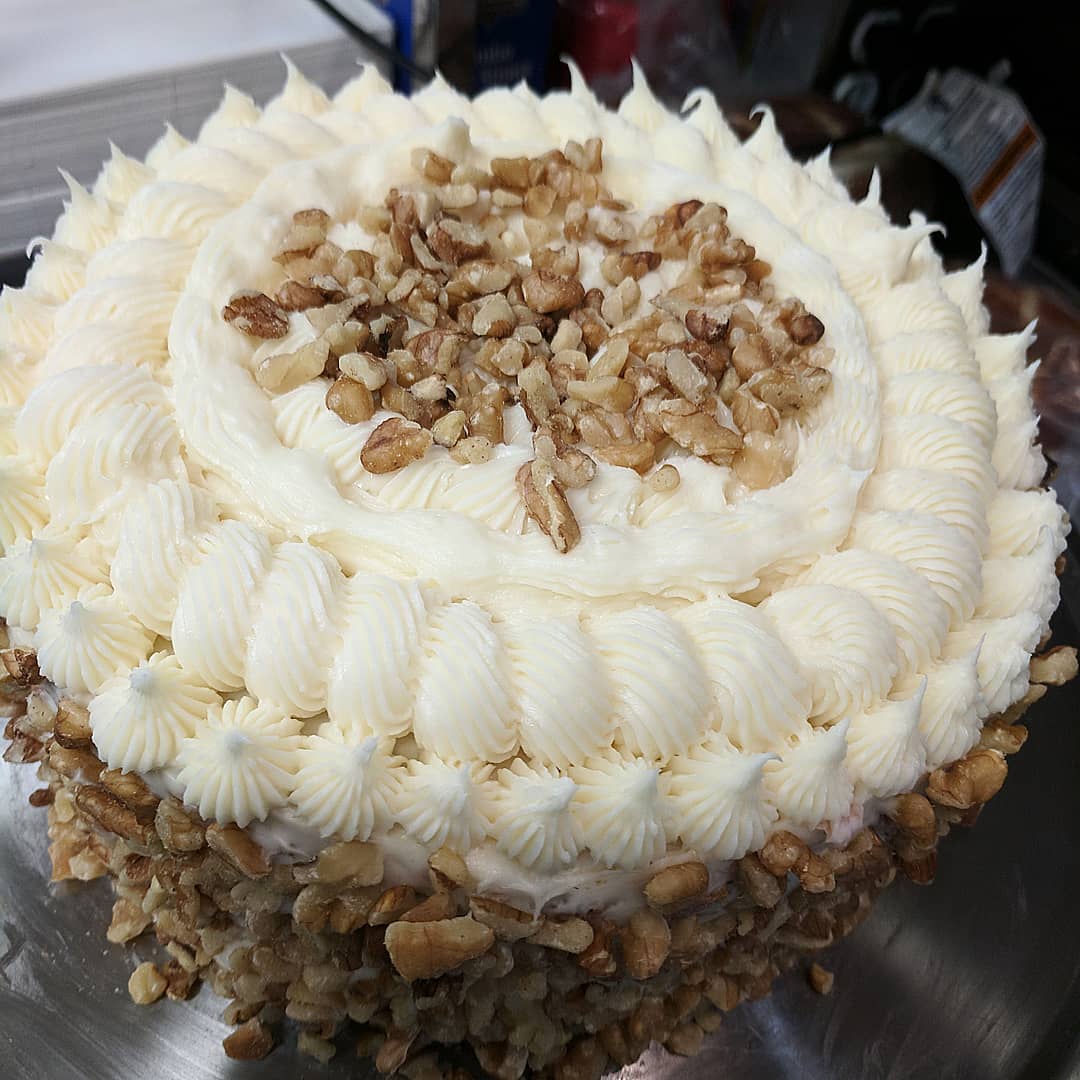
Carrot Cake, Practicing the Piping
January 10, 2018
“Attempting to practice my pipping on this cake”
A carrot cake covered in cream cheese frosting: a shell border around the top edge, a second ring of shells inside it, and chopped walnuts filling the center and pressed around the base.
I was attempting to practice my piping on this cake. Shell borders are the scales and arpeggios of cake decorating. Each shell is the same motion (squeeze, let it fan, relax and pull), and a good border is nothing more than that motion repeated identically all the way around. Cream cheese frosting is harder to pipe than buttercream because it's softer, so keeping it cold and working fast makes the difference.
This article is written in Corey’s voice for this tribute site, based on his captions and blog. His own words are the quotes above.
Carrot Cake with Cream Cheese Frosting
Carrots have sweetened European puddings and cakes since the Middle Ages, and carrot cakes were baked in Britain under sugar rationing during the Second World War. The version known today, moist with oil and covered in cream cheese frosting, became an American favorite in the 1960s and 1970s. The same batter bakes equally well as a layer cake or as cupcakes.
Ingredients
Carrot cake
- 300 g all-purpose flour (2 1/2 cups)
- 2 tsp baking powder
- 1 tsp baking soda
- 1 tsp fine salt
- 2 tsp ground cinnamon
- 1/2 tsp ground ginger
- 1/4 tsp freshly grated nutmeg
- 4 large eggs, at room temperature
- 200 g granulated sugar (1 cup)
- 200 g light brown sugar (1 cup, packed)
- 215 g neutral oil such as canola or grapeseed (1 cup)
- 2 tsp vanilla extract
- 340 g carrots, peeled and finely grated (3 cups, about 6 medium)
- 100 g pecans or walnuts, toasted and chopped (1 cup)
- 80 g raisins (1/2 cup), optional
Cream cheese frosting
- 340 g full-fat block cream cheese, cold (12 oz)
- 170 g unsalted butter, softened to about 18°C / 65°F (3/4 cup)
- 360 g powdered sugar, sifted (3 cups)
- 2 tsp vanilla extract
- 1/4 tsp fine salt
Method
- Heat the oven to 350°F (175°C). Grease two 9-inch (23 cm) round pans and line the bases with parchment, or line two 12-cup muffin tins with paper cases.
- Whisk the flour, baking powder, baking soda, salt and spices together.
- Whisk the eggs with both sugars for 2 minutes until thick and lighter in color. Whisk in the oil in a slow stream so the mixture emulsifies, then add the vanilla.
- Fold in the dry ingredients until a few streaks of flour remain, then fold in the carrots, nuts and raisins just until evenly mixed.
- Divide between the pans and bake 30-35 minutes, until a skewer comes out clean and the tops spring back. Bake cupcakes, filled two thirds full, for 18-22 minutes.
- Cool in the pans 15 minutes, then turn out and cool completely. The layers are easier to frost if wrapped and chilled for an hour.
- For the frosting, beat the butter with the powdered sugar and salt until smooth and pale. Add the cold cream cheese in pieces and beat only until combined and lump free, then mix in the vanilla.
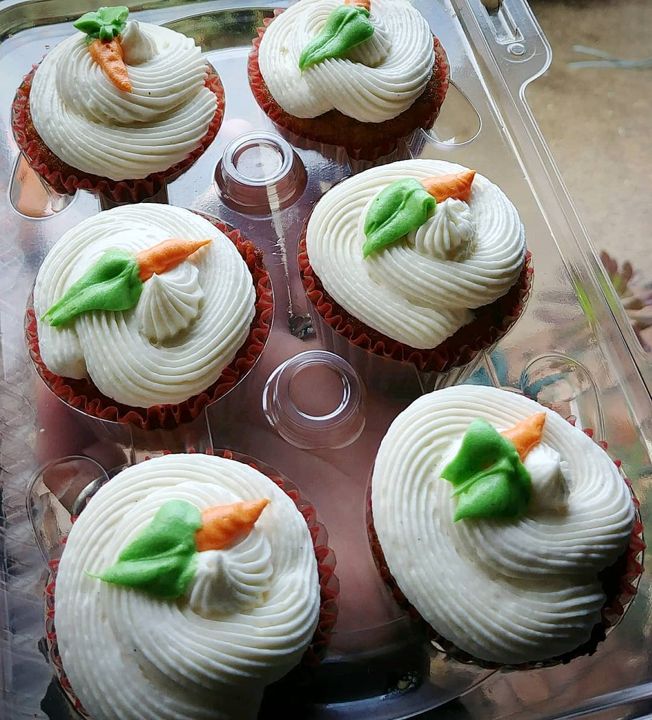
- Level the layers if domed. Fill with about a third of the frosting, cover the top and sides with the rest, and chill 30 minutes to set before slicing. For cupcakes, pipe or swirl the frosting on top.
Chef’s notes
- Grate the carrots yourself on the fine side of a box grater. Bagged shredded carrots are dry and thick and stay crunchy in the crumb.
- Runny frosting comes from overbeating the cream cheese or using a spreadable tub product. Add block cream cheese cold and last, and stop as soon as it is smooth. If it still loosens, chill it 20 minutes.
- A greasy, heavy cake means the oil was dumped in all at once. Streaming it into the whipped eggs builds an emulsion that holds the fat in the crumb.
- The flavor improves overnight. Keep the frosted cake refrigerated and serve it at cool room temperature.
Oil or butter in carrot cake?
Neutral oil
Rose Levy Beranbaum, Dorie Greenspan, King Arthur Baking Company and the classic American recipe
Oil is liquid at any temperature, so the cake stays soft and moist straight from the refrigerator, where a cream cheese frosted cake has to live. It also lets the carrot and spice lead the flavor. This recipe follows this method.
Brown butter
Stella Parks and Claire Saffitz
Butter is cooked until the milk solids toast, then used in place of oil for a nutty, caramel depth that oil cannot supply. The crumb is firmer when cold, so these cakes are best served at room temperature.
Drawn from the methods of
- Rose Levy Beranbaum, The Cake Bible (1988)
- Dorie Greenspan, Baking: From My Home to Yours (2006)
- Stella Parks, BraveTart (2017)
- King Arthur Baking Company
Corey has not published his own formula for this piece. This reference recipe is compiled from the published methods of the chefs and bakers listed above, written in our own words.