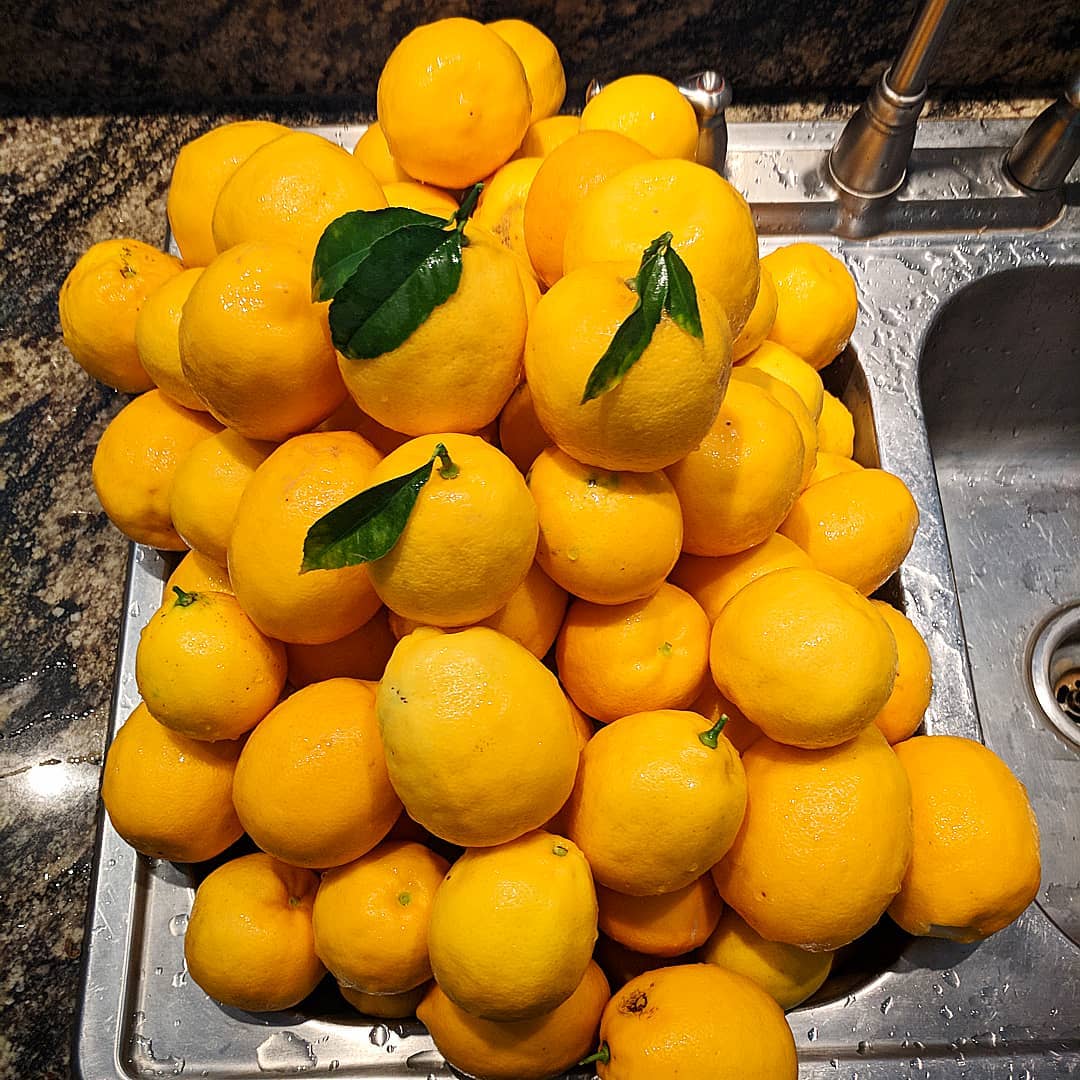
42 Pounds of Lemons
March 9, 2017 to April 10, 2018
“Found this monster on the tree!”
“I harvested the lemons off my tree and ended up with 42 pounds!”
A kitchen sink heaped with lemons, leaves still attached. I harvested the lemons off my tree and ended up with 42 pounds! A year earlier I posted a single enormous lemon held up in the sun, a monster I found on the tree.
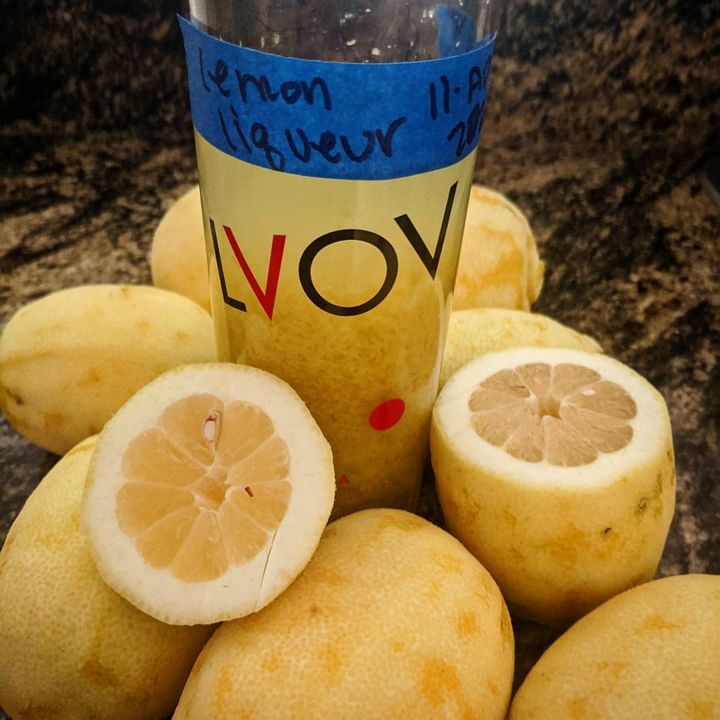
The tree explains a lot. Lemon runs through my work from the very first blog post, lemon poppy seed scones I made because the Meyer lemon tree was bursting, through lemon tarts, lemon bars, lemon curd danish, lemon roll cake and homemade lemon liqueur. Meyer lemons are thought to be a cross between a lemon and a mandarin. They are sweeter, thinner-skinned and more floral than supermarket lemons, and pastry chefs prize them for curds and creams.
This article is written in Corey’s voice for this tribute site, based on his captions and blog. His own words are the quotes above.
Limoncello
Limoncello is the lemon liqueur of southern Italy, most closely tied to the Sorrento peninsula, the Amalfi Coast and Capri, where it is served ice cold after a meal. It is made by steeping lemon zest in strong neutral spirit and then sweetening the infusion with sugar syrup. Its exact origin is disputed among those three places, and it has been produced commercially since the twentieth century.
Ingredients
Infusion
- 10 large unwaxed organic lemons, about 1.2 kg (2 1/2 lb), thick-skinned if possible
- 750 ml 100-proof (50% ABV) vodka, or 750 ml neutral grain spirit at 95% ABV (one standard bottle)
Syrup for 100-proof vodka
- 400 g water (1 2/3 cups)
- 350 g granulated sugar (1 3/4 cups)
Syrup for 95% grain spirit
- 1 kg water (4 1/4 cups)
- 600 g granulated sugar (3 cups)
Orange variation (arancello)
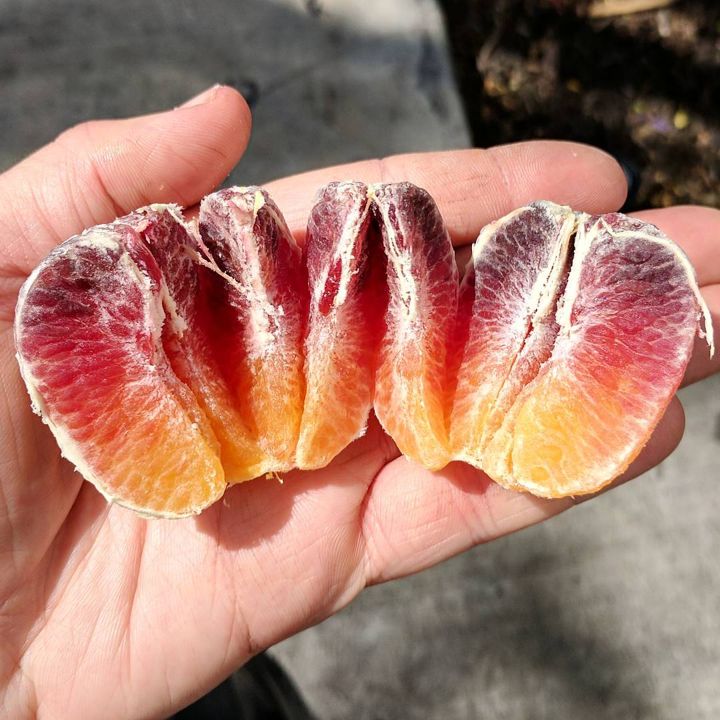
- 6 large unwaxed organic oranges in place of the lemons
- Zest of 1 lemon, added for brightness
- Reduce the sugar in either syrup by 50 g (1/4 cup)
Method
- Scrub the lemons in warm water and dry them completely. Wash a 2-litre glass jar and its lid in hot soapy water, rinse well and dry.
- Remove the zest in strips with a sharp vegetable peeler, taking only the yellow layer. Scrape away any white pith left on the back of the strips with a small knife.
- Put the zest in the jar, pour in the spirit, and seal. Keep the jar in a cool, dark place and swirl it every few days.
- Infuse for 1-2 weeks with 95% grain spirit or 3-4 weeks with vodka. It is ready when the liquid is vivid yellow and the peels have turned pale and snap when bent.
- Make the syrup that matches your spirit by heating the water and sugar just until the sugar dissolves. Cool it completely to room temperature.
- Strain the infusion through a fine sieve lined with a coffee filter or damp muslin, without pressing the peels. Stir in the cold syrup. A grain-spirit batch will turn cloudy, which is normal and traditional.
- Funnel into clean bottles, seal, and rest for at least 1 week, ideally 2-4, so the flavour rounds out.
- Store in the freezer and serve very cold in small chilled glasses. For arancello, follow the same method with the orange zest.
Chef’s notes
- Bitterness comes from pith. Any white on the back of the peel should be shaved off before infusing.
- Use unwaxed, unsprayed fruit, since the zest is the only part that goes into the bottle. Juice the peeled lemons for curd or lemon bars.
- Vodka at 80 proof (40% ABV) extracts less of the lemon oil and gives a liqueur that can freeze slushy. Use 100-proof if you can, and cut the syrup to 300 g water and 300 g sugar if you cannot.
- The finished liqueur lands at roughly 27-33% ABV. Add more syrup for a softer, sweeter style, but below about 25% it may freeze solid.
Drawn from the methods of
- Gennaro Contaldo, Gennaro's Limoncello (2021)
- Harold McGee, On Food and Cooking (2004)
Corey has not published his own formula for this piece. This reference recipe is compiled from the published methods of the chefs and bakers listed above, written in our own words.