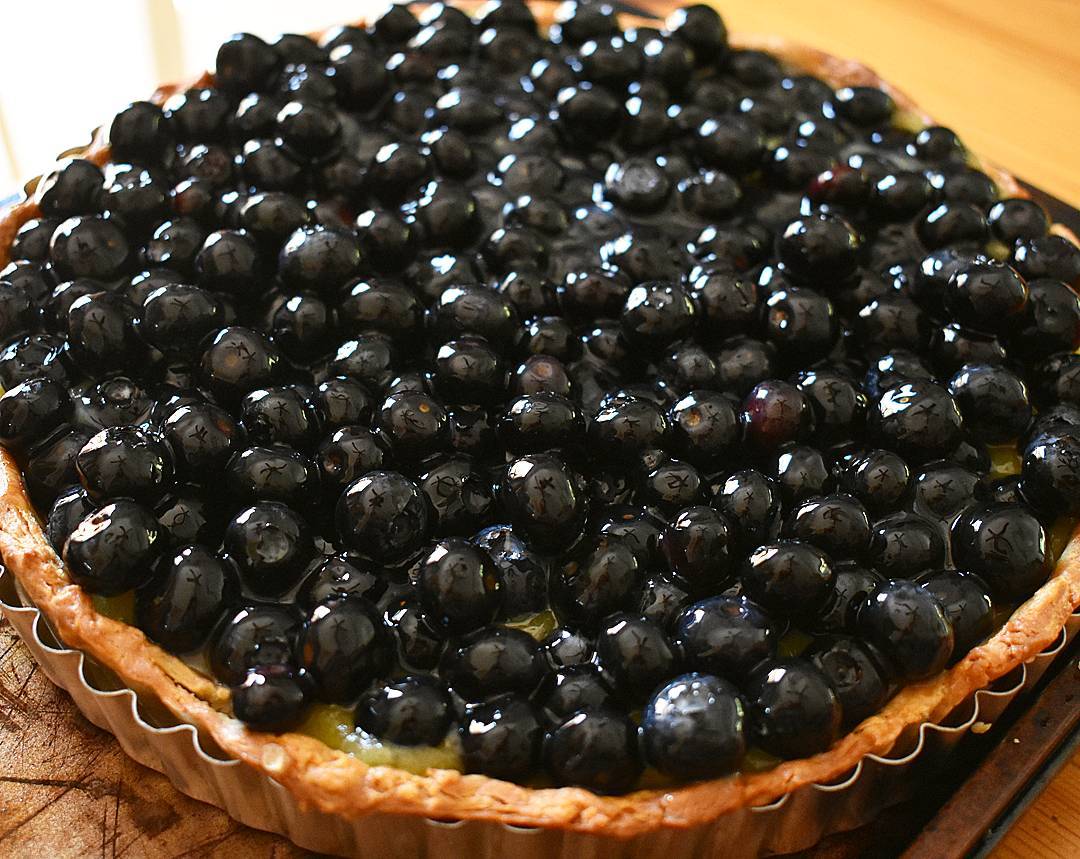
Lemon Curd and Blueberry Tart
July 19, 2017
“Lemon curd and blueberry tart.”
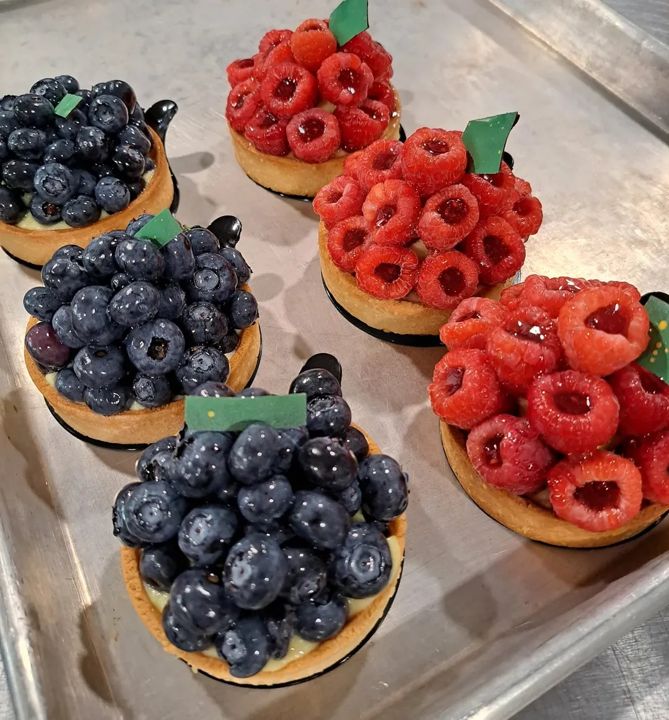
A tart packed edge to edge with glazed blueberries, shining and nearly black, with a rim of yellow lemon curd just visible underneath.
Lemon and blueberry is a pairing that works on every level: color, acidity and aroma. The curd is the sharp, rich base, and the berries add a juicy pop and a gentler sweetness. Tossing or brushing the berries in a warmed glaze makes them shine and holds them in place when the tart is cut. This came two days after my plain lemon tart, the same base taken one step further.
This article is written in Corey’s voice for this tribute site, based on his captions and blog. His own words are the quotes above.
Tarte au Citron
The French lemon tart is a thin sweet pastry shell filled with an intensely sharp, silky lemon cream. This version follows the emulsified lemon cream that Pierre Hermé made famous in the 1990s, in which a cooked lemon custard is cooled slightly and then blended with a large amount of butter so it sets like a cream instead of a curd.
Ingredients
Pâte sucrée
- 250 g all-purpose flour (2 cups)
- 30 g almond flour (1/3 cup)
- 95 g powdered sugar (3/4 cup plus 1 tbsp)
- 2 g fine salt (1/3 tsp)
- 150 g unsalted butter, soft but cool (10 1/2 tbsp)
- 50 g egg (1 large)
Lemon cream
- 200 g granulated sugar (1 cup)
- Finely grated zest of 3 lemons
- 200 g eggs (4 large)
- 180 g fresh lemon juice (3/4 cup, from 4-5 lemons)
- 300 g unsalted butter, at cool room temperature, cut into pieces (1 cup plus 5 tbsp)
Finish
- 50 g neutral glaze or strained apricot jam, warmed (optional)
- Fine strips of lemon zest or a little lime zest
Method
- Make the dough by beating the butter, powdered sugar and salt until smooth, adding the almond flour and egg, then mixing in the flour just until combined. Wrap and chill at least 2 hours.
- Roll to 3 mm (1/8 inch), line a 9-inch (23 cm) tart ring and chill 30 minutes. Heat the oven to 350°F (175°C).
- Blind bake with parchment and weights for 15 minutes, remove the weights and bake 8-12 minutes more until the shell is golden all over. Cool completely.
- Rub the sugar and zest together with your fingertips in a heatproof bowl until the sugar is damp and fragrant. Whisk in the eggs, then the lemon juice.
- Set the bowl over a pan of simmering water and whisk constantly until the cream thickens and reaches 180-183°F (82-84°C). This takes about 10 minutes and the whisk will leave clear tracks.
- Strain into a blender jar or tall container and let it cool to 140°F (60°C), stirring now and then, about 10 minutes.
- With the blender running, add the butter a few pieces at a time. Once it is all in, keep blending for 3-4 minutes so the cream becomes pale, light and perfectly smooth.
- Pour the cream into the baked shell, tap gently to level, and chill at least 4 hours until set. Glaze thinly if you like and decorate with zest.
Chef’s notes
- Adding the butter while the base is hotter than 140°F (60°C) melts it instead of emulsifying it, and the cream will be greasy and loose. Use a thermometer.
- The long blending is not optional. It is what gives the cream its airy, satiny body.
- If the base scrambles slightly, straining will rescue it, but pull it from the heat the moment it hits temperature.
- The filled tart keeps 2 days chilled. Take it out 15 minutes before serving so the cream softens.
Emulsified lemon cream or classic cooked curd?
Emulsified lemon cream
Pierre Hermé, Dorie Greenspan
The lemon base is cooked without butter, cooled to 140°F (60°C), then blended with butter so the fat stays emulsified. The result is lighter and creamier, with a clean set and a rounder acidity. This recipe uses this method.
Classic cooked lemon curd
Traditional French pâtisserie, Jacques Pépin, Thomas Keller
Eggs, sugar, juice and butter are cooked together until thick, or the filling is poured into the shell and baked briefly to set. It uses far less butter and gives a denser, sharper, more translucent filling that many consider the truer lemon flavour.
Drawn from the methods of
- Pierre Hermé and Dorie Greenspan, Desserts by Pierre Hermé (1998)
- Dorie Greenspan, Baking: From My Home to Yours (2006)
- Ferrandi Paris, French Pâtisserie (2017)
Corey has not published his own formula for this piece. This reference recipe is compiled from the published methods of the chefs and bakers listed above, written in our own words.