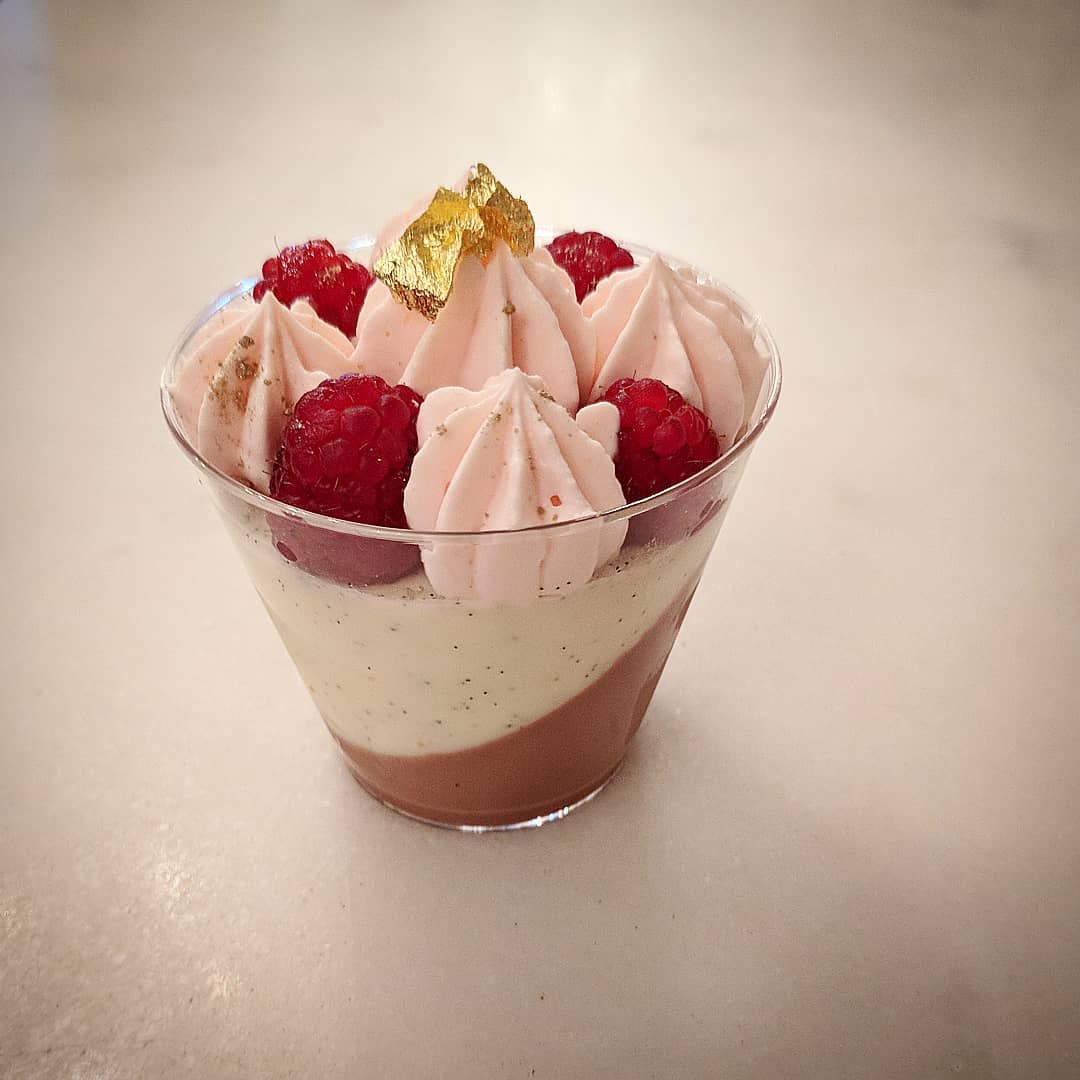
First Attempt at a Fancy Mousse Cup
August 5, 2018
“First attempt at an fancy mousse cup.”
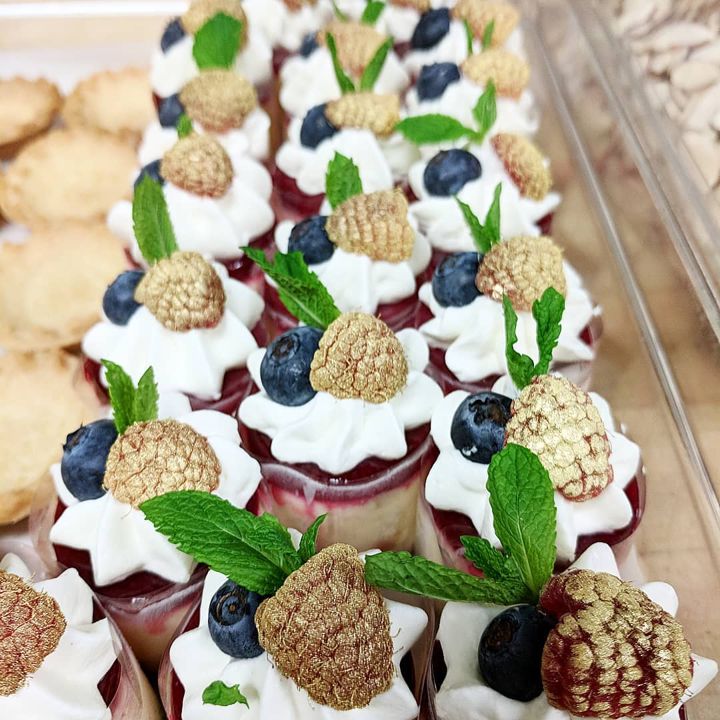
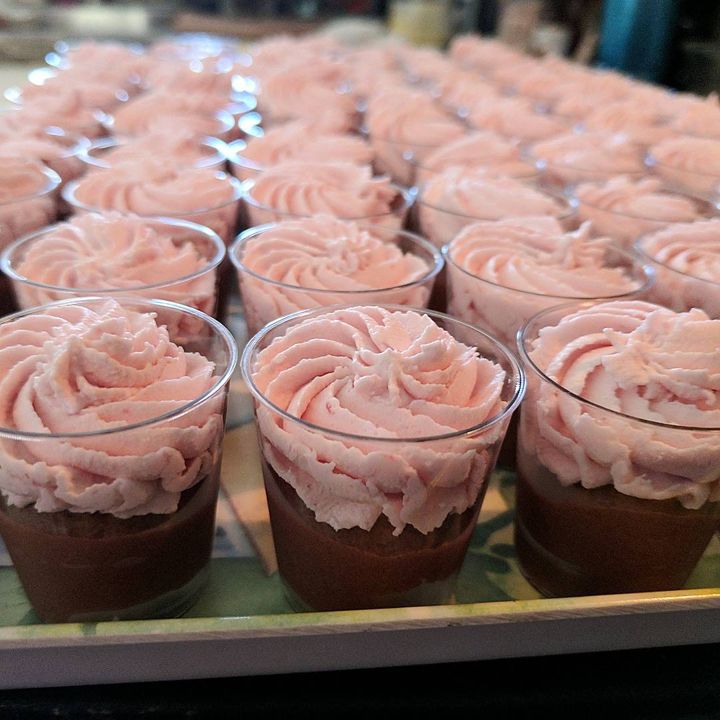
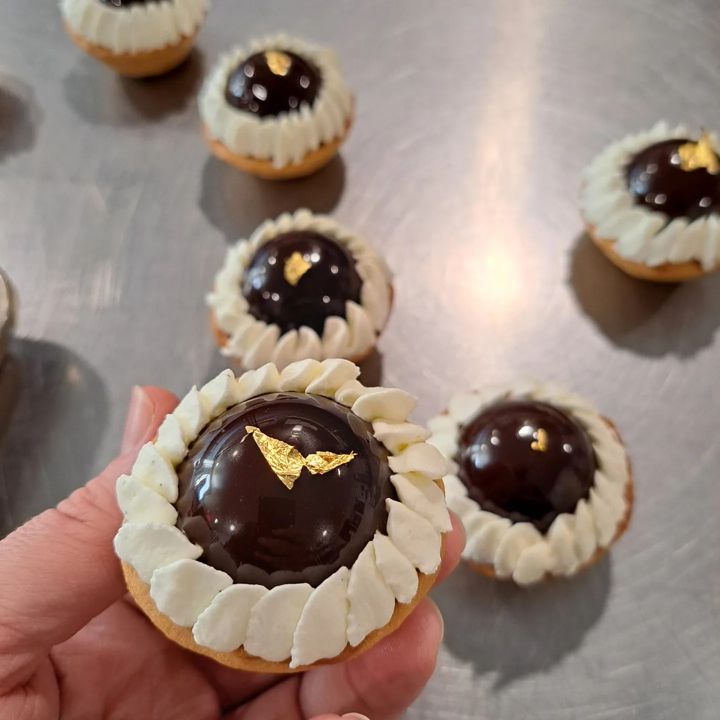
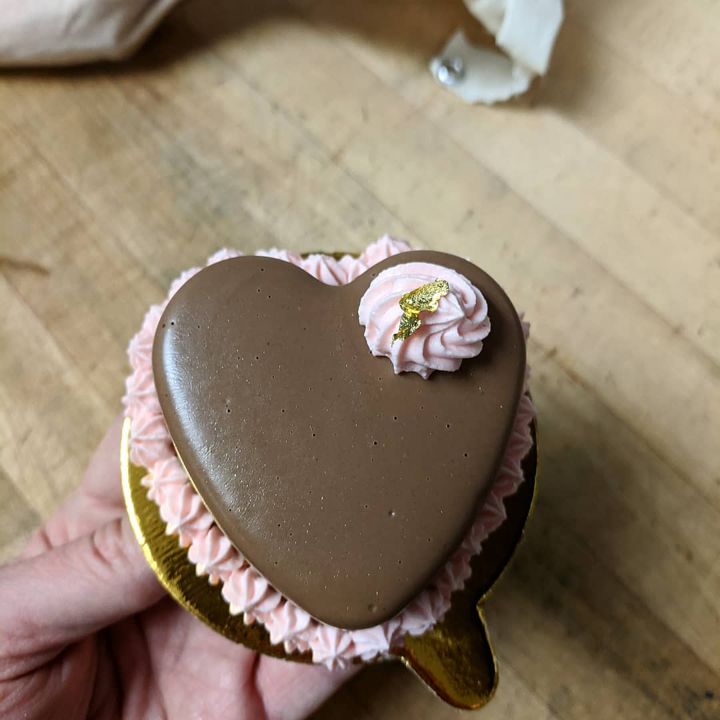
My first attempt at a fancy mousse cup. It's a clear cup layered on the diagonal: a pink mousse set at an angle, a vanilla-flecked white mousse filling the other side, then piped rosettes of pink cream, fresh raspberries and a sheet of gold leaf.
The slanted layer is a simple trick with a big effect. You prop the cup at an angle, in a muffin tin or an egg carton, while the first mousse sets, then stand it upright and fill it with the second. The French call layered desserts in glasses verrines, and they've been a fixture of modern pâtisserie since the early 2000s. Clean sides matter, so the glass gets filled with a piping bag and nothing smears.
This article is written in Corey’s voice for this tribute site, based on his captions and blog. His own words are the quotes above.
Three-Layer Mousse Verrines
Verrine comes from the French verre, glass, and describes a dessert layered in a small clear cup so the colors show from the side. Parisian pastry chefs, Philippe Conticini most prominently, made the format fashionable in the 1990s. These stack dark chocolate, raspberry and vanilla mousses, and scale down neatly to petits fours size for parties.
Ingredients
Dark chocolate mousse
- 120 g dark chocolate, 60 to 66% cacao, chopped
- 100 g heavy cream, for heating (scant 1/2 cup)
- 150 g heavy cream, cold, for whipping (2/3 cup)
Raspberry mousse
- 200 g raspberry purée, strained (3/4 cup plus 1 Tbsp)
- 40 g granulated sugar (3 Tbsp)
- 5 g powdered gelatin, 200 bloom (1 1/2 tsp), soaked in 25 g cold water
- 200 g heavy cream, cold (3/4 cup plus 2 Tbsp)
Vanilla mousse
- 150 g whole milk (2/3 cup)
- 1/2 vanilla bean, split and scraped, or 1 1/2 tsp vanilla paste
- 40 g egg yolks (2 large)
- 30 g granulated sugar (2 1/2 Tbsp)
- 3 g powdered gelatin (1 tsp), soaked in 15 g cold water
- 150 g heavy cream, cold (2/3 cup)
To finish
- Fresh raspberries, 1 or 2 per cup
- Dark chocolate shavings or small tempered chocolate shards
Method
- Set the cups on a tray that fits in your refrigerator. Have three piping bags ready: piping gives clean layers with no smears on the glass.
- For the chocolate mousse, pour the simmering 100 g cream over the chocolate, wait a minute and stir until smooth. Cool to 35-40°C (95-104°F), then fold in the 150 g cream whipped to soft peaks. Pipe into the cups to one third full, tap the tray to level, and chill 30 minutes.
- For the raspberry mousse, warm half the purée with the sugar to about 60°C (140°F), dissolve the soaked gelatin in it, and stir in the rest of the purée. Cool to 22-25°C (72-77°F).
- Whip the 200 g cream to soft peaks and fold it into the raspberry base. Pipe over the set chocolate layer to two thirds full and chill 30 minutes.
- For the vanilla mousse, simmer the milk with the vanilla. Whisk the yolks and sugar, temper in the milk, and cook, stirring, to 82-84°C (180-183°F). Stir in the soaked gelatin, strain, and cool over ice to 25°C (77°F).
- Fold in the 150 g cream whipped to soft peaks and pipe the vanilla layer to just below the rim.
- Refrigerate at least 3 hours until fully set. The verrines keep, covered, for 2 days.
- Finish each cup with raspberries and chocolate shavings just before serving so the fruit stays dry and bright.
Chef’s notes
- Layers bleed into each other when the one below has not set. Give each layer its full 30 minutes, and pipe the next one gently against the center, not the glass.
- Fresh pineapple, kiwi, papaya and mango contain enzymes that destroy gelatin. If you swap the fruit, boil those purées first or use a pasteurised commercial purée.
- For mini cups, loosen each mousse slightly by whipping the cream a little less so it pipes into a narrow glass without air pockets.
- Wipe the inside rim with a damp cloth wrapped around a fingertip before the mousse sets for a professional finish.
Drawn from the methods of
- Ferrandi Paris, French Pâtisserie (2017)
- Philippe Conticini, La Pâtisserie des Rêves (Paris)
- Francisco Migoya, The Elements of Dessert (2012)
Corey has not published his own formula for this piece. This reference recipe is compiled from the published methods of the chefs and bakers listed above, written in our own words.