"God I Love Swiss Meringue!"
June 17, 2019
“God I love Swiss merengue!”
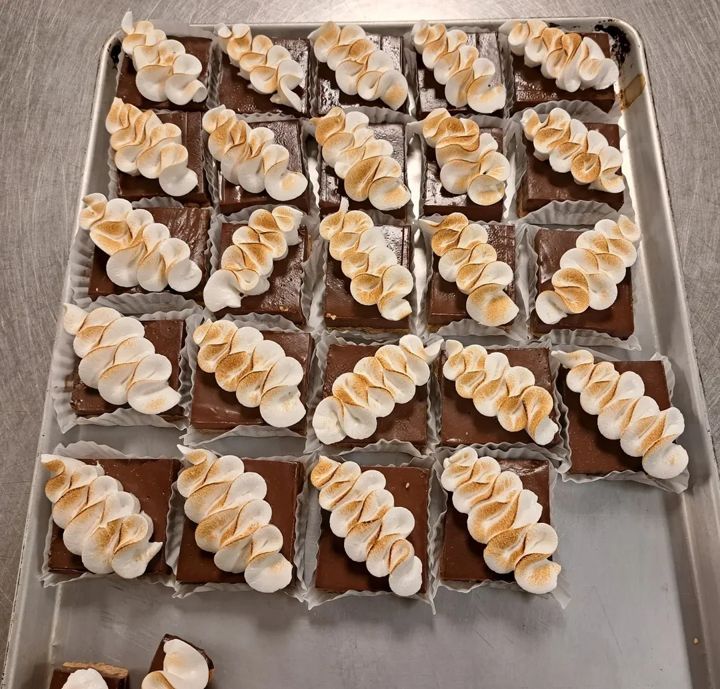
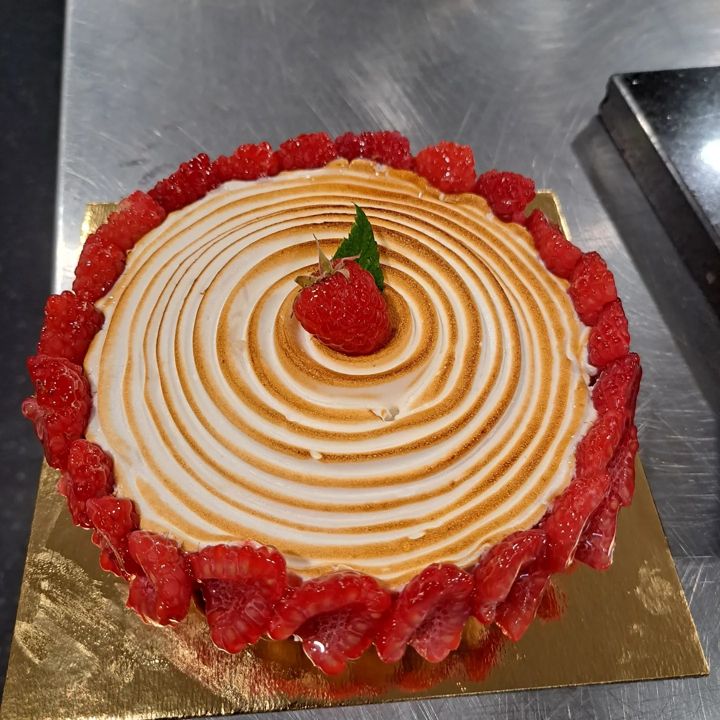
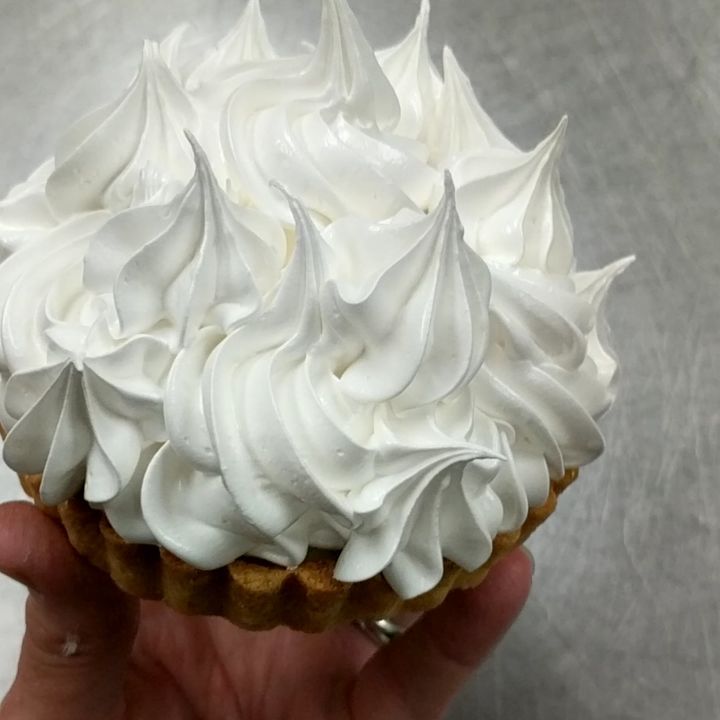
God, I love Swiss meringue! This is a close-up of a tart buried under tall, glossy white peaks of it, piped in loose flames that curl at the tips. I hadn't torched it yet, so you can see how bright and dense it is.
Swiss meringue is made by warming egg whites and sugar together over simmering water until the sugar dissolves, then whipping it to a stiff, satiny foam. Because the sugar is fully dissolved and the whites are gently cooked, it is smoother and more stable than a raw French meringue and simpler than Italian meringue, which needs boiling syrup. It pipes beautifully, holds for hours, and browns evenly under a torch. This post is a video on Instagram.
This article is written in Corey’s voice for this tribute site, based on his captions and blog. His own words are the quotes above.
Swiss Meringue
Swiss meringue is made by warming egg whites and sugar together over simmering water until the sugar dissolves, then whipping the mixture to a dense, glossy foam. Heating the whites makes it more stable than raw French meringue and it needs no sugar syrup, which makes it the most practical meringue for piping onto tarts and torching.
Ingredients
Meringue
- 120 g egg whites (4 large)
- 240 g granulated sugar (1 cup plus 3 tbsp)
- 1 g cream of tartar (1/4 tsp), or 1/2 tsp lemon juice
- Pinch of fine salt
- 5 g vanilla extract (1 tsp), optional
Method
- Wipe the mixer bowl and whisk with a paper towel dampened with lemon juice or vinegar to remove any grease.
- Combine the whites, sugar, cream of tartar and salt in the bowl. The ratio is one part whites to two parts sugar by weight.
- Set the bowl over a pan with 2-3 cm (1 inch) of barely simmering water, without letting the bowl touch the water. Whisk constantly but gently.
- Heat until the mixture reaches 160°F (71°C) and feels completely smooth when rubbed between your fingers, 4-6 minutes.
- Move the bowl to the mixer and whip on medium-high speed for 6-8 minutes, until the meringue is bright white, very glossy and holds a stiff peak that barely droops at the tip.
- Whip in the vanilla in the last few seconds. The bowl should feel just barely warm.
- Use straight away. Pipe with a plain, star or Saint-Honoré tip, or spread with a spoon into peaks, then brown with a blowtorch held 5-8 cm (2-3 inches) away.
Chef’s notes
- Grainy meringue means the sugar did not fully dissolve. Keep whisking over the heat until you cannot feel a single crystal.
- A meringue that will not stiffen has usually met fat: a speck of yolk, a greasy bowl or a plastic bowl that holds oil. Start again with clean equipment.
- Do not walk away from the bowl over the water. Unstirred whites cook into threads at the edge of the bowl.
- For crisp baked meringues, pipe and dry at 200°F (95°C) for 1 1/2 to 2 hours, then cool in the turned-off oven.
Swiss or Italian meringue for topping tarts?
Swiss meringue
Stella Parks, Claire Saffitz, Thomas Keller and Sebastien Rouxel
Whites and sugar are heated together to 160°F (71°C) and then whipped. It is dense, fine-textured and very stable, needs only a thermometer and a bowl, and gives a marshmallow-like chew when torched. This recipe uses this method.
Italian meringue
Pierre Hermé, Ferrandi Paris and most classical French pastry kitchens
Sugar syrup cooked to 244-250°F (118-121°C) is poured in a thin stream onto whipping whites. It is the lightest and most heat-stable of the cooked meringues and holds for hours on a tart, but it demands accurate syrup work and good timing.
Drawn from the methods of
- Stella Parks, BraveTart (2017)
- Thomas Keller and Sebastien Rouxel, Bouchon Bakery (2012)
- Ferrandi Paris, French Pâtisserie (2017)
- Bo Friberg, The Professional Pastry Chef (2002)
Corey has not published his own formula for this piece. This reference recipe is compiled from the published methods of the chefs and bakers listed above, written in our own words.