Cream Puffs
By Corey Coleman · March 2, 2017 · Originally published on makingsomedough.wordpress.com
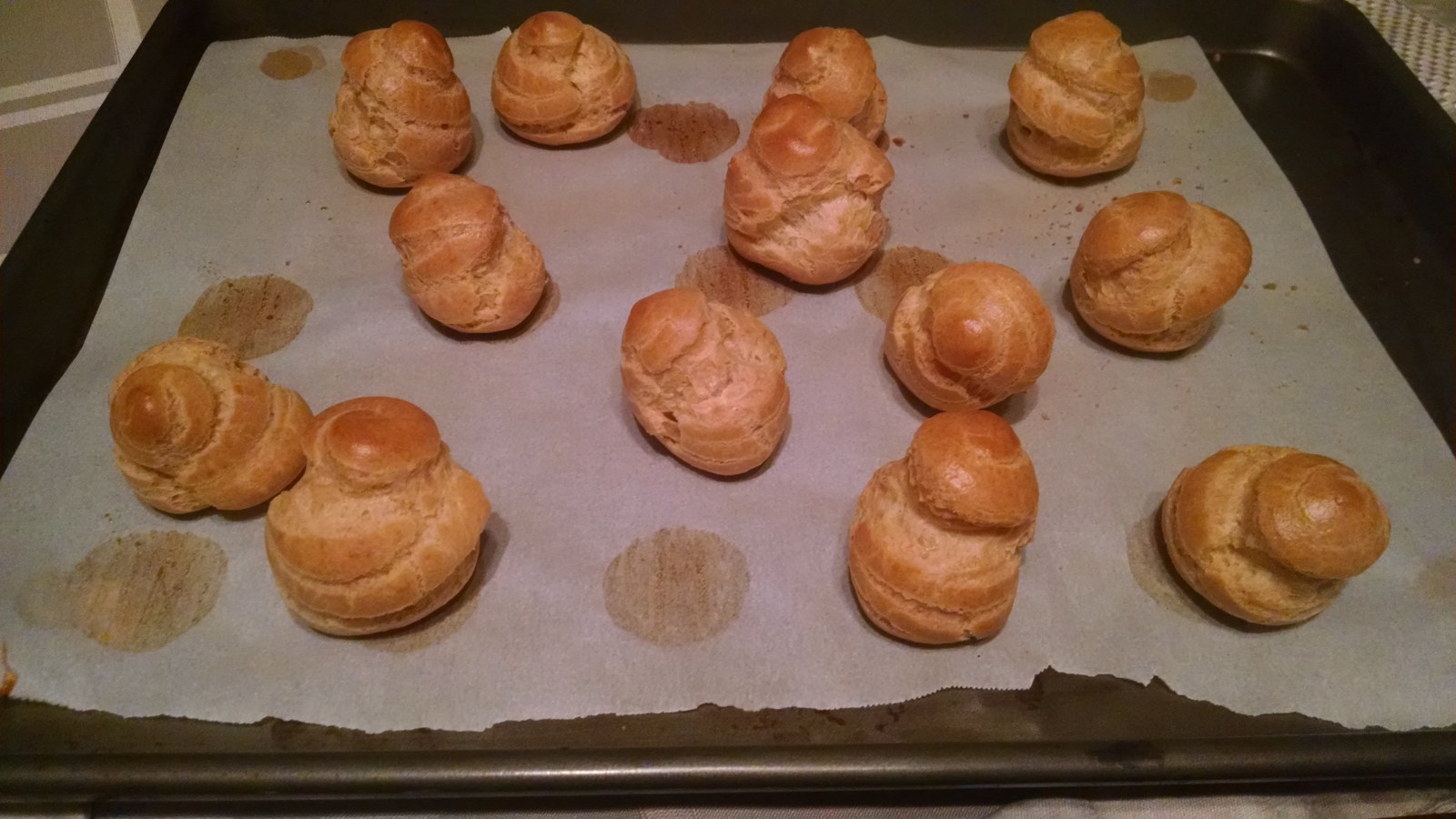
Cream puffs; we all know them, but we also know them as eclairs or profiteroles. Now obviously these aren’t the same thing, but what they do share in common is the dough used to make them. All three come are made from the same type of dough and it also happens to be (currently the only dough I know of) a cooked dough. I know it is strange, but it works.
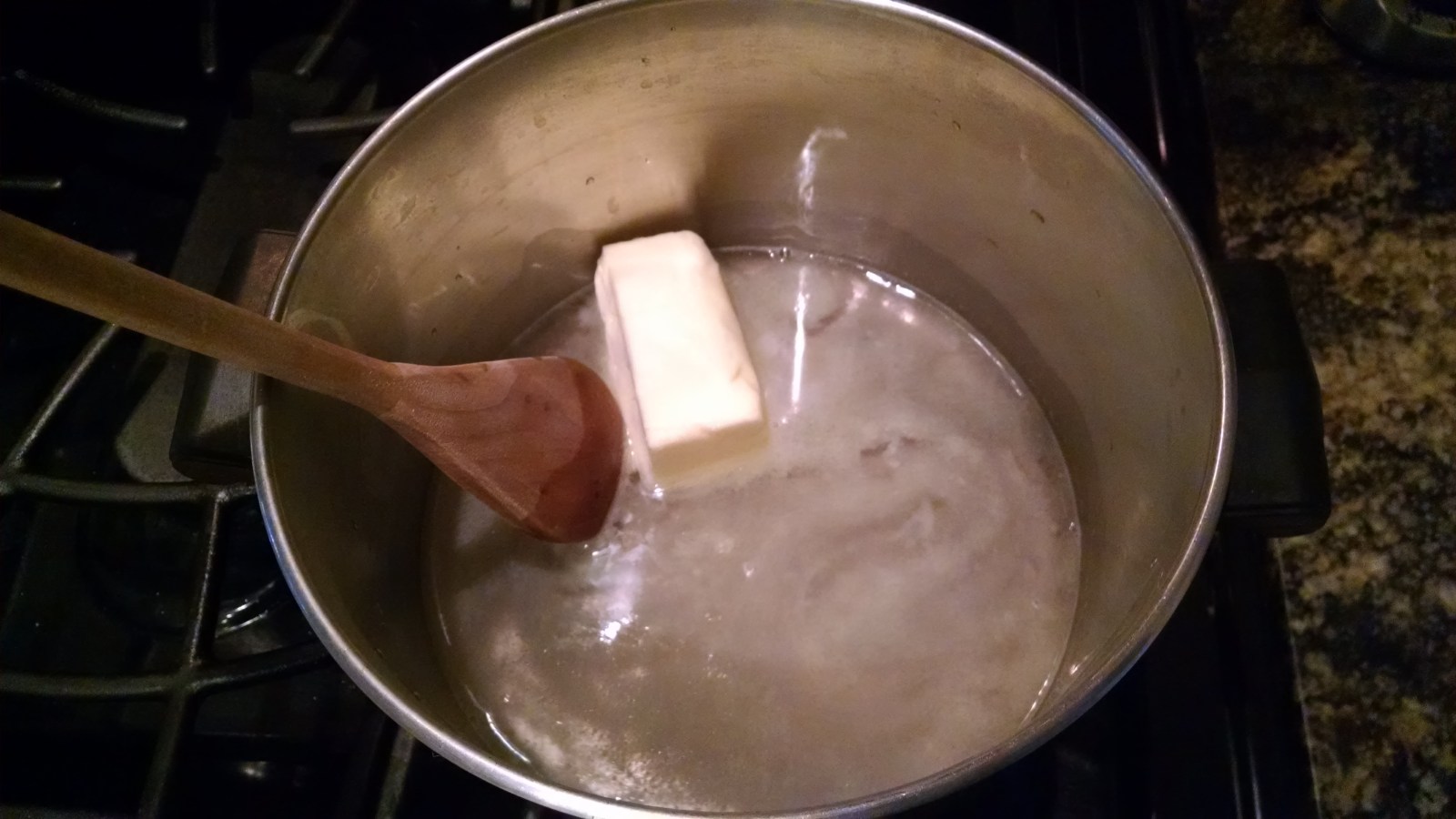
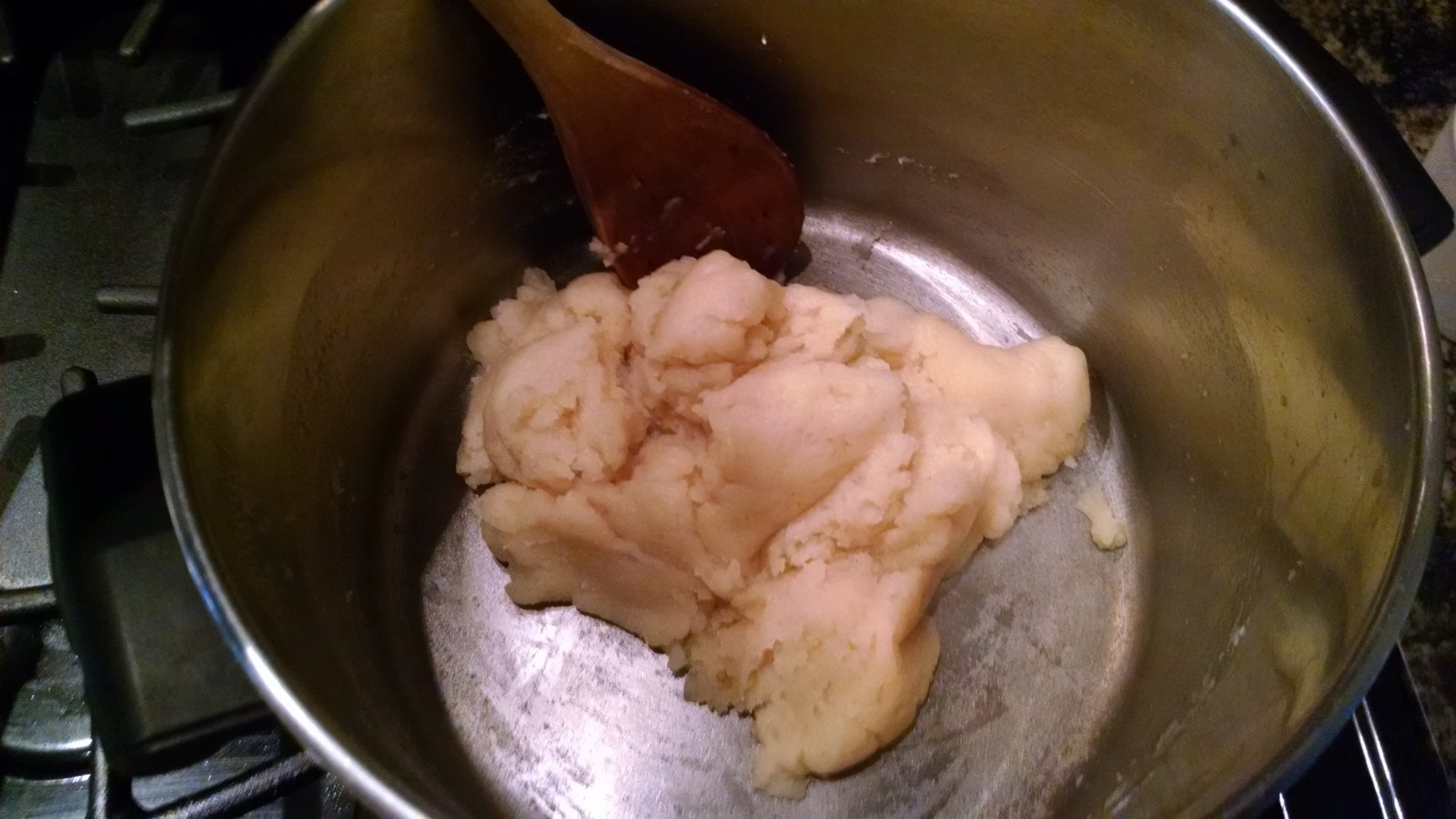
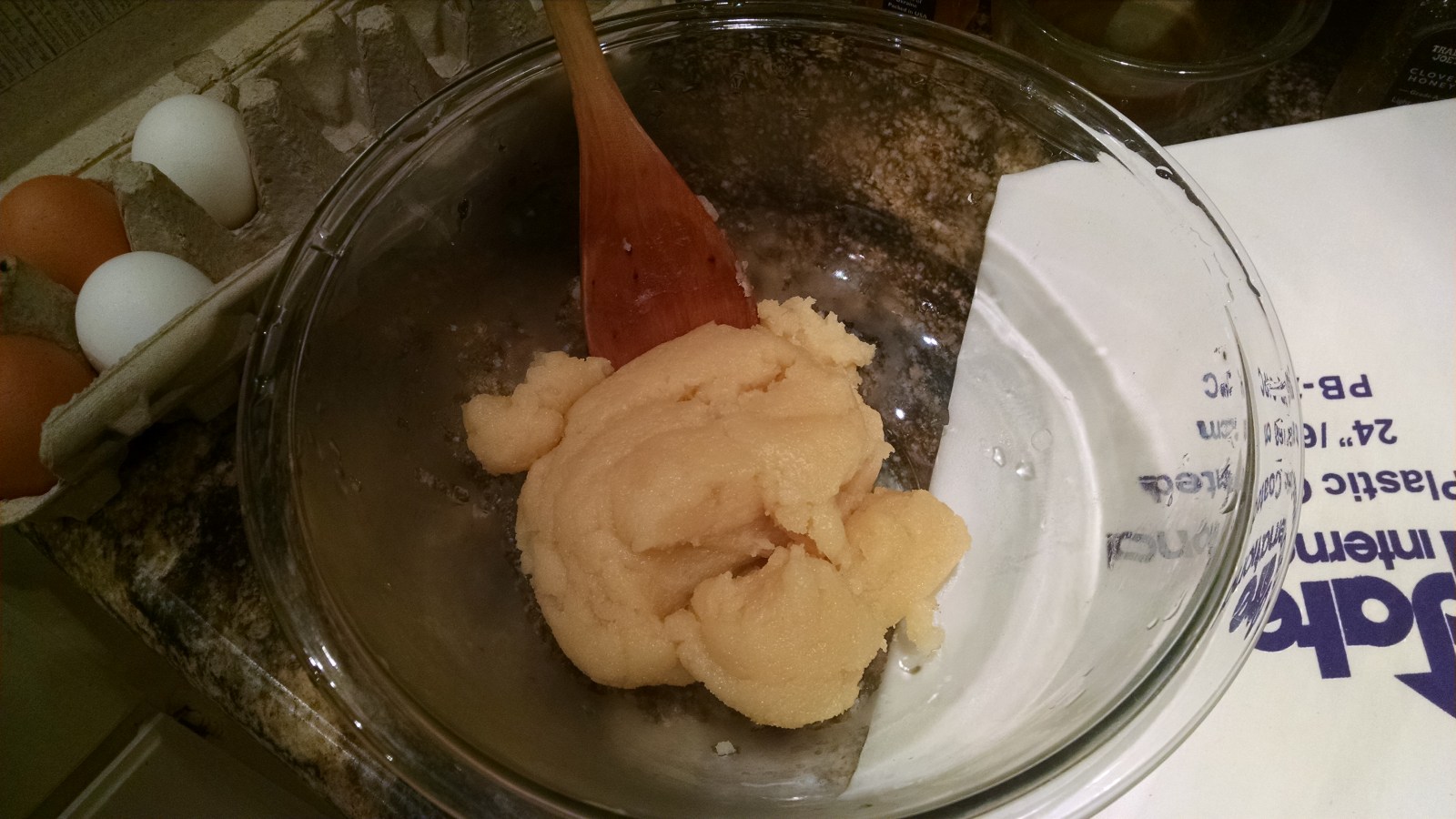
After melting butter on the stove all of the dry ingredients are added to the pan and mixed for a few minutes so the dough cooks. It will then be removed from the pan and into a mixing bowl (like in the above picture). Without waiting for it to cool the eggs are mixed in (one egg at a time). This is where it gets a little tricky and where I have messed up in the past. The dough and the eggs tend to not get along at first when they are mixed together. The eggs super lubricate the bowl and the dough turns into, basically marbles, which slide and bounce around the bowl until you finally get it to incorporate properly, and then it has to be done all over again with the next egg.
But once this period of mixing torture is complete, the dough/batter is now ready to be spooned or piped onto the baking sheet.
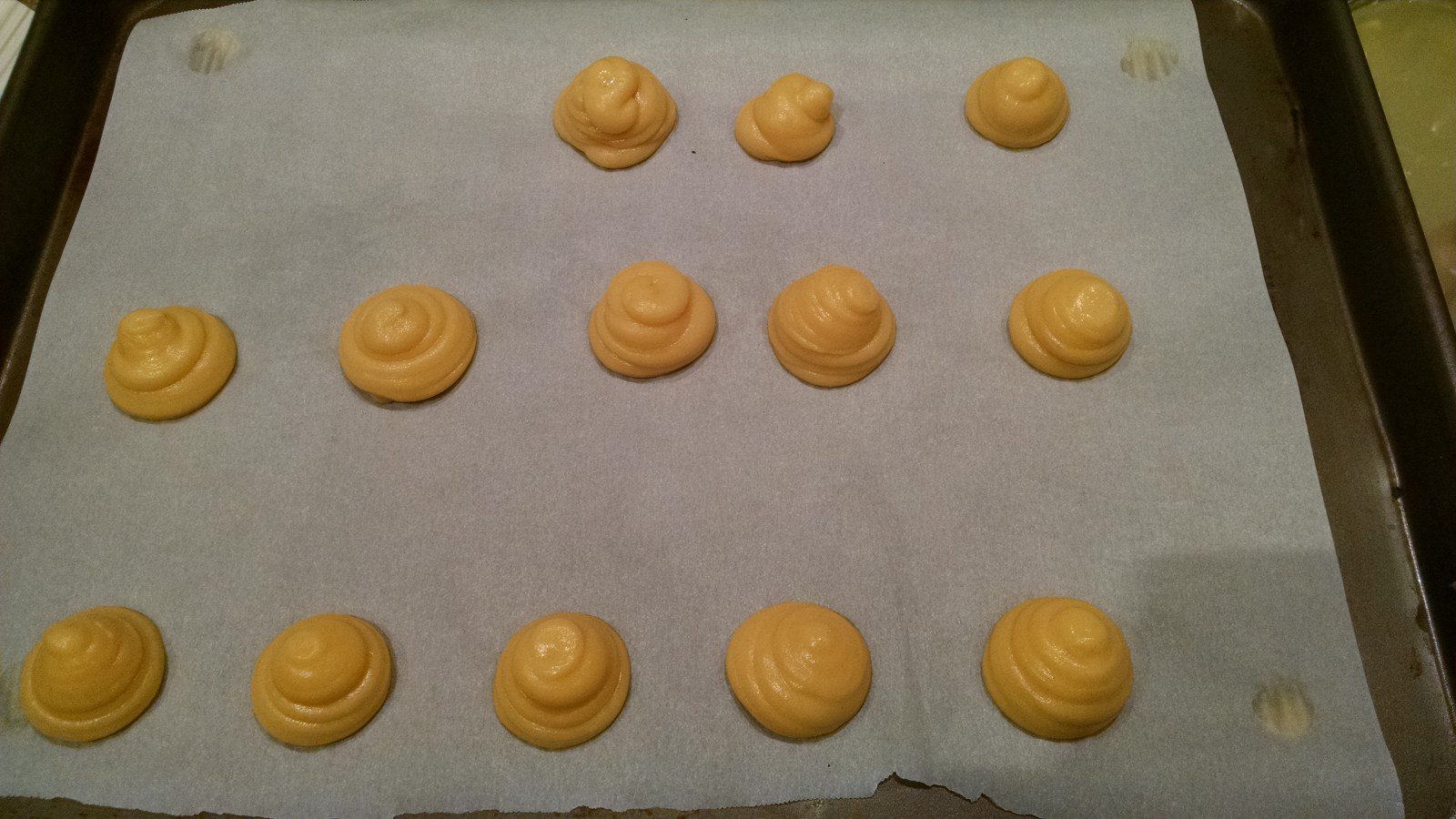
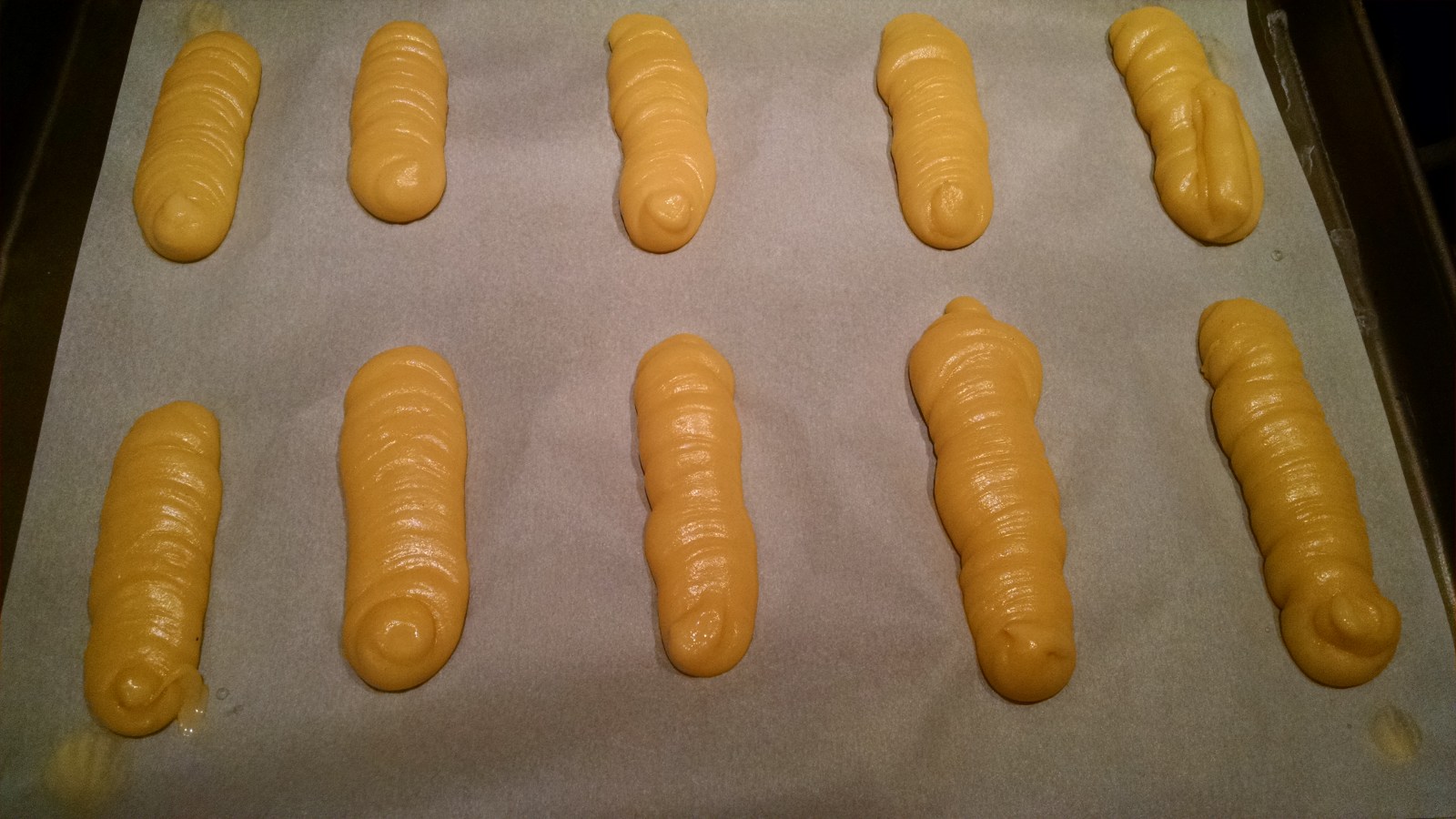
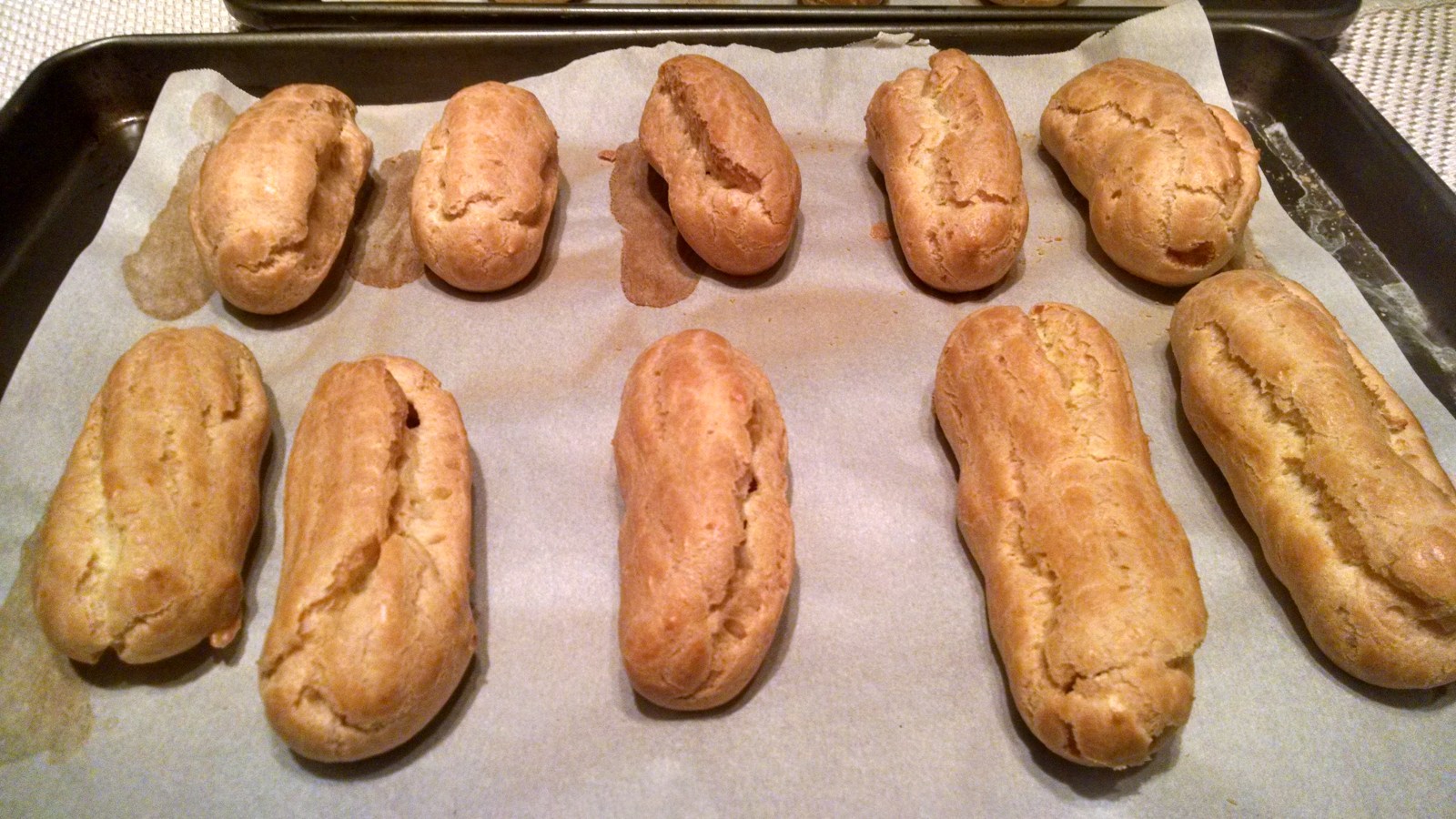
I chose to make cream puffs and eclairs; at this point it was really only a difference in piping the shapes. One thing I learned is to watch out for is the shape pipes or spooned onto the sheet is the shape after it bakes. So if there are points and rough edges all over it, be advised that when it bakes it’ll look pretty much the same.
Thankfully the dough/batter easily yields to being shaped here and there. All that needs to be done is get your fingertip wet and tap down any rough spots.
Next we have the baking, and these things take longer than one might think to bake. As their major claim to fame is that they bake hollow and are are ready to be filled with custard or cream, the key in achieving that is in baking them twice. The first time is to just no longer make them raw.
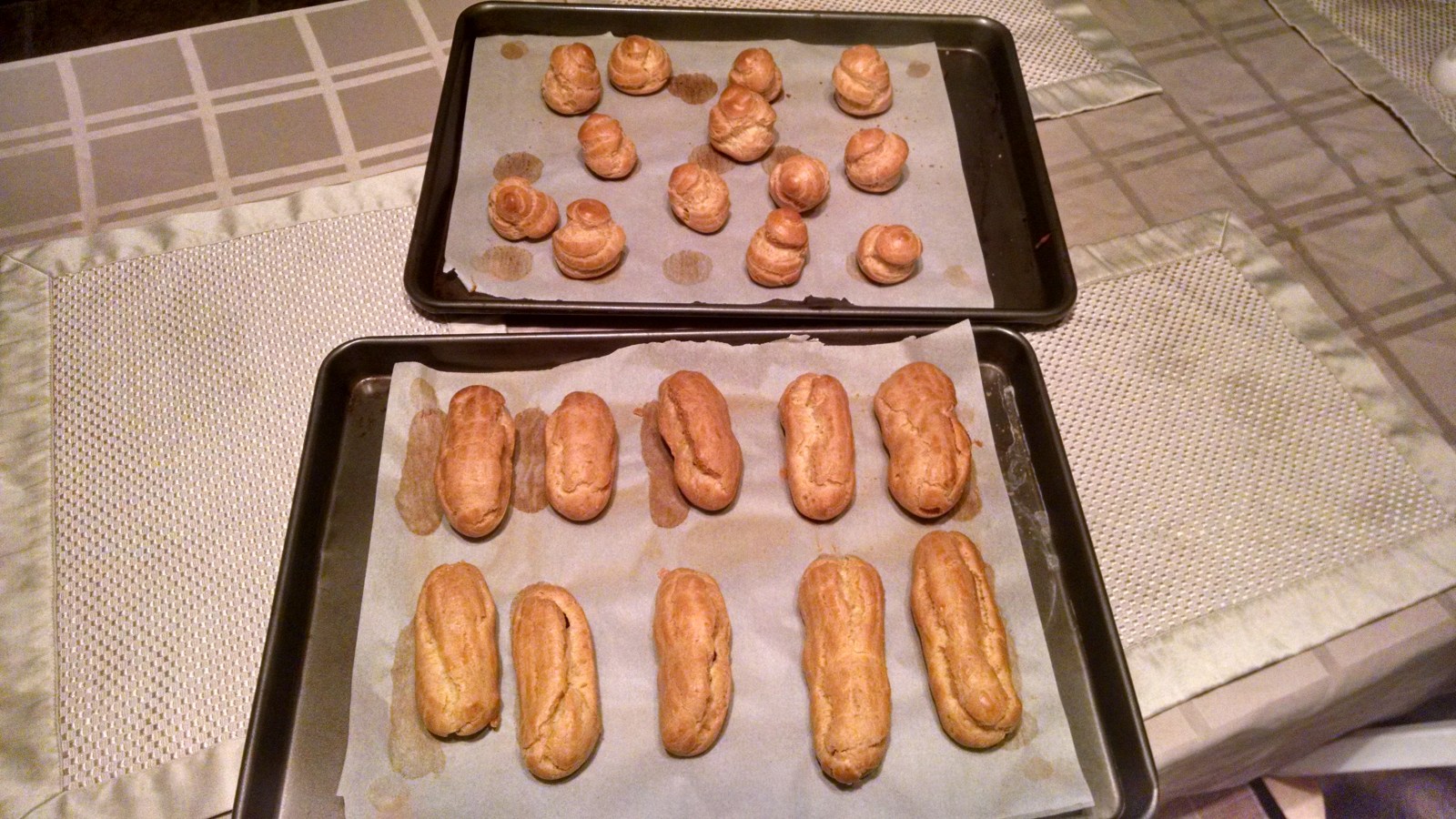
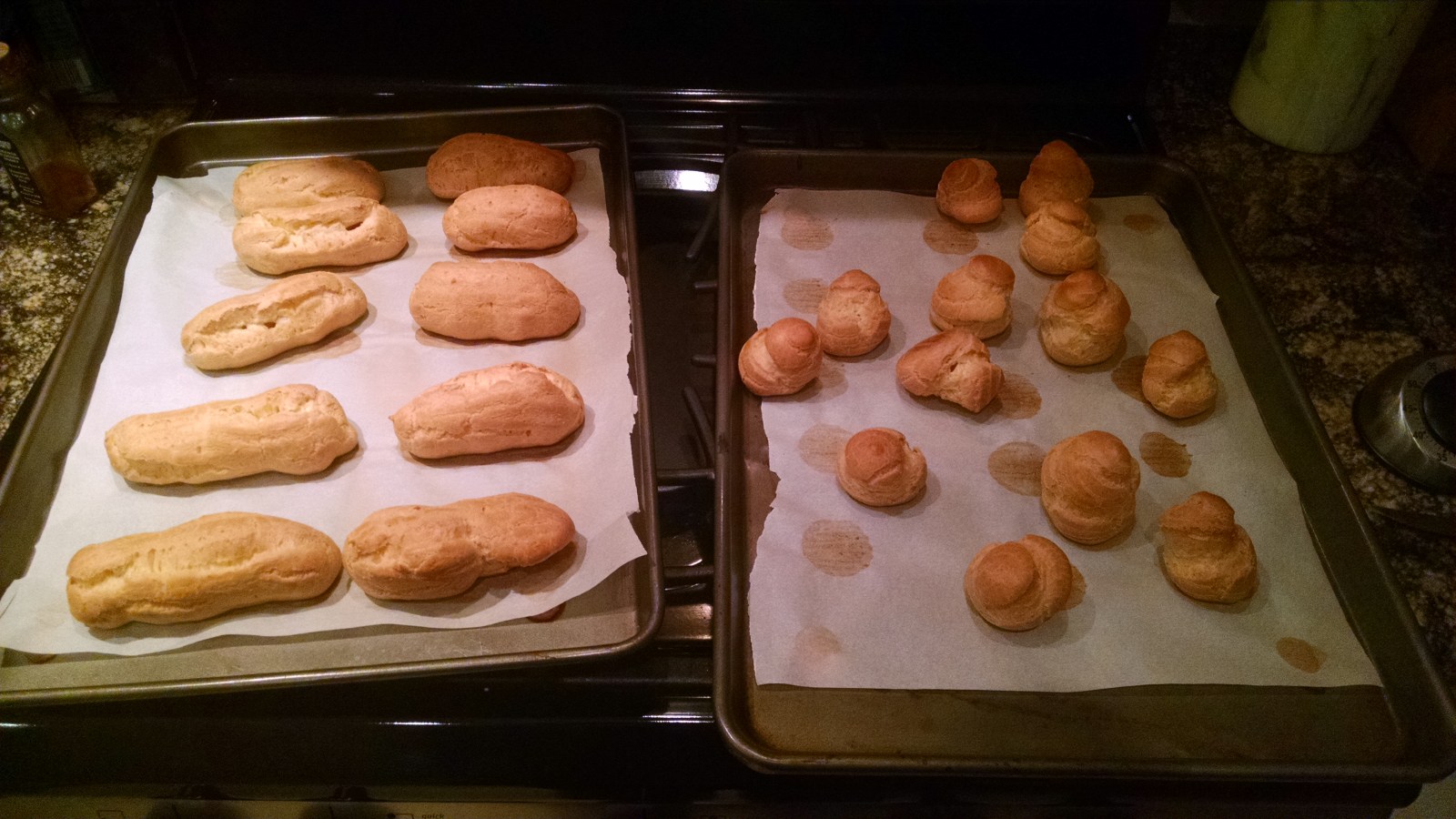
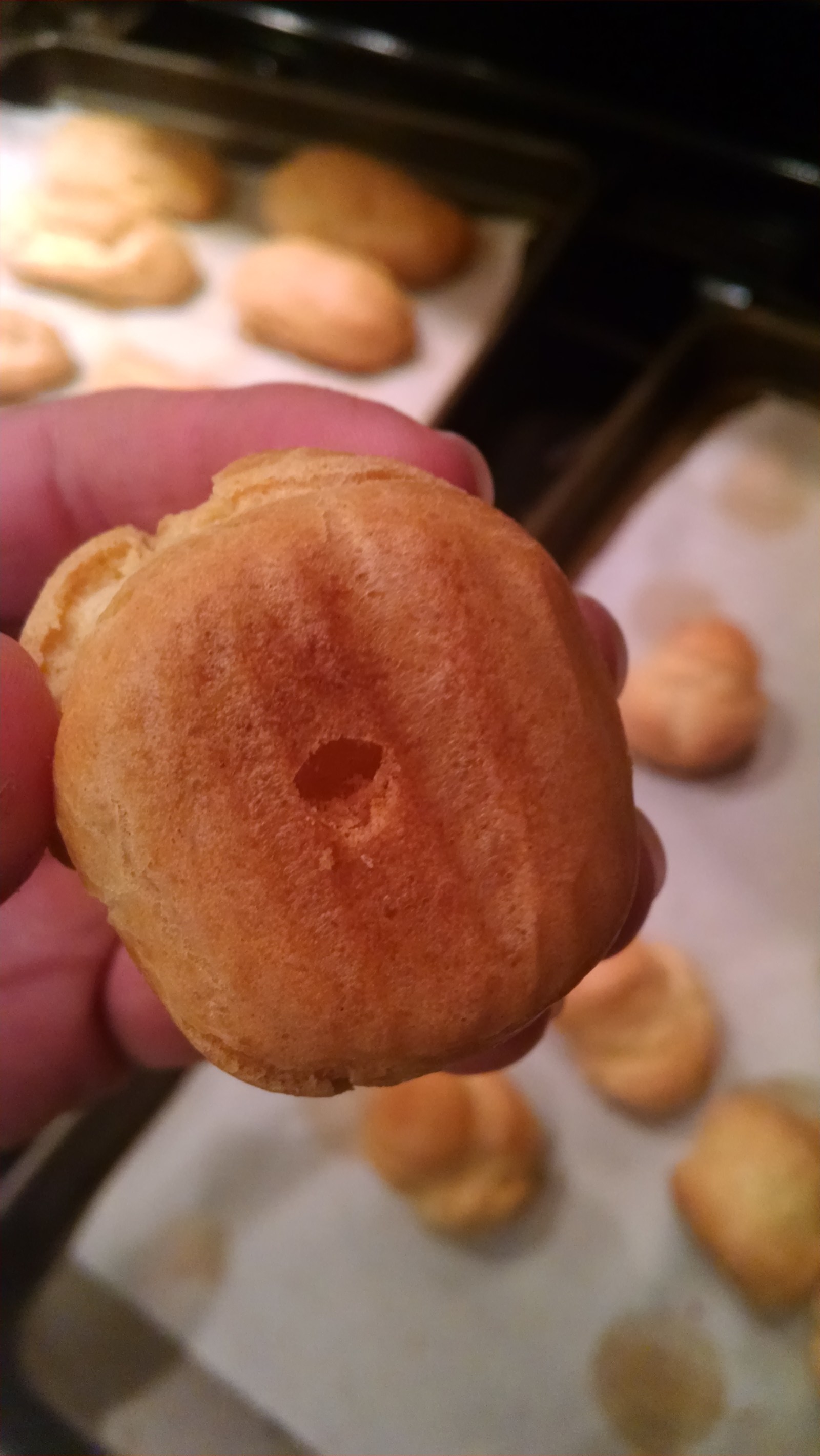
Prior to the second baking you need to flip the puffs and eclairs upside down and make a small hole at the bottom, this releases excess moisture. Now there are one of two options: they can be put back in the oven and baked at about 200 degrees for an hour or so, or let them sit in the hot oven for about two hours.This ensures they are dry and don’t get soggy.
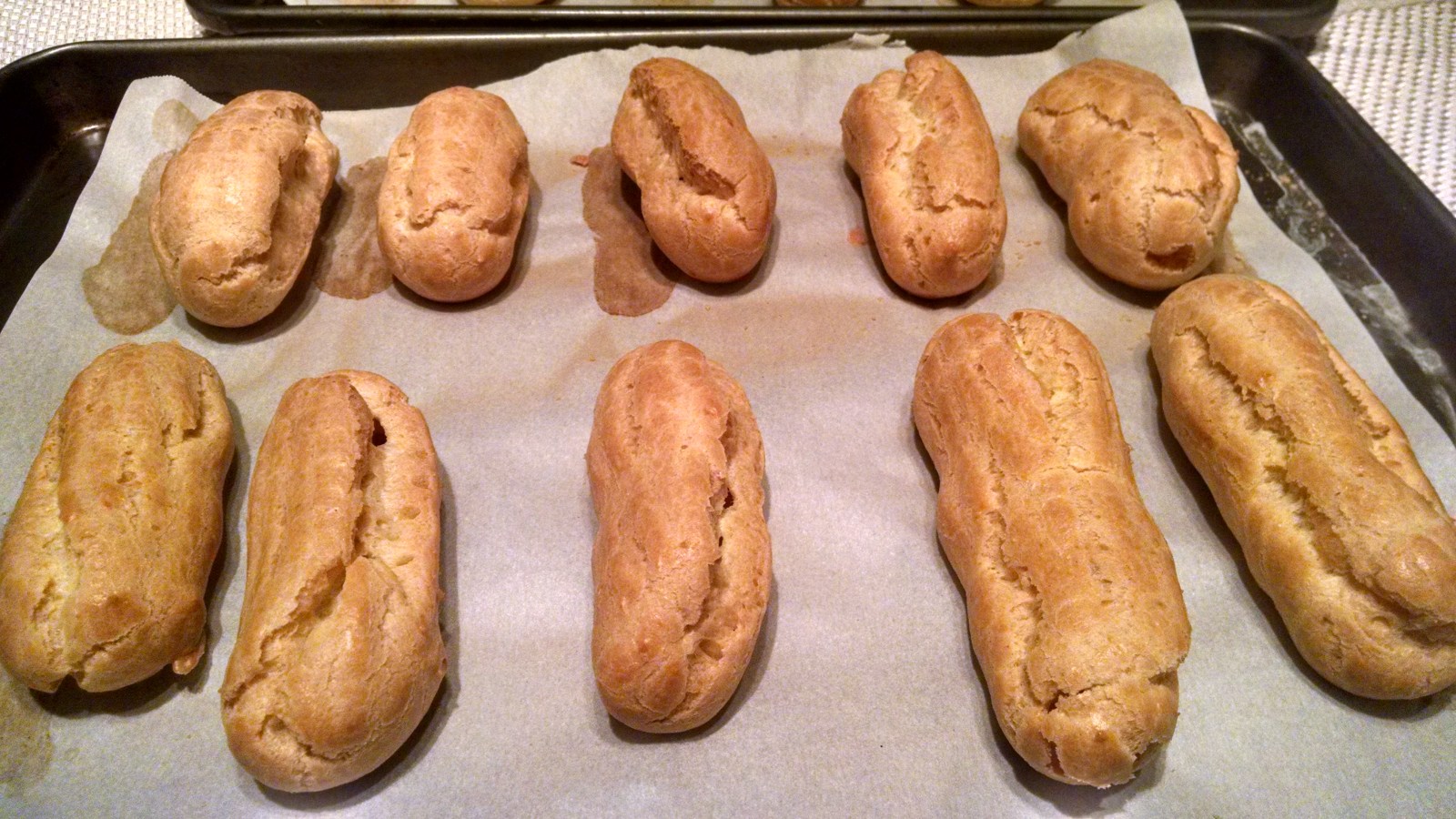
Once all that is done and they are cool you can fill them with, honestly anything you want, but usually its cream or custard and then you are done. After making these I do see why a lot of bakeries I go to don’t still have these available, they took rather long and many of of mine are far from picturesque, they look more this mutants or the result or inbreeding. So I, just like I always say, need to improve the appearance of the end result…..
Choux Pastry: Cream Puffs and Éclairs
Pâte à choux is a twice-cooked paste of water, butter, flour and eggs that puffs on steam alone into a crisp, hollow shell. French pastry cooks refined it through the 18th century, and Marie-Antoine Carême gave it its modern form in the early 19th. It is the base for cream puffs, éclairs, profiteroles, Paris-Brest, gougères and the Saint-Honoré.
Ingredients
Choux paste
- 125 g water (1/2 cup)
- 125 g whole milk (1/2 cup)
- 110 g unsalted butter, cubed (8 tbsp)
- 5 g granulated sugar (1 tsp)
- 5 g fine sea salt (scant 1 tsp)
- 140 g all-purpose or bread flour, sifted (1 cup plus 2 tbsp)
- 250 g eggs, beaten, room temperature (about 5 large)
Vanilla pastry cream
- 500 g whole milk (2 cups plus 1 tbsp)
- 1 vanilla bean, split and scraped, or 2 tsp vanilla paste
- 110 g egg yolks (6 large)
- 100 g granulated sugar (1/2 cup)
- 40 g cornstarch (5 tbsp)
- 40 g unsalted butter, cubed (3 tbsp)
Chocolate glaze
- 100 g dark chocolate, 60 to 70% cocoa, finely chopped (3 1/2 oz)
- 100 g heavy cream (scant 1/2 cup)
- 15 g light corn syrup or honey, optional, for shine (2 tsp)
Method
- Make the pastry cream first. Simmer the milk with the vanilla, whisk the yolks, sugar and cornstarch together, whisk in the hot milk, and return to the pan. Cook, whisking constantly, until it boils for a full minute, then whisk in the butter, cover the surface with plastic wrap, and chill for at least 2 hours.
- For the choux, bring the water, milk, butter, sugar and salt to a full rolling boil in a saucepan, making sure the butter has melted before the liquid boils. Take off the heat, add all the flour at once, and stir hard with a wooden spoon until smooth.
- Return to medium heat and stir for 2 to 3 minutes to dry the paste. It is ready when it pulls into a ball and leaves a thin film on the base of the pan, at about 170°F (77°C).
- Transfer to a mixer with the paddle and beat on low for 1 to 2 minutes to release steam, until the paste cools to about 140°F (60°C). Add the beaten egg in 4 or 5 additions, mixing each in fully.
- Hold back the last of the egg and check the texture: the paste should be glossy, and when you lift the paddle it should fall in a thick ribbon and leave a V-shaped point. Add the remaining egg only if needed. You may not use it all.
- Pipe onto parchment-lined trays, well spaced. For puffs, pipe 4 cm (1 1/2 in) mounds with a 12 mm (1/2 in) plain tip. For éclairs, pipe 12 cm (5 in) logs with a 12 mm French star tip, which helps prevent cracking. Smooth any peaks with a damp fingertip.
- Bake at 400°F (200°C) for 15 minutes, then reduce to 350°F (175°C) and bake 20 to 25 minutes more without opening the door in the first 25 minutes. The shells should be deep golden brown, including in the cracks, and feel light and hollow. Pierce the base of each and cool on a rack.
- Whisk the cold pastry cream until smooth. Fill the shells through the holes in the base with a small plain tip, 1 hole for puffs and 3 along each éclair, until they feel heavy.
- For the glaze, pour the simmering cream over the chocolate and corn syrup, wait 1 minute, and stir until smooth. Dip the tops of the filled pastries, let the excess drip off, and leave to set. Serve the same day.
Chef’s notes
- Shells that collapse were taken out too soon. The colour should be a deep, even brown and the sides firm. Pale choux is still wet inside and will sink as it cools.
- A runny paste that spreads flat has too much egg, and there is no fixing it short of making a second batch of paste without eggs and blending the two. Always add the last of the egg gradually.
- Flat, heavy puffs can also come from a paste that was not dried enough on the stove. Look for the film on the base of the pan.
- Unfilled shells freeze well. Recrisp them at 325°F (165°C) for 5 to 8 minutes before filling.
Half milk, or all water?
Half milk, half water
Pierre Hermé and much of modern French pâtisserie
Milk adds protein and sugar, so the shells brown more deeply and have a richer flavour and a more tender bite. This is the method the recipe follows.
All water
The traditional French base recipe, still preferred by many bakers for éclairs and gougères
Water alone gives a lighter, crisper and drier shell that holds its shape and stays crisp longer once filled. It browns more slowly, so the shells can dry fully without becoming too dark.
Drawn from the methods of
- Pierre Hermé
- Ferrandi Paris, French Pâtisserie (2017)
- Thomas Keller and Sebastien Rouxel, Bouchon Bakery (2012)
- Bo Friberg, The Professional Pastry Chef
Corey has not published his own formula for this piece. This reference recipe is compiled from the published methods of the chefs and bakers listed above, written in our own words.